The Listening Grove · Fifty Famous Stories Retold
Chapter 38: The King and His Hawk
A Charlotte Mason read-aloud lesson. Press play, with the lesson.
What is Fifty Famous Stories Retold Chapter 38, The King and His Hawk, about?Parent review
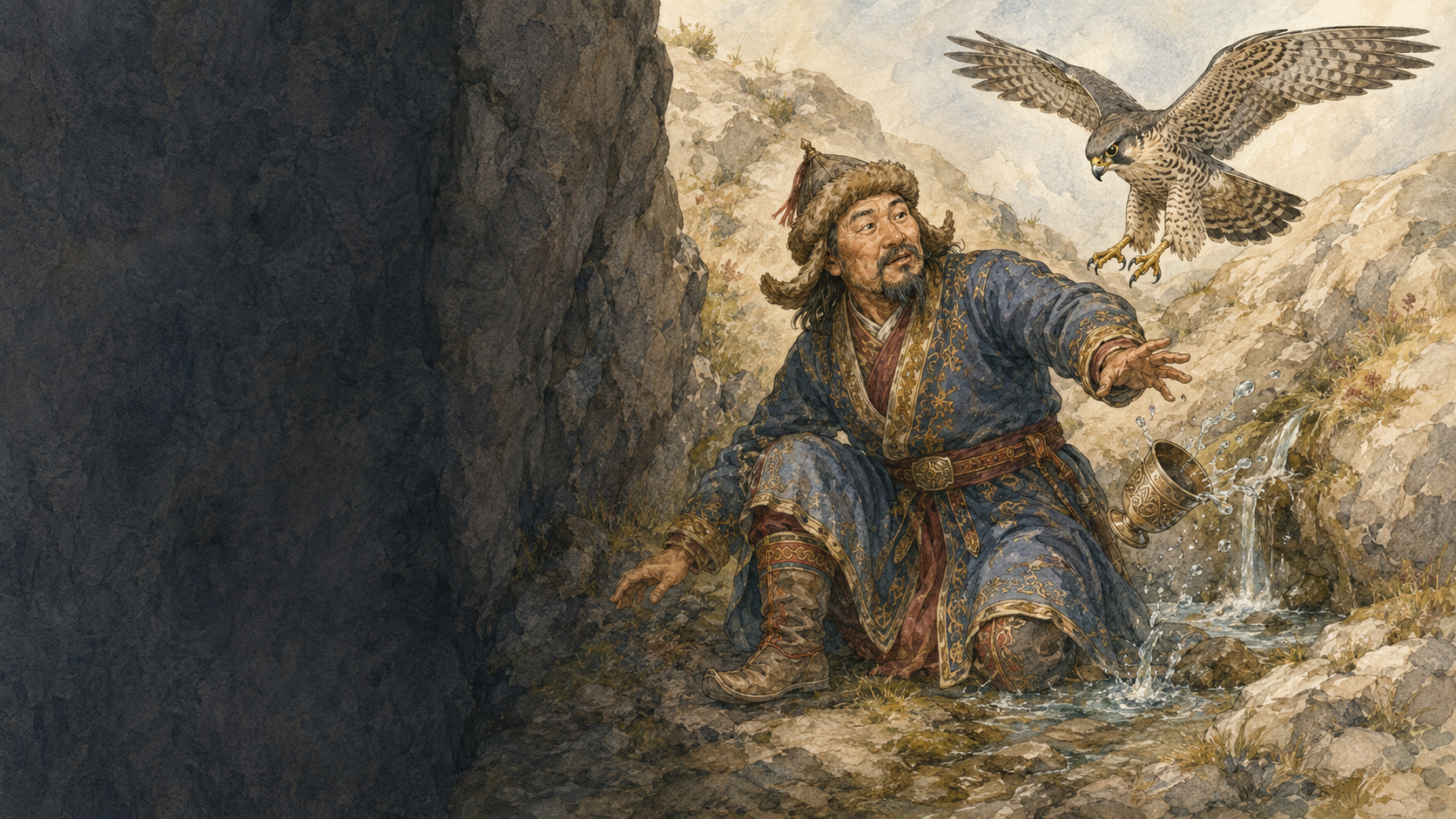
Fifty Famous Stories Retold Chapter 38, The King and His Hawk, is a story about the danger of acting in anger. Genghis Khan, a great king and warrior, rode out hunting one day with his favorite hawk on his wrist. Growing thirsty, he found a trickle of water and filled his silver cup, but each time he raised it to drink, his hawk swooped down and knocked it from his hand. After the bird spoiled his drink three times, the angry king struck it with his sword as it swooped a fourth time, killing it. Only afterward, climbing to the spring itself, did he discover a huge, poisonous dead snake lying in the pool, the very danger the hawk had been trying to keep him from drinking. Grief-stricken over his best friend, the king carried the hawk home and vowed he had learned a sad lesson: never to do anything in anger.
Say what you remember!
Tell what you remember from the last chapter.
What happened in Fifty Famous Stories Retold Chapter 37, Socrates and His House?Have a look
In the last chapter, Socrates and His House, we learned that the wise man Socrates built himself such a tiny house that his neighbors wondered how so great a man could be content with it. Socrates answered that he would count himself happy if he could fill even so small a place with true friends, showing that he valued good companionship far more than a grand home.
Read the previous lesson: Socrates and His House →Show what you know!
Use your printable Lesson Guide. Fill in the vocabulary you know, then click to check your work and learn some new words today.
What are the difficult or advanced vocabulary words in Fifty Famous Stories Retold Chapter 38, The King and His Hawk?daring, swoop, alighted, clamberedHave a look
- daring: boldly willing to take a risk
- swoop: to move down in one swift sweep
- alighted: came down from the air and settled
- clambered: climbed with effort using hands and feet
Locate it on the map!
Use your printable Lesson Guide. Use an atlas and fill in the blank map if you can find the geographic location, then click to check your work.
What important geographic location connects with Fifty Famous Stories Retold Chapter 38, The King and His Hawk?
- Find Mongolia (Mongolia): The chapter tells of Genghis Khan's conquests in China and Persia, but his home country is never named in the story. History remembers him as coming from northeastern Mongolia, the land he returned to after his conquests.
See it on the mapHave a look
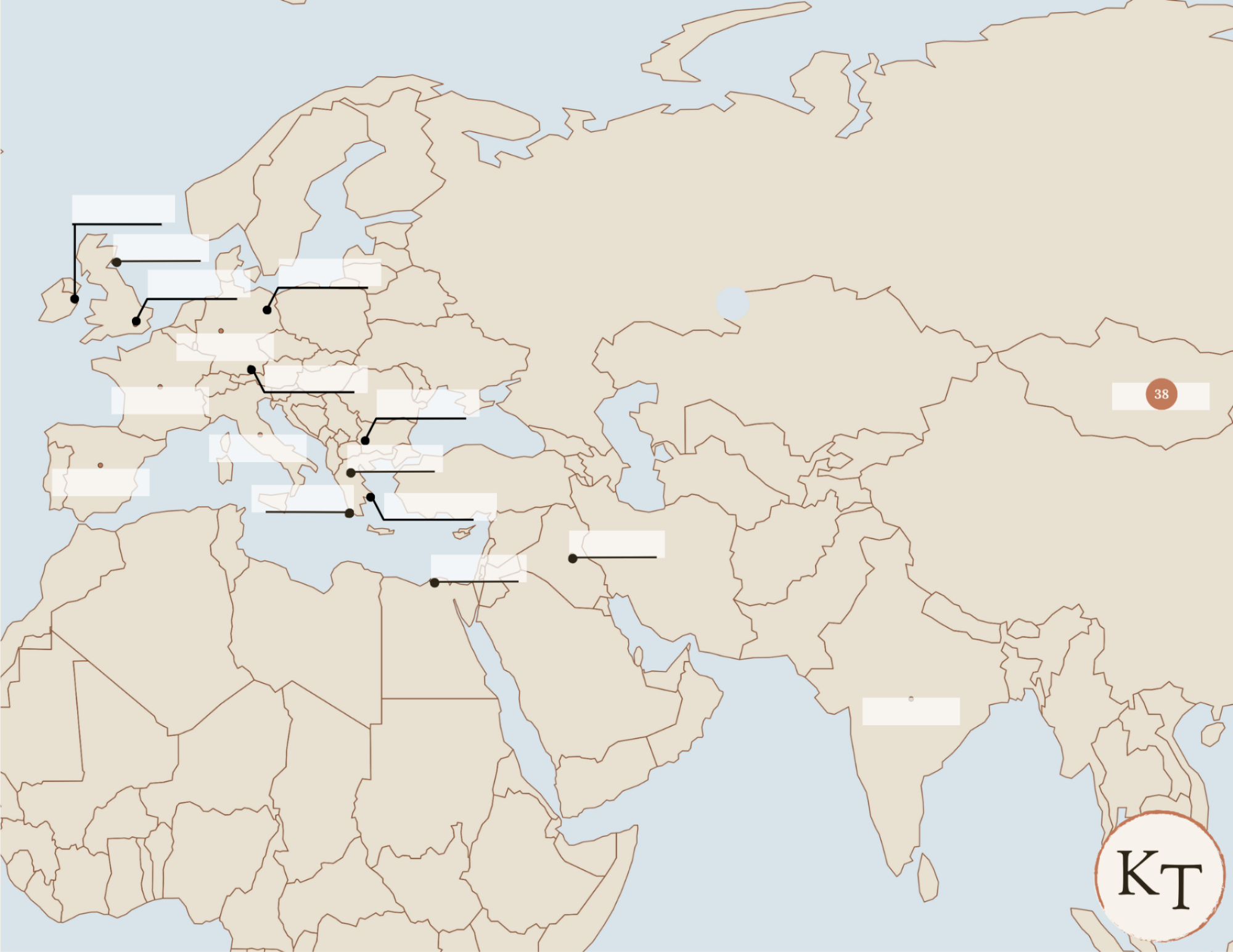
This matches the map in your Lesson Guide.
The Books come Alive!
Read or listen to Chapter 38 of Fifty Famous Stories Retold, the Kindred Thicket Enhanced Edition, read by Laura Caldwell.
Read by Laura Caldwell for LibriVox (public domain), professionally adjusted and trimmed by Kindred Thicket.
What do the Teacher’s Notes tell us about Chapter 38 of Fifty Famous Stories Retold?Parent review
This is a Kindred Thicket Enhanced Edition. Baldwin’s 1896 words are read exactly as he wrote them, and we add Teacher’s Notes with historical and literary context.
- About the whole bookFifty Famous Stories Retold gathers real history together with well-loved legends and traditions. These notes tell you, story by story, which is which.
- opening, "a great king"Khan, not king. It was the Mongol title for a supreme ruler, and he took it in 1206. He was born Temujin; Genghis Khan is the name history remembers.
- "conquered many lands"He invaded both, but did not finish either. He led the attack on northern China himself, and the conquest was completed in 1234, seven years after he died. In Persia he campaigned in the east and then withdrew.
- "a deer or a rabbit"A hawk cannot take a deer. Rabbits and hares are about its limit, though a big hawk can catch a hare twice its own weight. Deer belong to eagles, and in Central Asia it is the golden eagle that is flown at big game.
- the hawk upsets the cupThis is a very old traveling story, not something that happened on a hunt. A much older Arabic telling gives it to a King Sindibad, and the same tale turns up all across Asia and Europe centuries earlier.
- the killing of the hawkIn the older telling the bird is not killed. The king strikes off her wing, and she lives to point him to the danger in the tree. Here the wounding has become a death.
- the dead snake in the poolThe poison changes shape from telling to telling. In the older Arabic version there is no dead snake in a pool at all: a nest of vipers in the tree above is dripping venom, which the king mistakes for water.
- closing lessonNo history of Genghis Khan records this story. It is told centuries earlier about a King Sindibad, and belongs to a family of tales that traveled from Asia to Europe. How it came to be attached to him is not known.
- Parents may wish to preview this chapter. The king kills his pet hawk in a fit of temper, and the bird is described dying at his feet. He is sorry at once.
Memory becomes Action!
Use the Response Resource* to remember and spell tricky names. Choose one way to narrate.
*Materials in the Lesson Guide.
What is the list of names, people, characters, and places that are important in Chapter 38 of Fifty Famous Stories Retold?Genghis Khan, The hawk, The silver cup, China, PersiaHave a look
- Genghis Khan: A Mongol king and warrior.
- The hawk: The king's hunting hawk.
- The silver cup: The king's cup, carried in his hunting bag.
- China: A land Genghis Khan led his army into.
- Persia: Another land Genghis Khan led his army into.
Chapter 38 Q & A
This is a Kindred Thicket Enhanced Edition. Baldwin’s stories mingle real history with beloved legend, and here is what to know about this one.
Was Genghis Khan a real historical figure?
Yes. Genghis Khan was a real Mongol ruler who conquered vast territories in the early 1200s, though "Khan" was actually a title, not a name; he took it in 1206 after being born Temujin.
Did this hawk-and-water-cup story really happen to Genghis Khan?
No historical record ties this anecdote to him. It is a very old traveling story told about a King Sindibad long before Genghis Khan lived, and versions of it turn up across Asia and Europe. How it came to be attached to Genghis Khan is not known, so it is best enjoyed as a moral tale rather than documented history.
Did China and Persia name where Genghis Khan actually lived?
No. The chapter mentions China and Persia only as lands he conquered, not his home. His homeland is never named in the story; history places his birth in northeastern Mongolia.
In the older versions of the story, does the hawk really die?
No, and that is a real change worth knowing. In the older telling, the king only wounds the bird's wing rather than killing it, and the injured hawk lives on to lead him to the poisoned water. Here, the wounding has become a death.