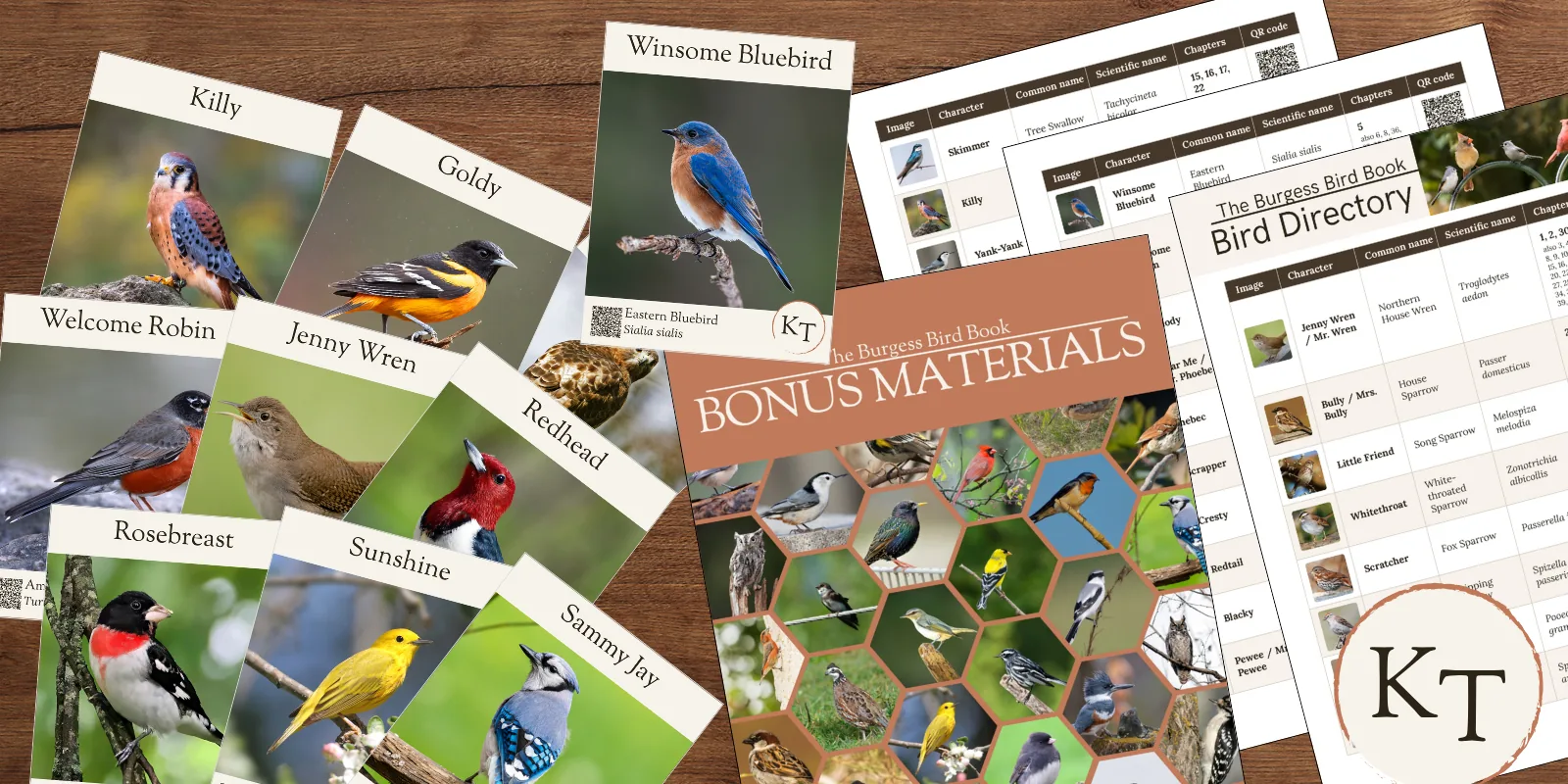
Birds and Characters in The Burgess Bird Book for Children
Every bird in The Burgess Bird Book for Children: who each character is, the real bird behind the name, the chapters it appears in, what it sounds like, and where it lives. Tap a bird to open it.
The Burgess Bird Book Coloring Pages, Bird Cards, and Bird Directory are available in the Kindred Thicket Free Resource Library.
Access here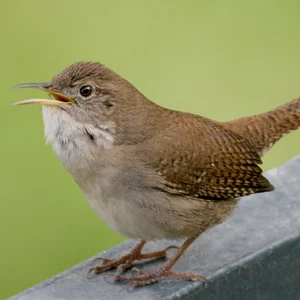 Jenny WrenNorthern House WrenCh. 1, 2, 30
Who is Jenny Wren in the story?
Jenny Wren is a Northern House Wren (Troglodytes aedon). Northern House Wrens are small, plain brown birds with fine dark barring on the wings and tail. They often hold their short tail straight up. They nest in holes and birdhouses.
LearnWhat does the Northern House Wren sound like?
A long, jumbled, bubbling song, sung as often as 9 to 11 times a minute. When upset it gives harsh churrs, chatters, rattles, and scolds.
ListenWhere does the Northern House Wren live?
Most Northern House Wrens that nest in the United States and Canada move to the southern United States and Mexico for winter.
ExploreWhich chapters feature Jenny Wren?
- Chapter 1: Jenny Wren Arrives
- Chapter 2: The Old Orchard Bully
- Chapter 30: Jenny Wren's Cousins
Also mentioned in chapters 3, 4, 5, 7, 8, 9, 10, 11, 12, 15, 16, 17, 19, 20, 22, 23, 24, 27, 28, 29, 33, 34, 35, 36, 37, 39, 42, 45.
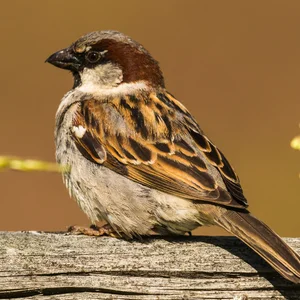 BullyHouse SparrowCh. 2, 3
Who is Bully in the story?
Bully is a House Sparrow (Passer domesticus). House Sparrows are chunky birds with a thick, cone-shaped bill. The males wear a gray cap, chestnut sides to the head and a black bib. They live close to people, nesting in buildings and birdhouses.
LearnWhat does the House Sparrow sound like?
A simple song of "cheep" or "chirrup" notes, repeated over and over through much of the year.
ListenWhich chapters feature Bully?
- Chapter 2: The Old Orchard Bully
- Chapter 3: Jenny Has a Good Word for Some Sparrows
Also mentioned in chapters 4, 6, 7, 8, 34, 35, 36, 42, 43.
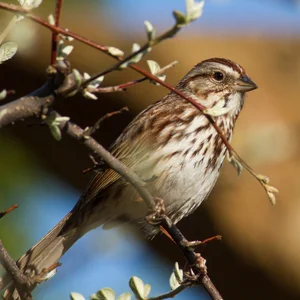 Little FriendSong SparrowCh. 3
Who is Little Friend in the story?
Little Friend is a Song Sparrow (Melospiza melodia). Song Sparrows have a brown-streaked breast with a dark spot in the center, a long, rounded tail they pump up and down as they fly, and a liking for low shrubs near water.
LearnWhat does the Song Sparrow sound like?
A loud, clanking song that starts with a few sharp, well-spaced notes and finishes with a buzz or trill.
ListenWhere does the Song Sparrow live?
Birds from Alaska and northern Canada fly the farthest, to the southern United States and northern Mexico. Birds from the northern United States may migrate, but usually not as far.
ExploreWhich chapters feature Little Friend?
- Chapter 3: Jenny Has a Good Word for Some Sparrows
Also mentioned in chapters 27, 37, 40, 45.
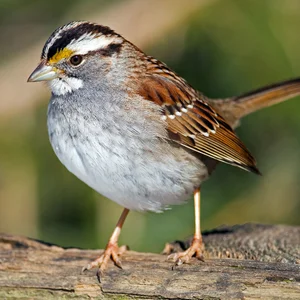 WhitethroatWhite-throated SparrowCh. 3
Who is Whitethroat in the story?
Whitethroat is a White-throated Sparrow (Zonotrichia albicollis). White-throated Sparrows have a crisp white throat patch, a boldly striped black and white (or tan) crown, and a bright yellow spot between the eye and the bill.
LearnWhat does the White-throated Sparrow sound like?
A pretty, thin whistle that sounds like "Oh sweet Canada, Canada" or "Old Sam Peabody, Peabody."
ListenWhere does the White-throated Sparrow live?
Found in the Northeast all year. The birds that nest there tend to leave in fall, and winter visitors from farther north take their place.
ExploreWhich chapters feature Whitethroat?
- Chapter 3: Jenny Has a Good Word for Some Sparrows
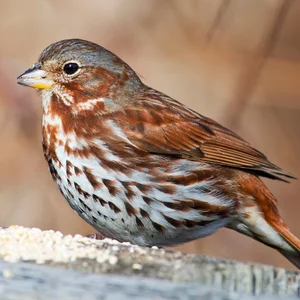 ScratcherFox SparrowCh. 3
Who is Scratcher in the story?
Scratcher is a Fox Sparrow (Passerella iliaca). Fox Sparrows are large, plump sparrows; in the East they have rich rusty-red wings and tail and heavy spotting on the breast. They have a habit of hopping forward and back to scratch through dead leaves with both feet at once.
LearnWhat does the Fox Sparrow sound like?
About a dozen rich, whistled notes. In summer he sings from before dawn until long after dark.
ListenWhere does the Fox Sparrow live?
All Fox Sparrows migrate, but distances vary a lot. Birds that nest in Alaska fly at night all the way to the southeastern United States, as far as Florida.
ExploreWhich chapters feature Scratcher?
- Chapter 3: Jenny Has a Good Word for Some Sparrows
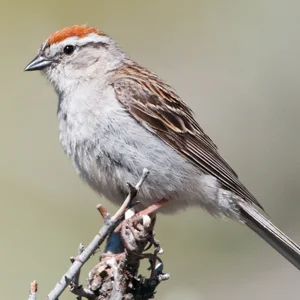 ChippyChipping SparrowCh. 4
Who is Chippy in the story?
Chippy is a Chipping Sparrow (Spizella passerina). Chipping Sparrows have a bright rusty cap in spring and summer, a black line through the eye, and a clean, unstreaked gray breast.
LearnWhat does the Chipping Sparrow sound like?
A long, dry trill of about 55 evenly spaced chips that sound almost like a machine.
ListenWhere does the Chipping Sparrow live?
Birds in the southern United States stay all year. Birds that nest farther north, all the way to the Arctic, fly south to Baja California, Mexico, and Florida.
ExploreWhich chapters feature Chippy?
- Chapter 4: Chippy, Sweetvoice, and Dotty
Also mentioned in chapters 18, 40.
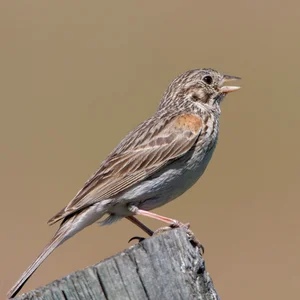 SweetvoiceVesper SparrowCh. 4
Who is Sweetvoice in the story?
Sweetvoice is a Vesper Sparrow (Pooecetes gramineus). Vesper Sparrows have white outer tail feathers that flash when they fly, a small chestnut patch on the shoulder, and a narrow white ring around the eye.
LearnWhat does the Vesper Sparrow sound like?
One to four slurred whistles, then a trill that rises and falls and ends in a buzzy jumble. It often sings early in the morning and after sunset.
ListenWhere does the Vesper Sparrow live?
Northern birds migrate at night in small groups and may spend the winter where southern birds nest.
ExploreWhich chapters feature Sweetvoice?
- Chapter 4: Chippy, Sweetvoice, and Dotty
Also mentioned in chapters 14, 31.
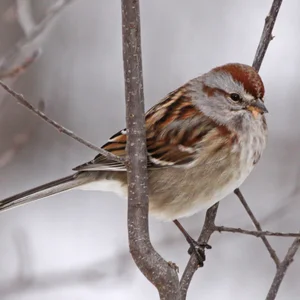 DottyAmerican Tree SparrowCh. 4, 40
Who is Dotty in the story?
Dotty is an American Tree Sparrow (Spizelloides arborea). American Tree Sparrows have a rusty cap and a rusty line behind the eye, a single dark dot in the middle of a plain gray breast, and a two-toned bill.
LearnWhat does the American Tree Sparrow sound like?
High, sweet whistled notes that fall a little in pitch, sung from late winter on. Feeding flocks call back and forth with a musical "teedle-eet."
ListenWhere does the American Tree Sparrow live?
Nests in far northern North America. For winter it migrates at night, often in flocks, to northern and central North America, as far south as northern Arizona, Texas, and Alabama.
ExploreWhich chapters feature Dotty?
- Chapter 4: Chippy, Sweetvoice, and Dotty
- Chapter 40: Some Merry Seed-Eaters
Also mentioned in chapters 39, 41, 44.
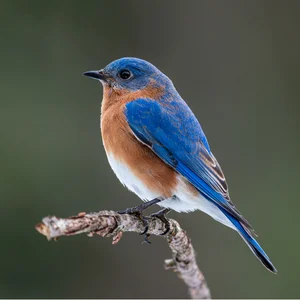 Winsome BluebirdEastern BluebirdCh. 5
Who is Winsome Bluebird in the story?
Winsome Bluebird is an Eastern Bluebird (Sialia sialis). The males have bright blue backs and a rusty-orange throat and breast, while the females are grayish above with blue in the wings and tail and a paler orange-brown breast. They perch upright on wires and posts, watching the ground for insects. They nest in tree holes and nest boxes.
LearnWhat does the Eastern Bluebird sound like?
A low, warbling song made of short phrases. Its most common call is a soft, low "tu-a-wee."
ListenWhere does the Eastern Bluebird live?
Northern birds spend the winter in the southeastern United States or Mexico, some flying as far as 2,000 miles. Birds in the southeast may stay on their territories all year.
ExploreWhich chapters feature Winsome Bluebird?
- Chapter 5: Peter Learns Something He Hadn't Guessed
Also mentioned in chapters 6, 8, 36, 37, 38, 45.
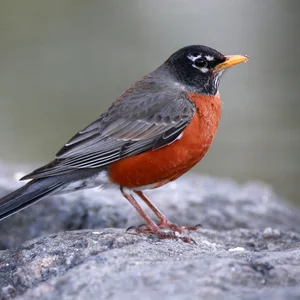 Welcome RobinAmerican RobinCh. 5, 17
Who is Welcome Robin in the story?
Welcome Robin is an American Robin (Turdus migratorius). American Robins have a warm orange breast, a gray-brown back with a darker head, and a habit of running across lawns, stopping, and tugging up earthworms.
LearnWhat does the American Robin sound like?
A string of clear, musical whistles, often described as "cheerily, cheer up, cheer up, cheerily, cheer up."
ListenWhere does the American Robin live?
Found all year almost anywhere south of Canada. Birds that nest from Canada to the north of Alaska move to the United States for winter.
ExploreWhich chapters feature Welcome Robin?
- Chapter 5: Peter Learns Something He Hadn't Guessed
- Chapter 17: More Robbers
Also mentioned in chapters 6, 7, 9, 12, 14, 16, 21, 27, 28, 30, 31, 32, 34, 36, 37, 44, 45.
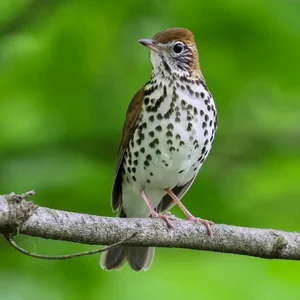 MelodyWood ThrushCh. 31
Who is Melody in the story?
Melody is a Wood Thrush (Hylocichla mustelina). Wood Thrushes are warm reddish-brown above and white with bold black spots below. They have a bold white ring around the eye. They hop through the leaves on the forest floor hunting for insects.
LearnWhat does the Wood Thrush sound like?
A clear, flute-like "ee-oh-lay," the middle part of a three-part song, ringing through the woods in spring and early summer.
ListenWhere does the Wood Thrush live?
A long-distance migrant. Twice a year it crosses the Gulf of Mexico in a single night's flight, and it spends fall and winter in Central America.
ExploreWhich chapters feature Melody?
- Chapter 31: Voices of the Dusk
Also mentioned in chapter 5.
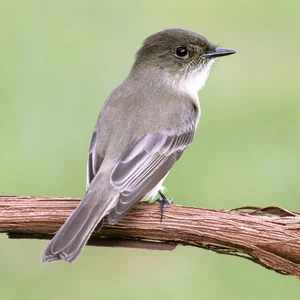 Dear MeEastern PhoebeCh. 6
Who is Dear Me in the story?
Dear Me is an Eastern Phoebe (Sayornis phoebe). Eastern Phoebes are brownish-gray above and off-white below. They wag their tails down and up while perched. They make short flights to catch insects, often returning to the very same perch.
LearnWhat does the Eastern Phoebe sound like?
A raspy, two-part "fee-bee" that gives the bird its name.
ListenWhere does the Eastern Phoebe live?
One of the first birds back in spring, sometimes as early as March. It winters from the central United States south to Mexico.
ExploreWhich chapters feature Dear Me?
- Chapter 6: An Old Friend In a New Home
Also mentioned in chapter 37.
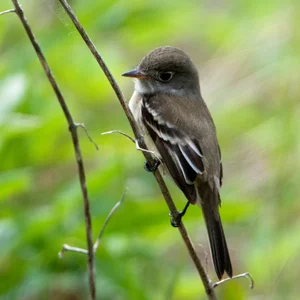 ChebecLeast FlycatcherCh. 6, 7, 17
Who is Chebec in the story?
Chebec is a Least Flycatcher (Empidonax minimus). Least Flycatchers are small grayish-olive flycatchers. They have a bold white ring around the eye and two white wingbars. They toss their head back each time they sing.
LearnWhat does the Least Flycatcher sound like?
A short, dry "che-bec," repeated as often as 60 times a minute. It is the song Burgess named him for.
ListenWhich chapters feature Chebec?
- Chapter 6: An Old Friend In a New Home
- Chapter 7: The Watchman of the Old Orchard
- Chapter 17: More Robbers
Also mentioned in chapters 8, 12.
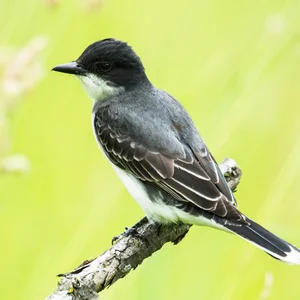 ScrapperEastern KingbirdCh. 7
Who is Scrapper in the story?
Scrapper is an Eastern Kingbird (Tyrannus tyrannus). Eastern Kingbirds are blackish above and white below. They have a black tail with a bright white tip. They perch out in the open on treetops, wires, and fences, flying out to snatch insects.
LearnWhat does the Eastern Kingbird sound like?
High, sputtering notes followed by a buzzy "zeer," plus short, sharp calls with an electric sound.
ListenWhere does the Eastern Kingbird live?
A long-distance migrant that travels by day in flocks of 10 to 60 birds.
ExploreWhich chapters feature Scrapper?
- Chapter 7: The Watchman of the Old Orchard
Also mentioned in chapters 8, 16, 17.
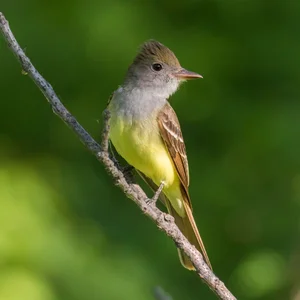 CrestyGreat Crested FlycatcherCh. 7, 8
Who is Cresty in the story?
Cresty is a Great Crested Flycatcher (Myiarchus crinitus). Great Crested Flycatchers have a gray throat and breast and a bright lemon-yellow belly. They show rusty-orange flashes in the wings and tail. They sit high in the treetops, darting out after large insects.
LearnWhat does the Great Crested Flycatcher sound like?
A loud, rising "whee-eep" whistle, a very common sound in summer.
ListenWhere does the Great Crested Flycatcher live?
Winters in central and southern Florida, southern Mexico, Central America, and northwestern South America.
ExploreWhich chapters feature Cresty?
- Chapter 7: The Watchman of the Old Orchard
- Chapter 8: Old Clothes and Old Houses
Also mentioned in chapter 29.
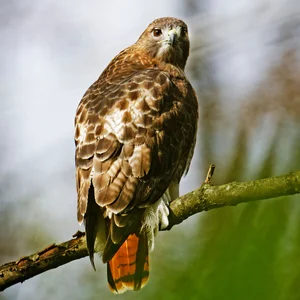 RedtailRed-tailed HawkCh. 7, 18
Who is Redtail in the story?
Redtail is a Red-tailed Hawk (Buteo jamaicensis). Red-tailed Hawks are large hawks with broad, rounded wings and a short, wide tail. Adults have a cinnamon-red upper tail (young birds have brown, banded tails). They soar in wide circles high over fields.
LearnWhat does the Red-tailed Hawk sound like?
A hoarse, screaming "kee-eeeee-arr," usually given while soaring.
ListenWhere does the Red-tailed Hawk live?
Most birds from Alaska, Canada, and the northern Great Plains fly south for a few months in winter. Birds across the rest of the continent usually stay put.
ExploreWhich chapters feature Redtail?
- Chapter 7: The Watchman of the Old Orchard
- Chapter 18: Some Homes in the Green Forest
Also mentioned in chapters 19, 20, 45.
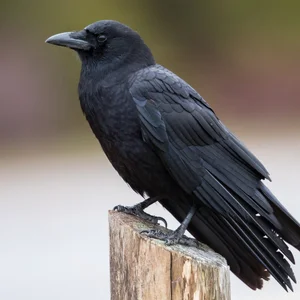 BlackyAmerican CrowCh. 17, 18, 19
Who is Blacky in the story?
Blacky is an American Crow (Corvus brachyrhynchos). American Crows are all black, even their legs and bill. They are clever problem-solvers. They often chase away larger birds such as hawks and owls.
LearnWhat does the American Crow sound like?
A series of loud "caw" calls. Crows have more than 20 different calls.
ListenWhere does the American Crow live?
Stays in the same area all year or moves a short distance. Most crows that nest in Canada spend the winter in the United States.
ExploreWhich chapters feature Blacky?
- Chapter 17: More Robbers
- Chapter 18: Some Homes in the Green Forest
- Chapter 19: A Maker of Thunder and a Friend in Black
Also mentioned in chapters 7, 11, 45.
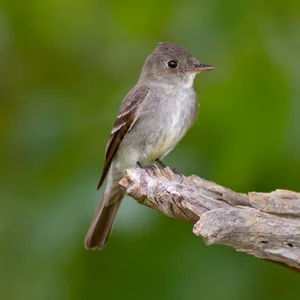 PeweeEastern Wood-PeweeCh. 8
Who is Pewee in the story?
Pewee is an Eastern Wood-Pewee (Contopus virens). Eastern Wood-Pewees are olive-gray with dark wings and thin white wingbars. They have a peaked crown that gives the head a triangular shape. They perch high in trees, flying out after insects and returning to the same perch.
LearnWhat does the Eastern Wood-Pewee sound like?
A slurred, whistled "pee-a-wee" whose last note trails off, a classic sound of eastern forests in summer.
ListenWhere does the Eastern Wood-Pewee live?
A long-distance migrant, and one of the last birds to return in spring from its winter home in South America.
ExploreWhich chapters feature Pewee?
- Chapter 8: Old Clothes and Old Houses
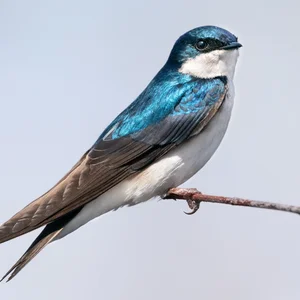 SkimmerTree SwallowCh. 15, 16, 17, 22
Who is Skimmer in the story?
Skimmer is a Tree Swallow (Tachycineta bicolor). Tree Swallows are blue-green above and white below (females are duller and browner). They have long, pointed wings and a short tail. They catch insects in their mouths during acrobatic flight.
LearnWhat does the Tree Swallow sound like?
High, liquid chirps, whines, and gurgles, mixed together in many patterns.
ListenWhere does the Tree Swallow live?
It starts flying south as early as July and August, and eastern birds winter in Florida and Central America.
ExploreWhich chapters feature Skimmer?
- Chapter 15: A Swallow and One Who Isn't
- Chapter 16: A Robber in the Old Orchard
- Chapter 17: More Robbers
- Chapter 22: Some Feathered Diggers
Also mentioned in chapters 8, 35.
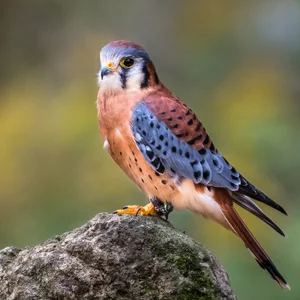 KillyAmerican KestrelCh. 22
Who is Killy in the story?
Killy is an American Kestrel (Falco sparverius). American Kestrels are small falcons about the size of a Mourning Dove. They are rusty brown on the back with black spots (the males have slate-blue wings). They have two black stripes running down each side of a pale face.
LearnWhat does the American Kestrel sound like?
A loud, excited "klee! klee! klee!" or "killy! killy! killy!" This call gave Killy his name.
ListenWhere does the American Kestrel live?
Northern birds are more likely to migrate, and the southernmost birds stay all year. Most spend the winter in the southern United States.
ExploreWhich chapters feature Killy?
- Chapter 22: Some Feathered Diggers
Also mentioned in chapters 8, 35.
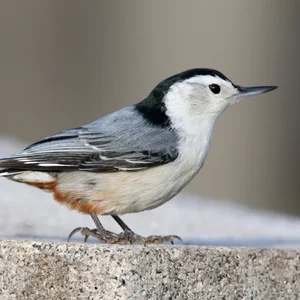 Yank-YankWhite-breasted NuthatchCh. 39
Who is Yank-Yank in the story?
Yank-Yank is a White-breasted Nuthatch (Sitta carolinensis). White-breasted Nuthatches are gray-blue on the back with a frosty white face and belly. They wear a black or gray cap that looks like a hood. They creep along tree trunks, often turning sideways and upside down.
LearnWhat does the White-breasted Nuthatch sound like?
A loud, nasal "yank," often repeated a few times, which is where Burgess got his name. In spring males also sing a fast, nasal "wha-wha-wha."
ListenWhere does the White-breasted Nuthatch live?
Stays in the same area all year. It does not migrate.
ExploreWhich chapters feature Yank-Yank?
- Chapter 39: Peter Discovers Two Old Friends
Also mentioned in chapters 8, 37.
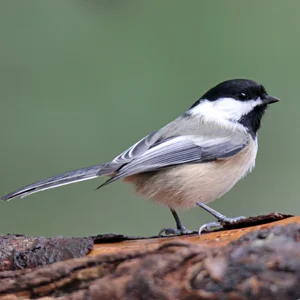 Tommy TitBlack-capped ChickadeeCh. 37
Who is Tommy Tit in the story?
Tommy Tit is a Black-capped Chickadee (Poecile atricapillus). Black-capped Chickadees are tiny, round birds with a black cap and bib and white cheeks. They have a soft gray back. They are acrobatic and travel in busy little flocks.
LearnWhat does the Black-capped Chickadee sound like?
A clear, whistled "fee-bee" or "hey, sweetie." Its call is the familiar "chickadee-dee-dee," with more "dee" notes when it is alarmed.
ListenWhere does the Black-capped Chickadee live?
Adults stay in the same area all year and do not migrate.
ExploreWhich chapters feature Tommy Tit?
- Chapter 37: Farewells and Welcomes
Also mentioned in chapters 1, 8, 25, 39.
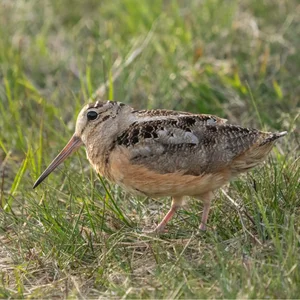 LongbillAmerican WoodcockCh. 9
Who is Longbill in the story?
Longbill is an American Woodcock (Scolopax minor). American Woodcocks are plump, short-legged birds with a very long, straight bill. They are camouflaged in light brown, black, buff, and gray. They rock back and forth as they walk, probing the ground for earthworms.
LearnWhat does the American Woodcock sound like?
A buzzy, nasal "peent" from the ground. On spring evenings the male flies high and zigzags back down, chirping and twittering.
ListenWhere does the American Woodcock live?
Most birds move south for winter, many to the Gulf states, but stay in North America. Some southern birds stay in the same place all year.
ExploreWhich chapters feature Longbill?
- Chapter 9: Longbill and Teeter
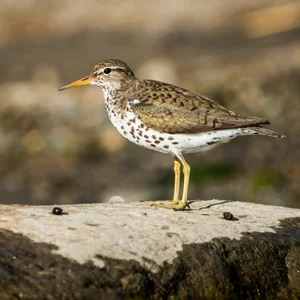 TeeterSpotted SandpiperCh. 9
Who is Teeter in the story?
Teeter is a Spotted Sandpiper (Actitis macularius). Spotted Sandpipers have bold dark spots on a white breast in summer. They walk with a teeter, bobbing their tails up and down all the time. They fly with quick, stiff wingbeats and short glides.
LearnWhere does the Spotted Sandpiper live?
ExploreWhich chapters feature Teeter?
- Chapter 9: Longbill and Teeter
Also mentioned in chapter 10.
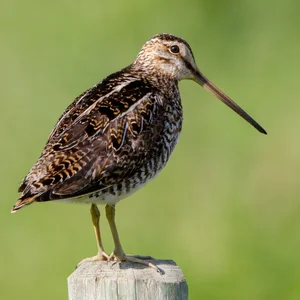 Jack SnipeWilson's SnipeCh. 9
Who is Jack Snipe in the story?
Jack Snipe is a Wilson's Snipe (Gallinago delicata). Wilson's Snipes are pudgy birds with short legs and a very long, straight bill. They are patterned in buff and brown stripes with three long buffy streaks down the back. They probe the mud for earthworms, moving the head up and down like a slow sewing machine.
LearnWhat does the Wilson's Snipe sound like?
Sharp "jick" calls. When the male dives in flight, air rushing over his tail feathers makes a haunting "hu-hu-hu" sound called winnowing.
ListenWhere does the Wilson's Snipe live?
Spends summer across northern North America and winters from the southern United States through Central America to Venezuela. Some in the Northwest stay all year.
ExploreWhich chapters feature Jack Snipe?
- Chapter 9: Longbill and Teeter
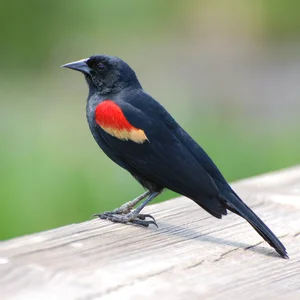 RedwingRed-winged BlackbirdCh. 10
Who is Redwing in the story?
Redwing is a Red-winged Blackbird (Agelaius phoeniceus). The males are glossy black with red-and-yellow shoulder patches. The females are streaked dark brown. The males sit on high perches and sing all day long.
LearnWhat does the Red-winged Blackbird sound like?
A gurgling "conk-la-ree!" that starts with a sharp note and ends in a musical trill, a classic sound of wetlands.
ListenWhere does the Red-winged Blackbird live?
Birds from northern North America winter in the southern United States, while southern and some western birds don't migrate at all.
ExploreWhich chapters feature Redwing?
- Chapter 10: Redwing and Yellow Wing
Also mentioned in chapters 9, 12, 13, 28.
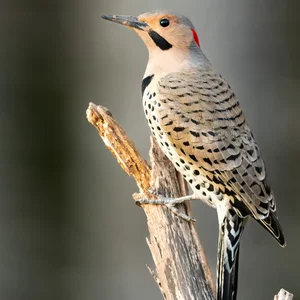 Yellow WingNorthern FlickerCh. 10, 11
Who is Yellow Wing in the story?
Yellow Wing is a Northern Flicker (Colaptes auratus). Northern Flickers are brownish woodpeckers covered in black spots, bars, and crescents. They flash bright yellow under the wings and tail in the East and a white rump patch in flight. They spend lots of time on the ground.
LearnWhat does the Northern Flicker sound like?
A loud, rolling rattle that rises and falls for 7 or 8 seconds. Its call is a loud "kyeer."
ListenWhere does the Northern Flicker live?
Flickers leave the northern parts of their range to winter in the southern United States, and birds farther south stay put.
ExploreWhich chapters feature Yellow Wing?
- Chapter 10: Redwing and Yellow Wing
- Chapter 11: Drummers and Carpenters
Also mentioned in chapters 8, 21, 22, 33, 36.
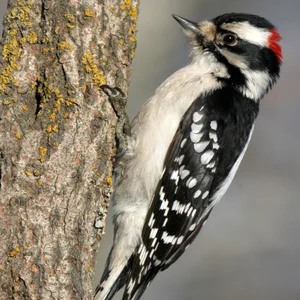 DownyDowny WoodpeckerCh. 11
Who is Downy in the story?
Downy is a Downy Woodpecker (Dryobates pubescens). Downy Woodpeckers are small, checkered black-and-white woodpeckers with a broad white stripe down the back. They have a small bill for their size. The males have a little red patch on the back of the head.
LearnWhat does the Downy Woodpecker sound like?
A shrill, whinnying string of high notes that drops in pitch, plus drumming on trees in spring.
ListenWhich chapters feature Downy?
- Chapter 11: Drummers and Carpenters
Also mentioned in chapters 8, 15, 22, 37, 39.
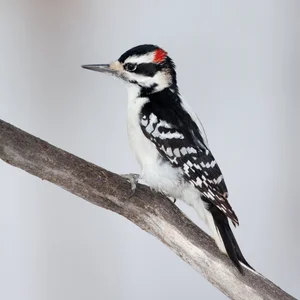 HairyHairy WoodpeckerCh. 11
Who is Hairy in the story?
Hairy is a Hairy Woodpecker (Leuconotopicus villosus). Hairy Woodpeckers are black-and-white woodpeckers with a large white patch down the back. They have a long, chisel-like bill nearly as long as the head. The males have a flash of red on the back of the head.
LearnWhat does the Hairy Woodpecker sound like?
A sharp "peek," like the Downy Woodpecker's call but lower and stronger.
ListenWhere does the Hairy Woodpecker live?
Stays in the same area all year. Some northern and mountain birds wander a little in winter.
ExploreWhich chapters feature Hairy?
- Chapter 11: Drummers and Carpenters
Also mentioned in chapters 37, 39.
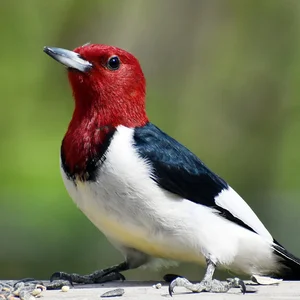 RedheadRed-headed WoodpeckerCh. 11
Who is Redhead in the story?
Redhead is a Red-headed Woodpecker (Melanerpes erythrocephalus). Adult Red-headed Woodpeckers have a bright red head and white underparts. They have a black back with big white wing patches. Besides hammering on wood, they catch insects in the air and eat lots of fruit and seeds.
LearnWhat does the Red-headed Woodpecker sound like?
A shrill, hoarse "tchur," along with all kinds of chirps and cackles.
ListenWhere does the Red-headed Woodpecker live?
Many leave the northern and western parts of the range for winter, depending on how many acorns and beechnuts there are.
ExploreWhich chapters feature Redhead?
- Chapter 11: Drummers and Carpenters
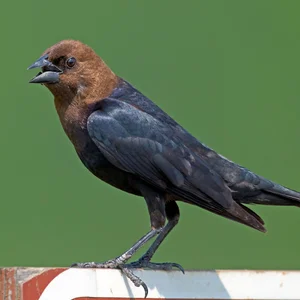 Sally SlyBrown-headed CowbirdCh. 12
Who is Sally Sly in the story?
Sally Sly is a Brown-headed Cowbird (Molothrus ater). Brown-headed Cowbirds have a short, thick, almost finch-like bill. The males are glossy black with a brown head while the females are plain brown. The females lay their eggs in other birds' nests.
LearnWhat does the Brown-headed Cowbird sound like?
Low, liquid gurgling notes followed by thin, sliding whistles.
ListenWhere does the Brown-headed Cowbird live?
A short-distance migrant, moving up to about 530 miles between its summer and winter homes.
ExploreWhich chapters feature Sally Sly?
- Chapter 12: Some Unlikely Relatives
Also mentioned in chapters 13, 17, 23, 24, 29, 34.
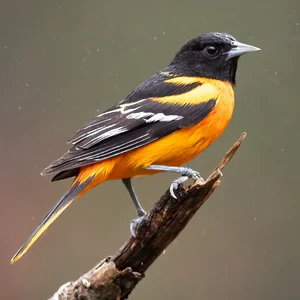 GoldyBaltimore OrioleCh. 12, 13
Who is Goldy in the story?
Goldy is a Baltimore Oriole (Icterus galbula). The males are flame-orange and black with a solid black head. The females are yellow-orange on the breast with two bold white wingbars. They feed high in the trees, searching leaves and twigs for insects, flowers, and fruit.
LearnWhat does the Baltimore Oriole sound like?
Pure, liquid, flute-like whistles in short paired notes, a sure sign of spring in the East.
ListenWhere does the Baltimore Oriole live?
Arrives in eastern and central North America in April and May to nest from Louisiana to central Canada. As early as July it starts leaving for its winter home in Florida, the Caribbean, Central America, and the northern tip of South America.
ExploreWhich chapters feature Goldy?
- Chapter 12: Some Unlikely Relatives
- Chapter 13: More of the Blackbird Family
Also mentioned in chapters 24, 29, 30.
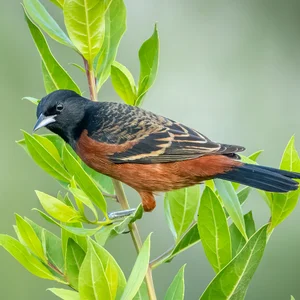 WeaverOrchard OrioleCh. 13
Who is Weaver in the story?
Weaver is an Orchard Oriole (Icterus spurius). The males are black above and rich reddish-chestnut below with a black head. The females are greenish-yellow with two white wingbars. They hunt insects in the treetops and sip nectar from flowers.
LearnWhat does the Orchard Oriole sound like?
Loud, clear, sing-song whistles mixed with harsh chattering notes, a little like a robin's song.
ListenWhere does the Orchard Oriole live?
Arrives in eastern North America by late May and winters from Mexico to northern South America.
ExploreWhich chapters feature Weaver?
- Chapter 13: More of the Blackbird Family
Also mentioned in chapter 17.
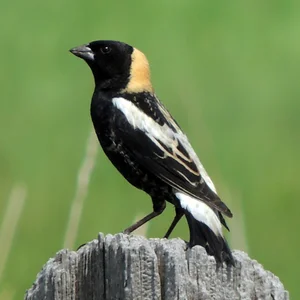 Bubbling BobBobolinkCh. 13
Who is Bubbling Bob in the story?
Bubbling Bob is a Bobolink (Dolichonyx oryzivorus). In spring the males are mostly black with a white back and a buffy patch on the back of the neck. The females are warm buffy brown with dark streaks. The males flutter low over the grass while they sing.
LearnWhat does the Bobolink sound like?
A bubbly, metallic, rambling song that mixes sharp high notes with buzzy low ones.
ListenWhere does the Bobolink live?
Makes one of the longest migrations of any songbird in the Americas, about 12,500 miles round trip every year.
ExploreWhich chapters feature Bubbling Bob?
- Chapter 13: More of the Blackbird Family
Also mentioned in chapter 12.
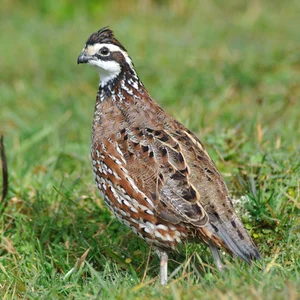 Bob WhiteNorthern BobwhiteCh. 14
Who is Bob White in the story?
Bob White is a Northern Bobwhite (Colinus virginianus). Northern Bobwhites are small, round quail with short tails. They are patterned in brown, rusty, buff, and black (the males have a bold black-and-white face). They travel in little groups called coveys, running from one patch of cover to the next.
LearnWhat does the Northern Bobwhite sound like?
A loud, whistled "bob-WHITE!" that sweeps upward at the end.
ListenWhich chapters feature Bob White?
- Chapter 14: Bob White and Carol the Meadow Lark
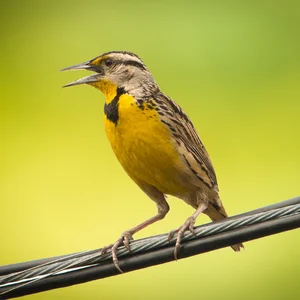 CarolEastern MeadowlarkCh. 14
Who is Carol in the story?
Carol is an Eastern Meadowlark (Sturnella magna). Eastern Meadowlarks have bright yellow underparts with a bold black V across the chest. They flash white outer tail feathers when they fly. The males sing from fenceposts and other open perches.
LearnWhat does the Eastern Meadowlark sound like?
Three to five pure, sweet, flute-like whistles slurred together and dropping in pitch.
ListenWhere does the Eastern Meadowlark live?
Some stay all year, while some northern birds fly more than 600 miles to the southern United States for winter.
ExploreWhich chapters feature Carol?
- Chapter 14: Bob White and Carol the Meadow Lark
Also mentioned in chapter 12.
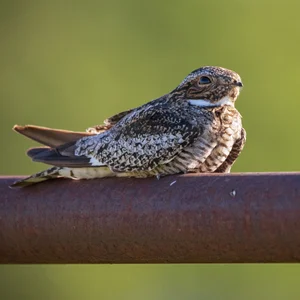 BoomerCommon NighthawkCh. 23
Who is Boomer in the story?
Boomer is a Common Nighthawk (Chordeiles minor). Common Nighthawks have very long, pointed wings with a bright white bar about two-thirds of the way out each wing. They are camouflaged in gray, white, buff, and black. During the day they rest motionless on a branch, fencepost, or the ground, where they are very hard to see. They fly in looping patterns in the mornings and evenings.
LearnWhat does the Common Nighthawk sound like?
A nasal "peent" in flight. In spring the male dives through the air and makes a loud booming sound with his wings, the boom Burgess named him for.
ListenWhere does the Common Nighthawk live?
Makes one of the longest migrations of any North American bird. It flies in large flocks at all hours, mostly over land through Mexico and Central America.
ExploreWhich chapters feature Boomer?
- Chapter 23: Some Big Mouths
Also mentioned in chapters 15, 31.
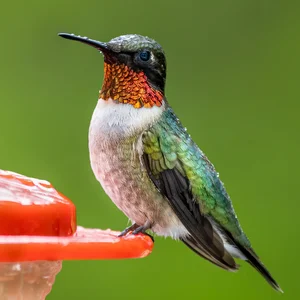 HummerRuby-throated HummingbirdCh. 35
Who is Hummer in the story?
Hummer is a Ruby-throated Hummingbird (Archilochus colubris). Ruby-throated Hummingbirds are bright emerald green on the back with grayish-white underparts. The males have a brilliant red throat that looks dark in poor light. They can stop in midair, hover, and even fly backward.
LearnWhat does the Ruby-throated Hummingbird sound like?
A quick "chee-dit" call, and the soft humming of its wings that gives the hummingbird its name.
ListenWhere does the Ruby-throated Hummingbird live?
Winters in Central America. Some fly straight across the Gulf of Mexico, while others follow the coast around it.
ExploreWhich chapters feature Hummer?
- Chapter 35: A Butcher and a Hummer
Also mentioned in chapters 15, 16.
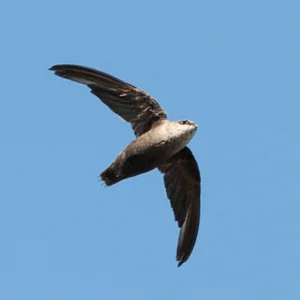 SootyChimney SwiftCh. 15
Who is Sooty in the story?
Sooty is a Chimney Swift (Chaetura pelagica). Chimney Swifts are small birds with very long, narrow, curved wings and a short tail. They are dark gray-brown all over. They fly fast with stiff wingbeats, twisting and banking from side to side.
LearnWhat does the Chimney Swift sound like?
A fast, high, twittering chatter, usually given while flying.
ListenWhere does the Chimney Swift live?
Migrates to South America each winter, flying across the Gulf of Mexico or along the Texas coast.
ExploreWhich chapters feature Sooty?
- Chapter 15: A Swallow and One Who Isn't
Also mentioned in chapters 16, 23.
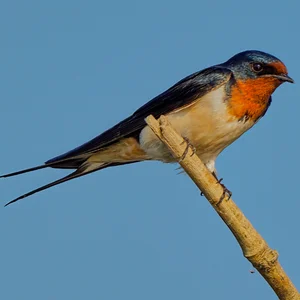 ForktailBarn SwallowCh. 16
Who is Forktail in the story?
Forktail is a Barn Swallow (Hirundo rustica). Barn Swallows have a steely blue back and rusty-tan underparts with a cinnamon throat. Their tail has a deep fork made by long outer feathers. They catch insects in flight, swooping just above the ground or water.
LearnWhat does the Barn Swallow sound like?
A long, twittering warble that ends in quick, mechanical-sounding whirrs.
ListenWhere does the Barn Swallow live?
Flies from its North American nesting grounds to winter in Central and South America.
ExploreWhich chapters feature Forktail?
- Chapter 16: A Robber in the Old Orchard
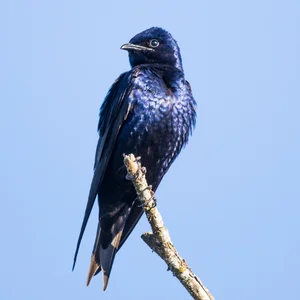 TwitterPurple MartinCh. 16
Who is Twitter in the story?
Twitter is a Purple Martin (Progne subis). Purple Martins are the largest swallows in North America, big and broad-chested. The males are glossy dark blue-purple while the females are duller with gray on the head and chest. They catch large insects such as dragonflies in midair.
LearnWhere does the Purple Martin live?
In late summer, huge flocks of several hundred thousand birds gather along the Gulf Coast. Most eastern birds probably fly across the Gulf of Mexico.
ExploreWhich chapters feature Twitter?
- Chapter 16: A Robber in the Old Orchard
Also mentioned in chapter 22.
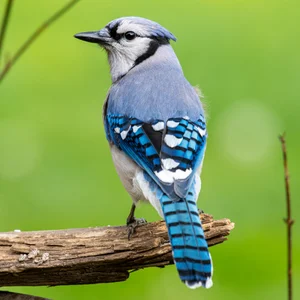 Sammy JayBlue JayCh. 17
Who is Sammy Jay in the story?
Sammy Jay is a Blue Jay (Cyanocitta cristata). Blue Jays are large crested songbirds with a broad, rounded tail. They are blue, black, and white above and white or light gray below. They carry food in a pouch in the throat to hide it away for later.
LearnWhat does the Blue Jay sound like?
A loud "jeer," plus clear whistles and gurgles. Blue Jays often imitate the calls of hawks.
ListenWhich chapters feature Sammy Jay?
- Chapter 17: More Robbers
Also mentioned in chapters 1, 11, 18, 19, 22, 37, 39.
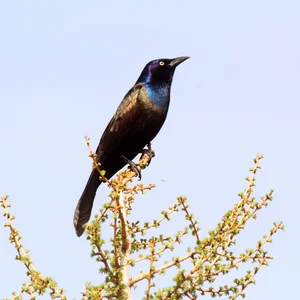 CreakerCommon GrackleCh. 19
Who is Creaker in the story?
Creaker is a Common Grackle (Quiscalus quiscula). Common Grackles are large, lanky blackbirds with long legs and long tails. Up close they have a glossy purple head and a bronze-shining body. They have a bright golden eye.
LearnWhat does the Common Grackle sound like?
A short, creaky "readle-eak" with high, clear whistles, plus squeaks and croaks.
ListenWhere does the Common Grackle live?
Birds from the far northern United States, Canada, and the Great Plains winter in the central and southern United States.
ExploreWhich chapters feature Creaker?
- Chapter 19: A Maker of Thunder and a Friend in Black
Also mentioned in chapters 12, 17, 36.
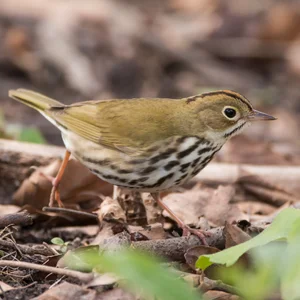 TeacherOvenbirdCh. 18
Who is Teacher in the story?
Teacher is an Ovenbird (Seiurus aurocapilla). Ovenbirds are chunky warblers, olive-green above and spotted below. They have bold black-and-orange stripes on the crown and a white ring around the eye. They walk along the forest floor with a jerky, wandering stroll.
LearnWhat does the Ovenbird sound like?
A ringing "tea-cher, tea-cher, TEA-cher" that grows louder as it goes, which is where Burgess got his name.
ListenWhere does the Ovenbird live?
Eastern birds winter in Florida and the Caribbean, and western birds in Mexico and Central America.
ExploreWhich chapters feature Teacher?
- Chapter 18: Some Homes in the Green Forest
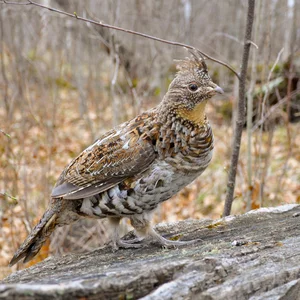 StrutterRuffed GrouseCh. 19, 43
Who is Strutter in the story?
Strutter is a Ruffed Grouse (Bonasa umbellus). Ruffed Grouse have a short crest and a long, fan-shaped tail with a wide black band near the tip. They are patterned with dark bars and spots on reddish-brown or gray. The males drum by beating their wings while standing on a log.
LearnWhat does the Ruffed Grouse sound like?
Mostly quiet. In spring the male makes a deep, thumping drumming sound by beating his wings while standing on a log.
ListenWhere does the Ruffed Grouse live?
Stays in the same area all year, moving only short distances to find food and shelter.
ExploreWhich chapters feature Strutter?
- Chapter 19: A Maker of Thunder and a Friend in Black
- Chapter 43: Strange Feet and a Stranger Bill
Also mentioned in chapter 45.
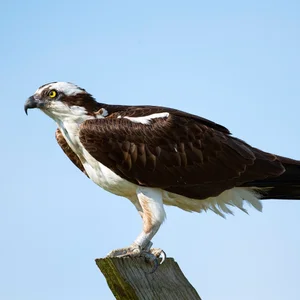 PlungerOspreyCh. 20
Who is Plunger in the story?
Plunger is an Osprey (Pandion haliaetus). Ospreys are very large hawks, brown above and white below, with a broad brown stripe through the eye. Their long, narrow wings bend into an M-shape in flight. They hover over water and then dive feet first to grab a fish.
LearnWhat does the Osprey sound like?
High, whistling chirps, often given in a series that grows more excited.
ListenWhere does the Osprey live?
Most North American Ospreys migrate to Central and South America for winter.
ExploreWhich chapters feature Plunger?
- Chapter 20: A Fisherman Robbed
Also mentioned in chapters 21, 22.
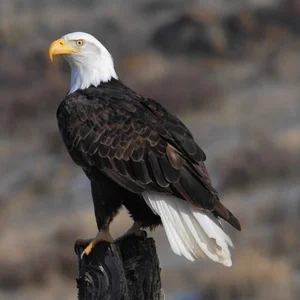 King EagleBald EagleCh. 20
Who is King Eagle in the story?
King Eagle is a Bald Eagle (Haliaeetus leucocephalus). Adult Bald Eagles have a white head and tail with a dark brown body (young birds take about five years to get them). They have a bright yellow bill and legs. They eat mainly fish, often stealing meals from other birds.
LearnWhat does the Bald Eagle sound like?
Surprisingly weak, high-pitched whistling or piping notes for such a powerful bird.
ListenWhere does the Bald Eagle live?
Northern adults move when lakes and rivers freeze, usually toward the coast or other open water, and return in January to March.
ExploreWhich chapters feature King Eagle?
- Chapter 20: A Fisherman Robbed
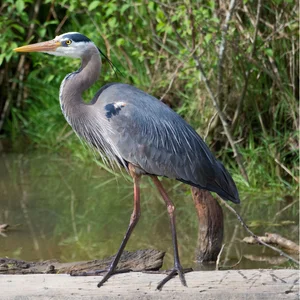 LonglegsGreat Blue HeronCh. 21, 22
Who is Longlegs in the story?
Longlegs is a Great Blue Heron (Ardea herodias). Great Blue Herons are the largest herons in North America, with long legs and a long, curving neck. They look blue-gray with a wide black stripe over the eye. They wade slowly or stand still as a statue before catching fish with their strong bill.
LearnWhat does the Great Blue Heron sound like?
Most vocal where they nest. At the nest they greet each other with squawking "roh-roh-roh" calls.
ListenWhere does the Great Blue Heron live?
Leaves the northern edge of its range in winter, some flying as far south as the Caribbean.
ExploreWhich chapters feature Longlegs?
- Chapter 21: A Fishing Party
- Chapter 22: Some Feathered Diggers
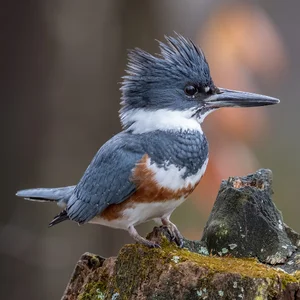 RattlesBelted KingfisherCh. 21, 22
Who is Rattles in the story?
Rattles is a Belted Kingfisher (Megaceryle alcyon). Belted Kingfishers are stocky, big-headed birds with a shaggy crest and a thick, pointed bill. They are blue-gray above and white below with a blue band across the breast (females also have a rusty band). They dive from a perch or from midair to catch fish.
LearnWhat does the Belted Kingfisher sound like?
A loud, mechanical rattle given at the slightest disturbance, which is where Burgess got his name.
ListenWhere does the Belted Kingfisher live?
Where water stays open in winter, kingfishers may stay all year. Birds from as far north as Alaska and Canada migrate south, wintering as far as Mexico, Central America, and northern South America.
ExploreWhich chapters feature Rattles?
- Chapter 21: A Fishing Party
- Chapter 22: Some Feathered Diggers
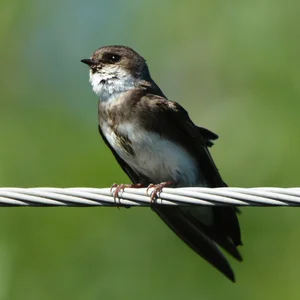 BankerBank SwallowCh. 22
Who is Banker in the story?
Banker is a Bank Swallow (Riparia riparia). Bank Swallows are small, chunky swallows, warm brown above and white below with a brown band across the chest. They fly in fast, fluttery bursts, changing direction often to chase insects.
LearnWhat does the Bank Swallow sound like?
A twittery, bubbling chatter, and a harsh "tschr tschr" in flight.
ListenWhere does the Bank Swallow live?
Some winter in the southern United States, and others go all the way to South America.
ExploreWhich chapters feature Banker?
- Chapter 22: Some Feathered Diggers
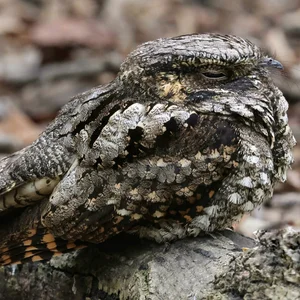 Whip-poor-willEastern Whip-poor-willCh. 23
Who is Whip-poor-will in the story?
Whip-poor-will is an Eastern Whip-poor-will (Antrostomus vociferus). Eastern Whip-poor-wills are mottled gray and brown so they disappear against dead leaves and bark. They have a blackish throat with a neat white bib below it. They come out only at night to catch moths and other flying insects.
LearnWhat does the Eastern Whip-poor-will sound like?
A loud, chanted "whip-poor-will," repeated for hours on warm summer nights.
ListenWhich chapters feature Whip-poor-will?
- Chapter 23: Some Big Mouths
Also mentioned in chapter 31.
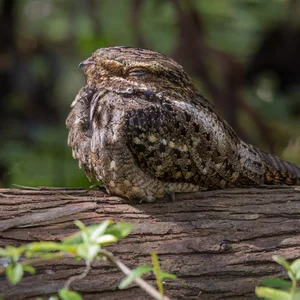 Chuck-will's-widowChuck-will's-widowCh. 23
Who is Chuck-will's-widow in the story?
Chuck-will's-widow (Antrostomus carolinensis) goes by his species name in the story. Chuck-will's-widows are surprisingly large, with a huge flat head and long wings. They are patterned in warm browns that make them extremely hard to spot. At night they often sit on roads, where their eyes shine bright orange in headlights.
LearnWhat does the Chuck-will's-widow sound like?
A loud "chuck-will's-WIDow," called at dusk and through the night. The first "chuck" is so soft it can't be heard from far away.
ListenWhere does the Chuck-will's-widow live?
ExploreWhich chapters feature Chuck-will's-widow?
- Chapter 23: Some Big Mouths
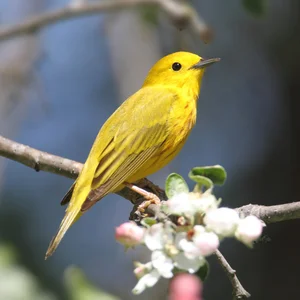 SunshineNorthern Yellow WarblerCh. 24
Who is Sunshine in the story?
Sunshine is a Northern Yellow Warbler (Setophaga aestiva). Northern Yellow Warblers are yellow all over. The males are a bright egg-yolk yellow with reddish streaks on the breast. They have a plain face that makes the big black eye stand out. They hop restlessly along twigs picking off caterpillars and other insects.
LearnWhat does the Northern Yellow Warbler sound like?
Bright, sweet whistled notes that speed up, often remembered as "sweet, sweet, sweet, I'm so sweet."
ListenWhere does the Northern Yellow Warbler live?
Spends summer across central and northern North America, and winters in Central America and northern South America.
ExploreWhich chapters feature Sunshine?
- Chapter 24: The Warblers Arrive
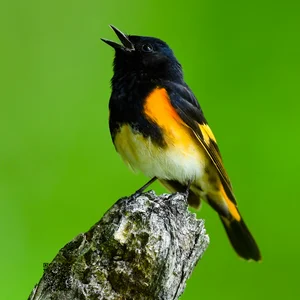 Zee ZeeAmerican RedstartCh. 24
Who is Zee Zee in the story?
Zee Zee is an American Redstart (Setophaga ruticilla). The adult males are mostly black with bright orange patches on the sides, wings, and tail. The females are gray and olive with yellow patches instead. They keep fanning their tails to flash the color, startling insects into flight and then catching them in the air.
LearnWhat does the American Redstart sound like?
A string of thin, high notes that often ends with a sharp, accented note, like a little sneeze.
ListenWhere does the American Redstart live?
Eastern birds winter in Florida, the Caribbean, and northern South America.
ExploreWhich chapters feature Zee Zee?
- Chapter 24: The Warblers Arrive
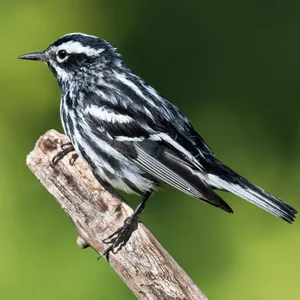 CreeperBlack-and-white WarblerCh. 25
Who is Creeper in the story?
Creeper is a Black-and-white Warbler (Mniotilta varia). Black-and-white Warblers are boldly striped in black and white. They have two wide white wingbars on black wings. They creep up, down, and around tree trunks and branches like a nuthatch, hunting insects hidden in the bark.
LearnWhat does the Black-and-white Warbler sound like?
A thin, high, repeated "weesy, weesy, weesy."
ListenWhere does the Black-and-white Warbler live?
One of the first warblers back in spring. Some winter as far north as Florida, and others as far south as northern South America.
ExploreWhich chapters feature Creeper?
- Chapter 25: Three Cousins Quite Unlike
 MummerCommon YellowthroatCh. 25
Who is Mummer in the story?
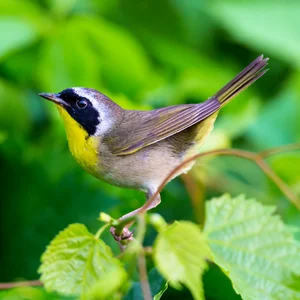
Mummer is a Common Yellowthroat (Geothlypis trichas). The males are bright yellow below with a sharp black mask. The females are plain olive-brown with no mask. They creep low through thick brush and fields hunting small insects and spiders.
LearnWhat does the Common Yellowthroat sound like?
A rolling "witchety-witchety-witchety," sung as often as 125 times an hour in summer.
ListenWhere does the Common Yellowthroat live?
Most migrate, some all the way from northern Canada to Central America, while some in the southern United States and Mexico stay all year.
ExploreWhich chapters feature Mummer?
- Chapter 25: Three Cousins Quite Unlike
 Chut-ChutYellow-breasted ChatCh. 25
Who is Chut-Chut in the story?
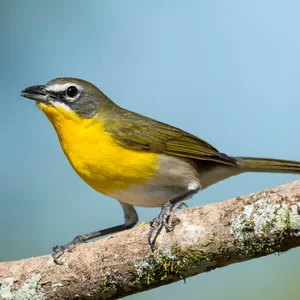
Chut-Chut is a Yellow-breasted Chat (Icteria virens). Yellow-breasted Chats are bigger and bulkier than warblers, with a long tail and a thick bill. They are olive-green above with a bright yellow breast and white "spectacles" around the eyes. They hide in low, thick brush.
LearnWhat does the Yellow-breasted Chat sound like?
A wild jumble of whistles, cackles, mews, chuckles, rattles, squawks, gurgles, and pops.
ListenWhere does the Yellow-breasted Chat live?
A long-distance migrant. Some travel over land, while others fly across the Gulf of Mexico at night.
ExploreWhich chapters feature Chut-Chut?
- Chapter 25: Three Cousins Quite Unlike
 Seep-SeepBrown CreeperCh. 39
Who is Seep-Seep in the story?
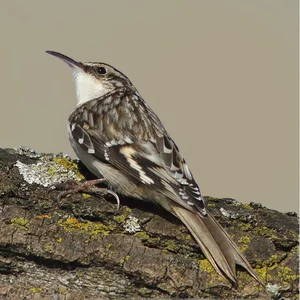
Seep-Seep is a Brown Creeper (Certhia americana). Brown Creepers are tiny birds with a long, stiff tail and a thin, curved bill. They are streaked brown and buff so they blend into tree bark. They hitch upward in a spiral around a trunk, then fly down to the bottom of the next tree and start again.
LearnWhat does the Brown Creeper sound like?
A jumble of high, thin notes, sometimes remembered as "trees, beautiful trees." Its call is a high, thin, wavering note.
ListenWhere does the Brown Creeper live?
Stays all year across most of its range. Birds from the far north and the mountains move south or downhill for winter.
ExploreWhich chapters feature Seep-Seep?
- Chapter 39: Peter Discovers Two Old Friends
Also mentioned in chapters 25, 37.
 FidgetYellow-rumped WarblerCh. 26
Who is Fidget in the story?
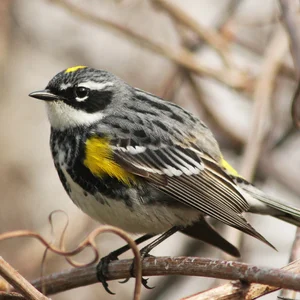
Fidget is a Yellow-rumped Warbler (Setophaga coronata). In summer Yellow-rumped Warblers are gray with white in the wings and yellow on the face, sides, and rump. In winter they turn paler brown but keep their bright yellow rump. They fly out to catch insects in midair and eat lots of berries in winter.
LearnWhat does the Yellow-rumped Warbler sound like?
A slow, soft, sweetly whistled warble or trill that speeds up at the end.
ListenWhere does the Yellow-rumped Warbler live?
Some western birds move to the Pacific Coast for winter, while others go to Mexico and Central America.
ExploreWhich chapters feature Fidget?
- Chapter 26: Peter Gets a Lame Neck
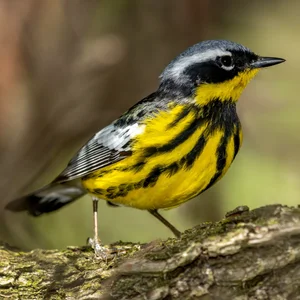 WeechiMagnolia WarblerCh. 26
Who is Weechi in the story?
Weechi is a Magnolia Warbler (Setophaga magnolia). The males have a black mask and black streaks running down from a necklace onto a yellow breast. They are gray and black above with a big white wing patch. They often flash their tails to show white spots.
LearnWhat does the Magnolia Warbler sound like?
A short, whistled "weta, weta, WETA," loudest at the end.
ListenWhich chapters feature Weechi?
- Chapter 26: Peter Gets a Lame Neck
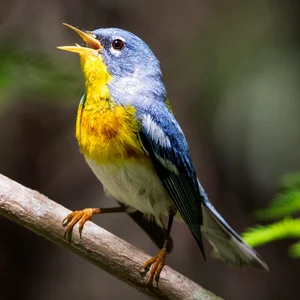 SpriteNorthern ParulaCh. 26
Who is Sprite in the story?
Sprite is a Northern Parula (Setophaga americana). Northern Parulas are small, plump warblers. They are bluish gray with a yellow-green patch on the back and a yellow throat (the males have a chestnut band between the yellow throat and chest). They have white crescents above and below the eye.
LearnWhich chapters feature Sprite?
- Chapter 26: Peter Gets a Lame Neck
Also mentioned in chapter 25.
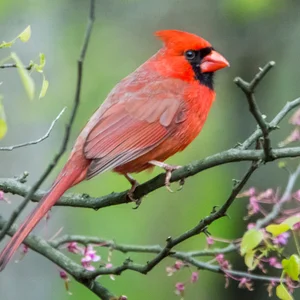 GloryNorthern CardinalCh. 27, 30
Who is Glory in the story?
Glory is a Northern Cardinal (Cardinalis cardinalis). The males are brilliant red all over with a black face around the bill. The females are pale brown with warm red in the wings, tail, and crest. Both have a tall crest and a short, very thick bill.
LearnWhat does the Northern Cardinal sound like?
Loud, clear whistles that often speed up into a slow trill. Both males and females sing.
ListenWhich chapters feature Glory?
- Chapter 27: A New Friend and an Old One
- Chapter 30: Jenny Wren's Cousins
Also mentioned in chapters 28, 32.
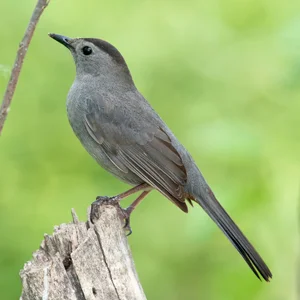 KittyGray CatbirdCh. 27, 34
Who is Kitty in the story?
Kitty is a Gray Catbird (Dumetella carolinensis). Gray Catbirds are slaty gray with a small black cap and a rusty patch under the tail. They hop and flutter through thick tangles of bushes. Their call is a raspy mew that sounds like a cat.
LearnWhat does the Gray Catbird sound like?
A long, rambling string of whistles, squeaks, and gurgles. Its call is a raspy mew, just like a cat's.
ListenWhere does the Gray Catbird live?
Stays all year along the Atlantic Coast. Others winter along the Gulf Coast from Florida to Texas, in Central America, and in the Caribbean.
ExploreWhich chapters feature Kitty?
- Chapter 27: A New Friend and an Old One
- Chapter 34: Mourner the Dove and Cuckoo
Also mentioned in chapter 30.
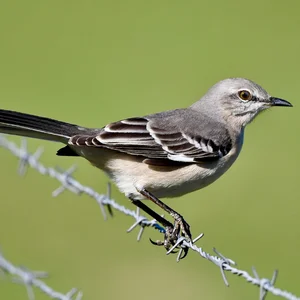 MockerNorthern MockingbirdCh. 27, 30
Who is Mocker in the story?
Mocker is a Northern Mockingbird (Mimus polyglottos). Northern Mockingbirds are gray-brown and paler underneath. They flash big white patches in the wings and white outer tail feathers when they fly. They sit boldly on fences, wires, and treetops, chasing intruders off their territory.
LearnWhat does the Northern Mockingbird sound like?
It copies the songs of other birds, and even frogs, and keeps learning new sounds all its life.
ListenWhere does the Northern Mockingbird live?
Stays in the same area all year. It does not migrate.
ExploreWhich chapters feature Mocker?
- Chapter 27: A New Friend and an Old One
- Chapter 30: Jenny Wren's Cousins
Also mentioned in chapter 35.
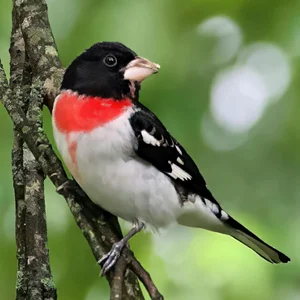 RosebreastRose-breasted GrosbeakCh. 28, 44
Who is Rosebreast in the story?
Rosebreast is a Rose-breasted Grosbeak (Pheucticus ludovicianus). The males are black and white with a brilliant red triangle down the middle of the breast. The females are brown and streaked with a bold white stripe over the eye. Both have a very large, triangle-shaped bill.
LearnWhat does the Rose-breasted Grosbeak sound like?
A rich, sweet whistled song, like a robin's but sweeter. Its call is a sharp, squeaky note, like a sneaker on a gym floor.
ListenWhere does the Rose-breasted Grosbeak live?
Most fly across the Gulf of Mexico in a single night to winter in Central and northern South America.
ExploreWhich chapters feature Rosebreast?
- Chapter 28: Peter Sees Rosebreast and Finds Redcoat
- Chapter 44: More Folks in Red
Also mentioned in chapter 32.
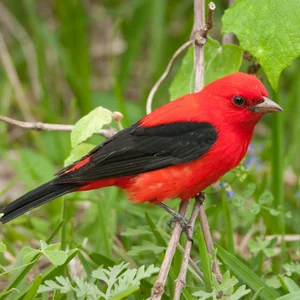 RedcoatScarlet TanagerCh. 28
Who is Redcoat in the story?
Redcoat is a Scarlet Tanager (Piranga olivacea). In spring and summer the males are brilliant red with black wings and tail. The females are olive-yellow. They stay high in the treetops among the leaves, where they are hard to see.
LearnWhat does the Scarlet Tanager sound like?
A burry, hurried song that sounds like a robin with a sore throat. Its call is a sharp "chick-burr."
ListenWhere does the Scarlet Tanager live?
Spends summer in eastern North America and winters in South America, crossing the Gulf of Mexico twice a year.
ExploreWhich chapters feature Redcoat?
- Chapter 28: Peter Sees Rosebreast and Finds Redcoat
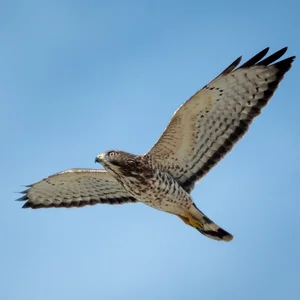 BroadwingBroad-winged HawkCh. 28
Who is Broadwing in the story?
Broadwing is a Broad-winged Hawk (Buteo platypterus). Broad-winged Hawks are small, chunky hawks with a large head. They have broad black and white bands across the tail. They migrate in huge flocks called kettles, soaring on rising warm air.
LearnWhat does the Broad-winged Hawk sound like?
A high, thin whistle, "kee-eee," with a short first note and a long second one.
ListenWhere does the Broad-winged Hawk live?
Lives in forests. In fall, big flocks called kettles pass along the Great Lakes and then turn southwest around the Gulf of Mexico. Some stay all year on Caribbean islands.
ExploreWhich chapters feature Broadwing?
- Chapter 28: Peter Sees Rosebreast and Finds Redcoat
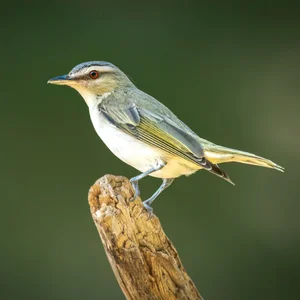 RedeyeRed-eyed VireoCh. 29
Who is Redeye in the story?
Redeye is a Red-eyed Vireo (Vireo olivaceus). Red-eyed Vireos are olive-green above and clean white below with a gray cap and a white eyebrow edged in black. The adults have red eyes. They sing almost nonstop all summer, even in the heat of the afternoon.
LearnWhat does the Red-eyed Vireo sound like?
Short, slurred phrases, as if the bird asks a question and then answers it, over and over.
ListenWhere does the Red-eyed Vireo live?
Spends summer across the United States and Canada, and flies all the way to the Amazon basin in South America for winter.
ExploreWhich chapters feature Redeye?
- Chapter 29: The Constant Singers
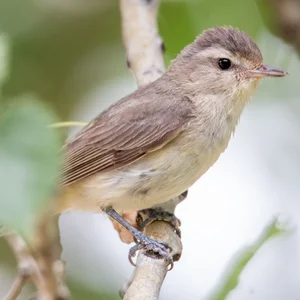 Warbling VireoEastern Warbling VireoCh. 29
Who is the Warbling Vireo in the story?
The Warbling Vireo goes by his species name in the story. Today Cornell calls him the Eastern Warbling Vireo (Vireo gilvus). Eastern Warbling Vireos are grayish above and whitish below with a yellow wash on the sides. They have a dark line through the eye and a white line above it. They peer carefully at leaves before pouncing on caterpillars.
LearnWhat does the Eastern Warbling Vireo sound like?
A quick, rich, bubbling warble that usually ends on a higher note.
ListenWhere does the Eastern Warbling Vireo live?
A medium- to long-distance migrant that travels at night.
ExploreWhich chapters feature the Warbling Vireo?
- Chapter 29: The Constant Singers
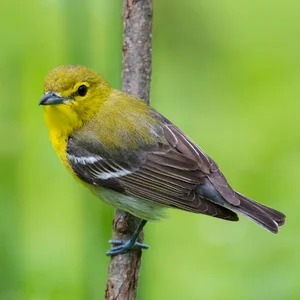 Yellow-throated VireoYellow-throated VireoCh. 29
Who is the Yellow-throated Vireo in the story?
The Yellow-throated Vireo (Vireo flavifrons) goes by his species name in the story. Yellow-throated Vireos look as if they are wearing bright yellow spectacles on an olive-green head. Their throat and chest are yellow and their belly bright white. They have two white bars on gray wings.
LearnWhat does the Yellow-throated Vireo sound like?
Burry two- and three-note phrases with pauses between, as if saying "three-eight."
ListenWhich chapters feature the Yellow-throated Vireo?
- Chapter 29: The Constant Singers
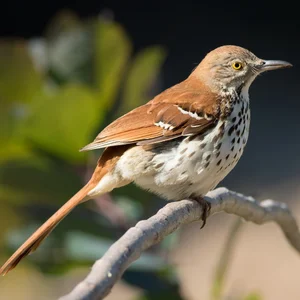 BrownieBrown ThrasherCh. 30
Who is Brownie in the story?
Brownie is a Brown Thrasher (Toxostoma rufum). Brown Thrashers are foxy brown with heavy dark streaks on a whitish breast. They have bright yellow eyes. They have a long tail that they often hold cocked up like a wren's.
LearnWhat does the Brown Thrasher sound like?
A loud, long string of musical phrases, each usually sung twice, many of them copied from other birds. A single thrasher can know more than 1,100 songs.
ListenWhere does the Brown Thrasher live?
Northern birds move to the southeast for winter, where others stay all year.
ExploreWhich chapters feature Brownie?
- Chapter 30: Jenny Wren's Cousins
Also mentioned in chapter 31.
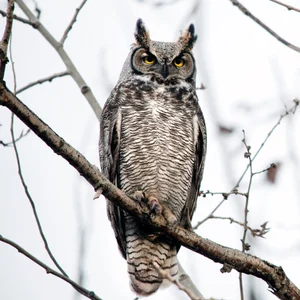 HootyGreat Horned OwlCh. 45
Who is Hooty in the story?
Hooty is a Great Horned Owl (Bubo virginianus). Great Horned Owls are large, thick-bodied owls with two feathered tufts on the head. They are mottled gray-brown with a reddish-brown face and a neat white patch on the throat. They hunt at night, often sitting on fence posts or tree limbs at dusk.
LearnWhat does the Great Horned Owl sound like?
Deep, soft hoots in a stuttering rhythm: "hoo-h'HOO-hoo-hoo."
ListenWhere does the Great Horned Owl live?
ExploreWhich chapters feature Hooty?
- Chapter 45: Peter Sees Two Terrible Feathered Hunters
Also mentioned in chapters 31, 42.
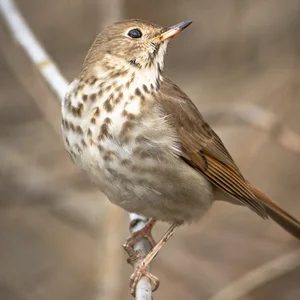 HermitHermit ThrushCh. 31
Who is Hermit in the story?
Hermit is a Hermit Thrush (Catharus guttatus). Hermit Thrushes are rich brown on the head and back with a warm reddish tail. They have spots on the throat and smudgy spots on the breast. They sometimes cock their tail and bob it slowly while flicking their wings.
LearnWhat does the Hermit Thrush sound like?
A beautiful, haunting song that starts with a long whistle and ends in softer, echoing notes, described as "oh, holy holy, ah, purity purity, eeh, sweetly sweetly."
ListenWhere does the Hermit Thrush live?
A short-distance migrant. It belongs to a close family group of five North American thrushes. Of these, it is the last to fly south in fall and the first to head north in spring. It is also the only one that spends the winter in the United States.
ExploreWhich chapters feature Hermit?
- Chapter 31: Voices of the Dusk
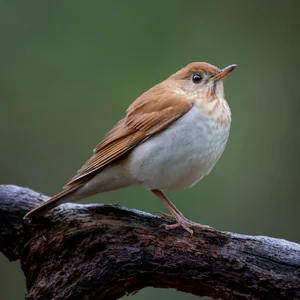 VeeryVeeryCh. 31
Who is Veery in the story?
Veery is a Veery (Catharus fuscescens), which Burgess also calls Wilson's Thrush. Veeries are bright cinnamon-brown above with faint spots on a pale chest. They are plump thrushes a little smaller than a robin. They hunt for insects and other small creatures on the ground and on logs.
LearnWhat does the Veery sound like?
A string of "veer" notes that spiral downward and ring as if inside a metal pipe. The bird is named for this song.
ListenWhere does the Veery live?
Almost every Veery spends the winter in South America. To get there, it flies from Canada and the northern United States across the Gulf of Mexico and through Central America.
ExploreWhich chapters feature Veery?
- Chapter 31: Voices of the Dusk
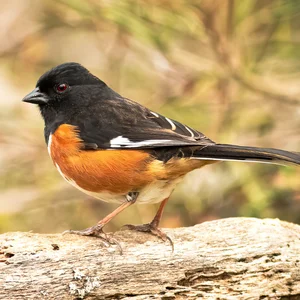 ChewinkEastern TowheeCh. 32
Who is Chewink in the story?
Chewink is an Eastern Towhee (Pipilo erythrophthalmus). Eastern Towhees are large sparrows with a thick bill and a long, rounded tail. The males are sooty black above with rusty sides and a white belly (the females are brown where the males are black). They scratch through dead leaves with both feet at once in a backward hop.
LearnWhat does the Eastern Towhee sound like?
A loud "drink-your-TEA!" Its call is a rising "chewink," which is where Burgess got his name.
ListenWhere does the Eastern Towhee live?
Birds north of Virginia and southern Indiana move south for the winter, some as far as southern Texas. Birds in the Southeast may stay all year.
ExploreWhich chapters feature Chewink?
- Chapter 32: Peter Saves a Friend and Learns Something
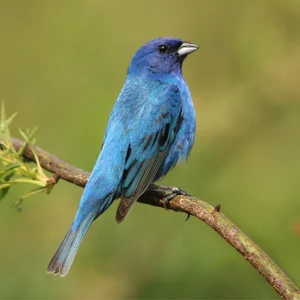 IndigoIndigo BuntingCh. 32
Who is Indigo in the story?
Indigo is an Indigo Bunting (Passerina cyanea). In spring and summer the males are blue all over. The females are brown with faint streaks on the breast. They often swish their tails from side to side while perched.
LearnWhat does the Indigo Bunting sound like?
A bright, lively song of paired notes, like "what! what! where? where? see it! see it!" A male may sing 200 songs an hour at dawn.
ListenWhere does the Indigo Bunting live?
Flies about 1,200 miles each way between eastern North America and its winter home, anywhere from southern Florida to northern South America.
ExploreWhich chapters feature Indigo?
- Chapter 32: Peter Saves a Friend and Learns Something
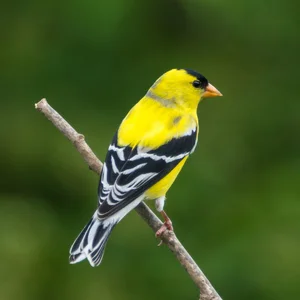 ChicoreeAmerican GoldfinchCh. 33
Who is Chicoree in the story?
Chicoree is an American Goldfinch (Spinus tristis). In spring and summer the males are bright yellow with a black forehead and black-and-white wings. In winter they turn a plain, drab brown. They fly with a bouncy, up-and-down flight, often calling as they go.
LearnWhat does the American Goldfinch sound like?
A long, twittering warble. In flight it calls "po-ta-to-chip."
ListenWhich chapters feature Chicoree?
- Chapter 33: A Royal Dresser and a Late Nester
Also mentioned in chapter 44.
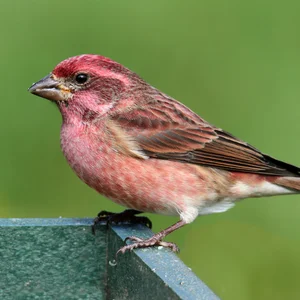 LinnetPurple FinchCh. 33
Who is Linnet in the story?
Linnet is a Purple Finch (Haemorhous purpureus), which Burgess calls the Purple Linnet. The males are pinkish-red on the head and breast. The females have no red and are boldly streaked with a whitish stripe over the eye. They have a strong, cone-shaped beak and a notched tail.
LearnWhere does the Purple Finch live?
Wanders in winter to follow cone crops. Many leave Canada to winter across the central and southeastern United States. Some in the Northeast and along the Pacific Coast may not migrate.
ExploreWhich chapters feature Linnet?
- Chapter 33: A Royal Dresser and a Late Nester
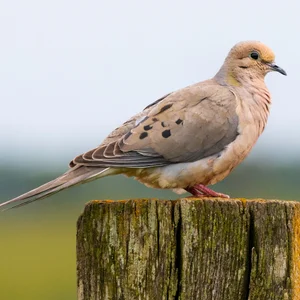 MournerMourning DoveCh. 34
Who is Mourner in the story?
Mourner is a Mourning Dove (Zenaida macroura). Mourning Doves are plump with a small head and a long, pointed tail. They are soft brown to buffy tan with black spots on the wings. Their wings make a loud whistling sound when they take off and land.
LearnWhere does the Mourning Dove live?
Northern birds fly south thousands of miles, as far as southern Mexico. Birds in the central and southern United States move a few hundred miles or not at all.
ExploreWhich chapters feature Mourner?
- Chapter 34: Mourner the Dove and Cuckoo
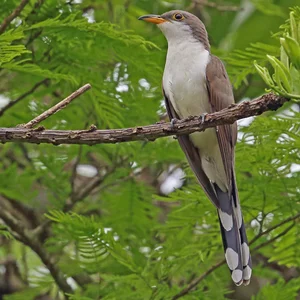 CuckooYellow-billed CuckooCh. 34
Who is Cuckoo in the story?
Cuckoo is a Yellow-billed Cuckoo (Coccyzus americanus). Yellow-billed Cuckoos are long, slim birds with a very long tail banded in white underneath. They have a mostly yellow bill. They move slowly through the treetops hunting large, hairy caterpillars.
LearnWhat does the Yellow-billed Cuckoo sound like?
A slow, hollow, wooden-sounding "ka-ka-ka-ka-kow-kow-kowlp-kowlp" that gets slower at the end.
ListenWhich chapters feature Cuckoo?
- Chapter 34: Mourner the Dove and Cuckoo
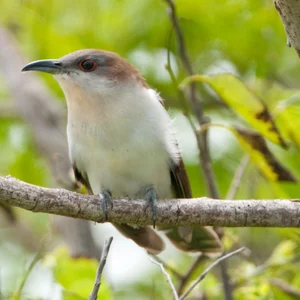 CuckooBlack-billed CuckooCh. 34
Who is the Black-billed Cuckoo in the story?
The Black-billed Cuckoo (Coccyzus erythropthalmus) goes by his species name in the story. Black-billed Cuckoos are plain brown above and white below with a red ring around the eye and a black bill. They are slender birds with a very long tail. They hide quietly in thick leaves, feasting on caterpillars such as tent caterpillars.
LearnWhat does the Black-billed Cuckoo sound like?
Three to five quick toots on the same note, repeated over and over, by day or by night.
ListenWhere does the Black-billed Cuckoo live?
A long-distance migrant that travels at night, often calling as it flies.
ExploreWhich chapters feature the Black-billed Cuckoo?
- Chapter 34: Mourner the Dove and Cuckoo
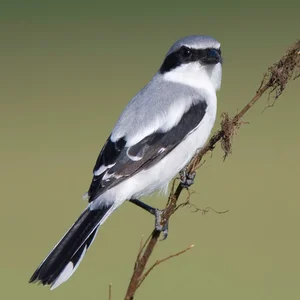 ButcherLoggerhead ShrikeCh. 35
Who is Butcher in the story?
Butcher is a Loggerhead Shrike (Lanius ludovicianus). Loggerhead Shrikes are gray birds with a wide black mask. They have a big, blocky head and a thick bill with a small hook. They are famous for storing their prey on thorns or barbed wire to eat later.
LearnWhat does the Loggerhead Shrike sound like?
Quiet songs of short trills, rasps, and buzzes mixed with clear notes.
ListenWhere does the Loggerhead Shrike live?
Birds in the north move south for winter to avoid snow cover. They appear to travel alone by day, a short distance at a time.
ExploreWhich chapters feature Butcher?
- Chapter 35: A Butcher and a Hummer
Also mentioned in chapter 36.
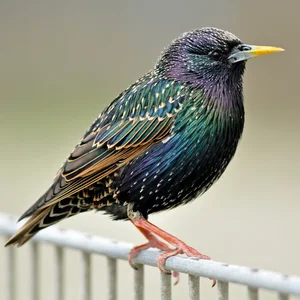 SpecklesEuropean StarlingCh. 36
Who is Speckles in the story?
Speckles is a European Starling (Sturnus vulgaris). European Starlings look black from far away but shine purple and green with a yellow beak in summer. In winter they are covered in bright white spots. Their short, pointed wings make them look like little four-pointed stars in flight.
LearnWhat does the European Starling sound like?
Whistles, warbles, chatters, rattles, and smooth liquid notes. Starlings are great mimics and can imitate meadowlarks, jays, and hawks.
ListenWhere does the European Starling live?
Adults north of the latitude of New York City, and many young birds, move south in winter, but most stay in North America.
ExploreWhich chapters feature Speckles?
- Chapter 36: A Stranger and a Dandy
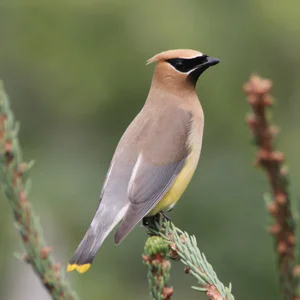 DandyCedar WaxwingCh. 36
Who is Dandy in the story?
Dandy is a Cedar Waxwing (Bombycilla cedrorum). Cedar Waxwings are soft brown and gray with a pale yellow belly and a bright yellow tip on the tail. They wear a narrow black mask outlined in white and a crest that droops over the back of the head. They travel in flocks, swallowing berries whole.
LearnWhat does the Cedar Waxwing sound like?
A high, thin, trilled "bzeee" and a soft, sighing whistle, often given in flight.
ListenWhere does the Cedar Waxwing live?
Many eastern birds spend the winter in the southeastern United States, and some travel as far south as Costa Rica and Panama.
ExploreWhich chapters feature Dandy?
- Chapter 36: A Stranger and a Dandy
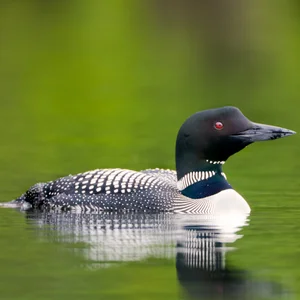 DippyCommon LoonCh. 38
Who is Dippy in the story?
Dippy is a Common Loon (Gavia immer). Common Loons are large diving waterbirds with a dagger-like bill. In summer they have a black head and a black-and-white spotted back. They slip underwater without a splash to catch fish.
LearnWhat does the Common Loon sound like?
Famous eerie calls: a wavering tremolo when alarmed, the male's yodel, and a haunting wail that loons trade back and forth.
ListenWhere does the Common Loon live?
Moves from northern lakes to ocean coasts for winter. Loons from the Great Lakes go to the Gulf of Mexico or Florida coasts, and loons from eastern Canada go to the Atlantic Coast.
ExploreWhich chapters feature Dippy?
- Chapter 38: Honker and Dippy Arrive
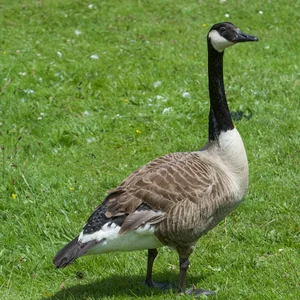 HonkerCanada GooseCh. 38
Who is Honker in the story?
Honker is a Canada Goose (Branta canadensis). Canada Geese are big waterbirds with a long neck. They have a black head and neck with white cheeks and chinstrap, a tan breast, and a brown back. They often fly in a V formation.
LearnWhere does the Canada Goose live?
Some birds that nest in the High Arctic fly to the southern United States for the winter.
ExploreWhich chapters feature Honker?
- Chapter 38: Honker and Dippy Arrive
Also mentioned in chapters 20, 39.
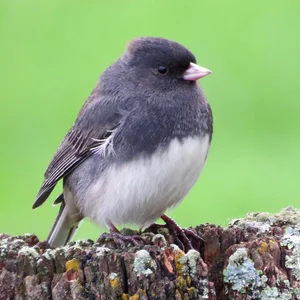 SlatyDark-eyed JuncoCh. 40
Who is Slaty in the story?
Slaty is a Dark-eyed Junco (Junco hyemalis). Dark-eyed Juncos are dark gray or brown birds with a pink bill. They flash white outer tail feathers when they fly. They spend their time on the ground, hopping around the bases of trees and shrubs looking for fallen seeds.
LearnWhat does the Dark-eyed Junco sound like?
An even, musical trill that can be heard several hundred feet away, plus high, short "chip" notes.
ListenWhere does the Dark-eyed Junco live?
Birds that nest in Canada and Alaska move to the southern United States for the winter. Some in the West and in the Appalachian Mountains don't migrate at all.
ExploreWhich chapters feature Slaty?
- Chapter 40: Some Merry Seed-Eaters
Also mentioned in chapter 41.
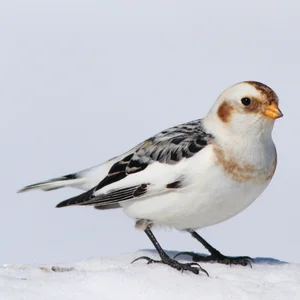 SnowflakeSnow BuntingCh. 41
Who is Snowflake in the story?
Snowflake is a Snow Bunting (Plectrophenax nivalis). Snow Buntings always show white inner wings with black wingtips. The breeding males are bright white with a black back. They walk hunched over across bare ground until the whole flock bursts into the air in a flash of black and white.
LearnWhat does the Snow Bunting sound like?
A low, husky, finch-like warble, sung in flight or from a rock.
ListenWhere does the Snow Bunting live?
A medium-distance migrant that travels in loose flocks of anywhere from a dozen to thousands of birds.
ExploreWhich chapters feature Snowflake?
- Chapter 41: More Friends Come With the Snow
Also mentioned in chapters 40, 43, 44.
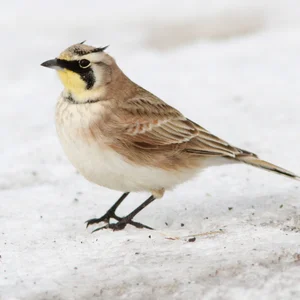 WandererHorned LarkCh. 41
Who is Wanderer in the story?
Wanderer is a Horned Lark (Eremophila alpestris). The males have a black band across the chest and a curving black mask. They can raise two tiny feathered "horns" on the head. They creep along bare ground in flocks, searching for seeds and insects.
LearnWhat does the Horned Lark sound like?
A fast, high, tinkling song, often sung before sunrise and sometimes from as high as 800 feet in the air.
ListenWhere does the Horned Lark live?
Birds from northern North America move south into the lower 48 states for the winter, traveling by day in flocks. Others stay all year.
ExploreWhich chapters feature Wanderer?
- Chapter 41: More Friends Come With the Snow
Also mentioned in chapters 43, 44.
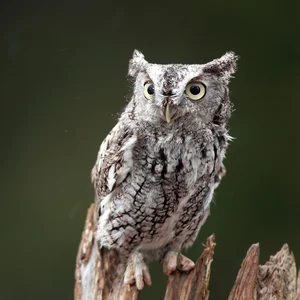 SpookyEastern Screech-OwlCh. 42
Who is Spooky in the story?
Spooky is an Eastern Screech-Owl (Megascops asio). Eastern Screech-Owls are short, stocky owls with a large head and pointed ear tufts. They are gray or reddish-brown with bands and spots that hide them against tree bark. They hunt at night and rest in holes in trees.
LearnWhat does the Eastern Screech-Owl sound like?
An even, trembling trill and a shrill, falling whinny. Pairs sometimes sing back and forth to each other.
ListenWhere does the Eastern Screech-Owl live?
Stays in the same area all year. It does not migrate.
ExploreWhich chapters feature Spooky?
- Chapter 42: Peter Learns Something About Spooky
Also mentioned in chapters 8, 45.
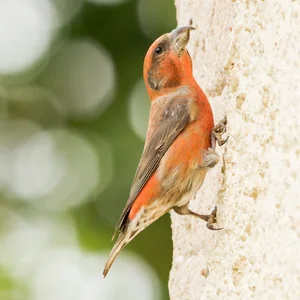 SnipperRed CrossbillCh. 43
Who is Snipper in the story?
Snipper is a Red Crossbill (Loxia curvirostra). Red Crossbills have an unusual twisted bill whose tips cross when it is closed. The males are brick red and the females mostly yellowish. They travel in flocks eating the seeds of pines and other cone trees.
LearnWhat does the Red Crossbill sound like?
A sweet, loose trill or warble. In flight they give short, dry "jip" calls.
ListenWhere does the Red Crossbill live?
Not a true migrant. It stays put or wanders, sometimes moving far in years when there are few cones.
ExploreWhich chapters feature Snipper?
- Chapter 43: Strange Feet and a Stranger Bill
Also mentioned in chapter 44.
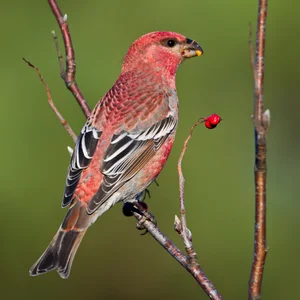 PinyPine GrosbeakCh. 44
Who is Piny in the story?
Piny is a Pine Grosbeak (Pinicola enucleator). Pine Grosbeaks are large, plump finches with a short, thick bill. The males are reddish pink and gray while the females are gray with reddish-orange or yellow on the head. They all have two white bars on dark gray wings.
LearnWhat does the Pine Grosbeak sound like?
A clear, flute-like warble sung from the treetops, rising and falling for a few seconds.
ListenWhere does the Pine Grosbeak live?
Stays all year, though some move to lower ground or wander outside their usual range in some winters.
ExploreWhich chapters feature Piny?
- Chapter 44: More Folks in Red
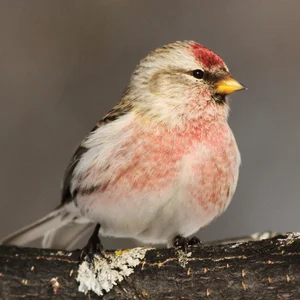 RedpollRedpollCh. 44
Who is Redpoll in the story?
Redpoll is a Redpoll (Acanthis flammea), the bird Cornell used to call the Common Redpoll. Redpolls have a small red patch on the forehead and black feathers around a yellow bill. The common form is brown and white with heavy streaks and two white wingbars (the males have a rosy breast). They travel in chattering flocks, often hanging upside down to reach seeds.
LearnWhat does the Redpoll sound like?
Busy, chattering flocks with sharp, zapping notes, a rising whistle, and a rattle.
ListenWhere does the Redpoll live?
Moves south in some winters, following the seed supply. About every two years, redpolls come far south and sometimes reach the central or southern United States.
ExploreWhich chapters feature Redpoll?
- Chapter 44: More Folks in Red
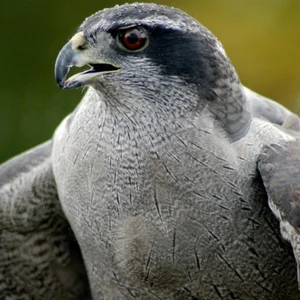 TerrorAmerican GoshawkCh. 45
Who is Terror in the story?
Terror is an American Goshawk (Astur atricapillus), previously included under the Northern Goshawk. American Goshawks are large, bulky hawks with broad, rounded wings and a long tail. The adults are dark slate gray above and pale gray below with a white stripe over an orange-red eye. They watch from high perches, then attack with fast, twisting flight even through thick trees.
LearnWhat does the American Goshawk sound like?
A rapid "ki-ki-ki-ki" alarm call, repeated 10 to 20 times.
ListenWhere does the American Goshawk live?
Some stay all year and some move short distances. About once every 10 years, when snowshoe hares and grouse become scarce, many fly south.
ExploreWhich chapters feature Terror?
- Chapter 45: Peter Sees Two Terrible Feathered Hunters
Bird facts, sounds, and range maps courtesy of the Cornell Lab of Ornithology's All About Birds.