The Listening Grove · Just So Stories
Chapter 6: The Sing-song of Old Man Kangaroo
A Charlotte Mason read-aloud lesson. Press play, with the lesson.
What is Just So Stories Chapter 6, The Sing-song of Old Man Kangaroo, about?Parent review
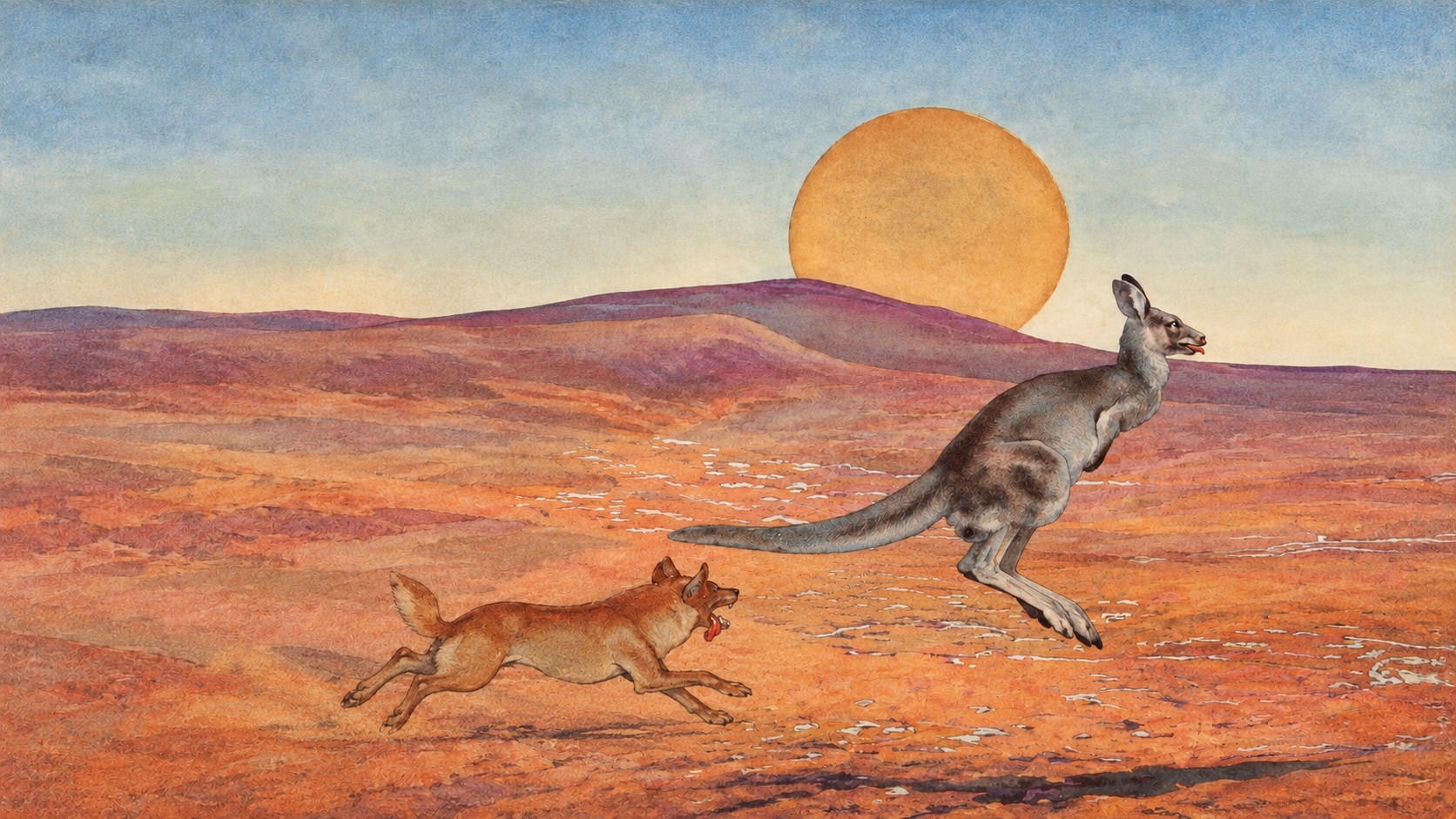
Just So Stories Chapter 6, The Sing-Song of Old Man Kangaroo, is Rudyard Kipling’s tale of how the Kangaroo got his long hind legs. Long ago, the Kangaroo was a Different Animal with four short legs, grey and woolly, and his pride was inordinate. He asked the Little God Nqa, the Middle God Nquing, and the Big God Nqong to make him different from all other animals, and popular and wonderfully run after, by five o’clock that afternoon. Nqong said “Yes, I will!” and sent Yellow-Dog Dingo, always hungry, to chase him. The Kangaroo ran all across Australia until he came to the Wollgong River, where he had to stand on his hind legs and hop. By five o’clock his hind legs were long and strong, and he had his tail for a balance-weight, but he wasn’t grateful, and neither he nor Dingo got any supper.
Say what you remember!
Tell what you remember from the last story.
What happened in Just So Stories Chapter 5, The Elephant’s Child?Have a look
In Chapter 5, The Elephant’s Child, the curious young Elephant went to the Limpopo River to find out what the Crocodile has for dinner. The Crocodile caught him by the nose and pulled until it stretched into a trunk, and the Bi-Coloured-Python-Rock-Snake helped him pull free. He found his new trunk very useful and went home to show his family.
Read the previous lesson: The Elephant’s Child →Show what you know!
Say what you think each word means, then click to check your answers and learn some new words today.
What are the difficult or advanced vocabulary words in Just So Stories Chapter 6, The Sing-song of Old Man Kangaroo?inordinate, outcrop, bewildered, importunateHave a look
- inordinate: far more than is reasonable
- outcrop: rock that sticks up out of the ground
- bewildered: confused, especially by too many things
- importunate: too urgent in asking again and again
The Books come Alive!
Read or listen to Chapter 6 of Just So Stories, the Kindred Thicket Classic Edition.
Read by Phil Chenevert for LibriVox (public domain), adjusted and trimmed by Kindred Thicket.
Memory becomes Action!
Use the names below to remember and spell tricky names. Choose one way to narrate.
What is the list of names, people, characters, and places that are important in Chapter 6 of Just So Stories?Old Man Kangaroo, Yellow-Dog Dingo, Nqong, Nqa, Nquing, Australia, The Wollgong RiverHave a look
- Old Man Kangaroo: The proud gray woolly Different Animal, whose name was Boomer.
- Yellow-Dog Dingo: The always-hungry yellow dog set on Kangaroo's heels.
- Nqong: The Big God of the salt-pan bath, granter of Kangaroo's wish.
- Nqa: The Little God of the sand-flat, first of the three gods asked.
- Nquing: The Middle God of the burrow in the spinifex, second of the three.
- Australia: The continent of deserts and spinifex where Kangaroo lives.
- The Wollgong River: The bridgeless, ferry-less river in Kangaroo's way.
Chapter 6 Q & A
This is a Kindred Thicket Classic Edition, with Kipling’s words kept as he wrote them. Here are answers to questions families often ask about this story.
How did the kangaroo get its long legs?
In Kipling’s story, Yellow-Dog Dingo chased the Kangaroo all across Australia. When he came to the Wollgong River, he had to stand up and hop, and his hind legs grew stronger and longer with every hop.
What did the Kangaroo ask the gods for?
He asked to be made different from all other animals, and popular and wonderfully run after, by five o’clock in the afternoon.
Who are Nqa, Nquing, and Nqong?
They are the three gods the Kangaroo visited: the Little God Nqa, the Middle God Nquing, and the Big God Nqong. Nqa and Nquing told him to go away, but Nqong said, “Yes, I will!”
Why wasn’t the Kangaroo happy at the end?
He said Dingo had chased him out of the homes of his childhood and his regular meal-times, and altered his shape so he would never get it back. He had also had nothing to eat since morning.
What does “his pride was inordinate” mean?
Inordinate means far more than is right or reasonable. The Kangaroo was much too proud, and that is why he wanted to be different from all other animals.