The Listening Grove · The Burgess Bird Book for Children
Chapter 1: Jenny Wren Arrives
A Charlotte Mason nature-study lesson. Press play, with the lesson.
What is The Burgess Bird Book for Children Chapter 1, Jenny Wren Arrives, about?Parent review
The Burgess Bird Book for Children Chapter 1, Jenny Wren Arrives, opens Thornton Burgess’s year in the Old Orchard as Peter Rabbit, out all night as usual, hops over the tumble-down stone wall at sunrise to see who has come back with the spring. A sharp little scolding voice stops him: Jenny Wren and her husband, Mr. Wren, have just returned from the sunny South, a long journey they make twice a year. Jenny sets Peter straight on why birds go away at all, for there is no food here in winter, so they follow Mistress Spring north and keep ahead of Jack Frost, and on why she is glad to wear a plain brown suit rather than gay colors, since bright feathers draw danger and plain ones keep a small bird safe. It is a warm, talkative first lesson that introduces the House Wren and the idea of migration, all through the eyes of Peter Rabbit.
Show what you know!
Use your printable Lesson Guide. Fill in the vocabulary you know, then click to check your work and learn some new words today.
What are the difficult or advanced vocabulary words in The Burgess Bird Book for Children Chapter 1, Jenny Wren Arrives?fussing, tartly, snap, prompted, retorted, emphatic, impose, overdo, mischievously, suitHave a look
- fussing: Moving about in a busy, restless, slightly anxious way, often over small things.
- tartly: In a sharp, impatient way that carries a slight sting, said when someone is a little cross.
- snap: When eyes snap, they flash with sudden brightness or feeling, showing the bird is alert, amused, or annoyed.
- prompted: Asked a question or offered a hint that encouraged someone else to keep speaking.
- retorted: Fired back with a quick, sharp reply, often to prove someone wrong.
- emphatic: Very clear, strong, and definite, said in a way that leaves no room for doubt.
- impose: To take unfair advantage of someone’s patience or goodwill by expecting too much.
- overdo: To put in so much effort that you push beyond what is wise and risk wearing yourself out.
- mischievously: In a sly, playful way that enjoys stirring up a bit of harmless, gentle teasing.
- suit: In bird life, the full covering of feathers on the body, worn like an outfit that changes with the seasons.
The Books come Alive!
Read or listen to Chapter 1 of The Burgess Bird Book for Children, the Kindred Thicket Revised Edition.
Read by Kindred Thicket, from the Kindred Thicket Revised Edition. The plain accuracy notes that explain each correction come with the Complete Companion Guide.
Memory becomes Action!
Use the Response Resource* to remember and spell tricky names. Choose one way to narrate.
*Materials in the Lesson Guide.
What is the list of names, people, characters, birds, and places that are important in Chapter 1 of The Burgess Bird Book for Children?Peter Rabbit, Jenny Wren, Mr. Wren, The Old Orchard, Mistress Spring, Sammy Jay, Tommy Tit the Chickadee, Drummer the WoodpeckerHave a look
- Peter Rabbit: The curious observer whose eyes we watch the Old Orchard through. His own coat is brown and gray, and he loves to be out all night so he misses nothing.
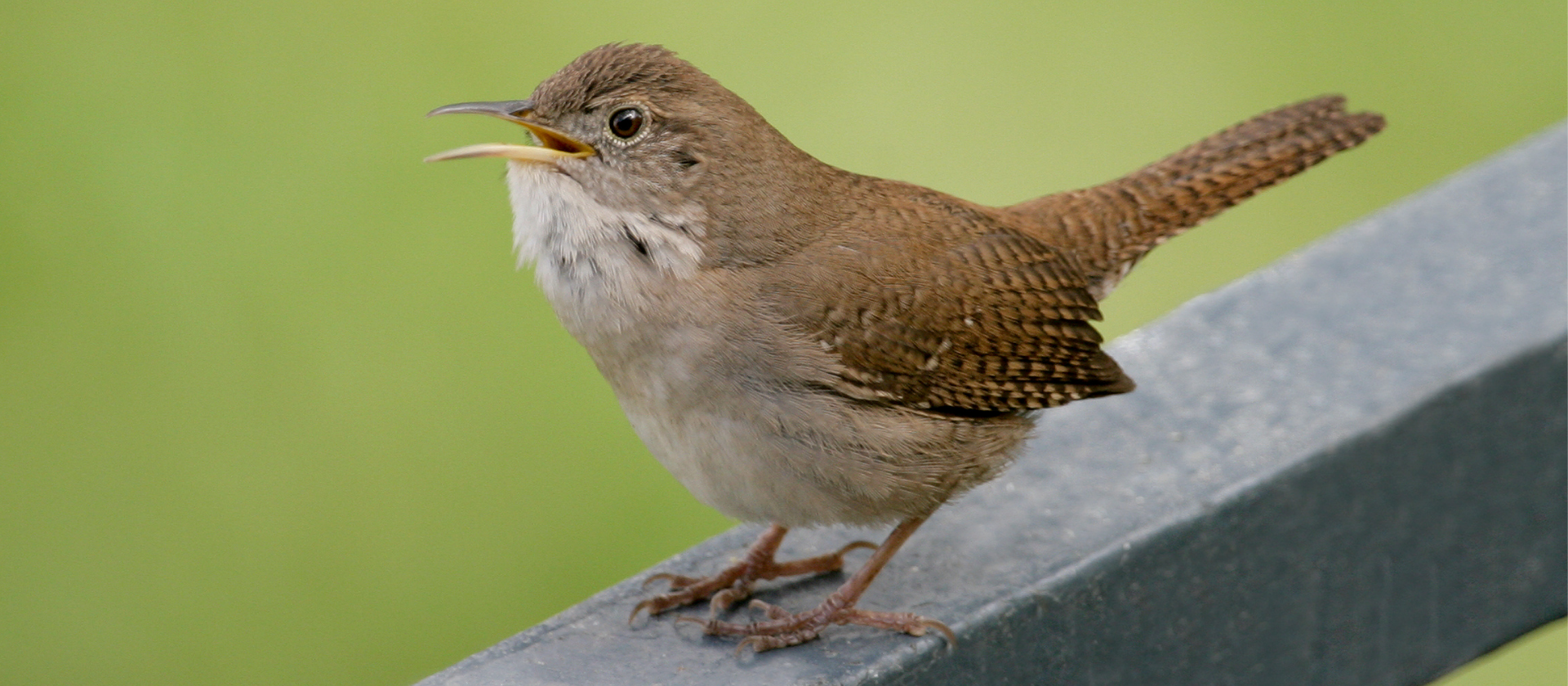
- Jenny Wren: The House Wren (Northern House Wren), just back from the South. A tiny brown bird famous for her sharp, scolding tongue and her constant, restless fussing.
- Mr. Wren: Jenny’s mate, who sings his beautiful spring song with all his might, shaking all over as he pours it out.
- The Old Orchard: The home place where the birds gather each spring. It is the setting for the whole book.
- Mistress Spring: The season pictured as a person. The wrens follow along behind her as she moves north, keeping far enough back to stay ahead of Jack Frost.
- Sammy Jay: The Blue Jay, named as one of the birds who have "a little sense" and stay through the winter instead of migrating.
- Tommy Tit the Chickadee: The Black-capped Chickadee, another stay-at-home bird who can find food here in winter.
- Drummer the Woodpecker: A woodpecker named among the birds who do not go away for the winter.
Chapter 1 Q & A
A few questions families ask about this chapter and its birds.
What kind of bird is Jenny Wren in The Burgess Bird Book?
Jenny Wren is a House Wren, known today as the Northern House Wren (Troglodytes aedon). She is one of the smallest birds of the garden and orchard, plain brown all over, with a short tail she often cocks straight up. Burgess gives her a sharp, scolding voice, and real House Wrens are indeed famous for a long, bubbling song and a scolding chatter far bigger than the bird.
Why do birds leave the Old Orchard in winter?
For food. As Jenny tells Peter, birds cannot live without eating any more than a rabbit can, and in winter there is no food here for most of them, so they travel to where food can be found. The few who can eat what winter offers, like the chickadee, the jay, and the woodpecker, are able to stay. This is migration, and Chapter 1 introduces it through Jenny’s own two long journeys a year.
Why is Jenny Wren glad to wear plain brown feathers?
Because plain colors keep a small bird safe. Jenny explains that brown is neat, useful, and always in good taste, and that when danger comes a brown bird can slip out of sight in a hurry, while a brightly colored one cannot. She has seen the gorgeous birds of the tropics hunted for their very beauty. This is the idea of camouflage, told as a bird’s own good sense.
Who is Peter Rabbit, and why is he in a bird book?
Peter Rabbit is the friendly observer who ties the whole book together. He is not a bird at all, but a curious rabbit from the Old Briar-patch who meets each new bird as it arrives and asks the questions a child would ask. Seeing the birds through Peter’s eyes is what makes Burgess’s nature study feel like a story rather than a list of facts.
Do House Wrens really come back to the same place each spring?
Yes. House Wrens migrate south for the winter and return north to breed in spring, and pairs often come back to the same yard or orchard, sometimes to the very nest boxes they used before, exactly as Jenny is so glad to see the Old Orchard again. The male often begins singing and building the moment he arrives.