The Listening Grove · The Burgess Bird Book for Children
Chapter 10: Redwing and Yellow Wing
A Charlotte Mason nature-study lesson. Press play, with the lesson.
What is The Burgess Bird Book for Children Chapter 10, Redwing and Yellow Wing, about?Parent review
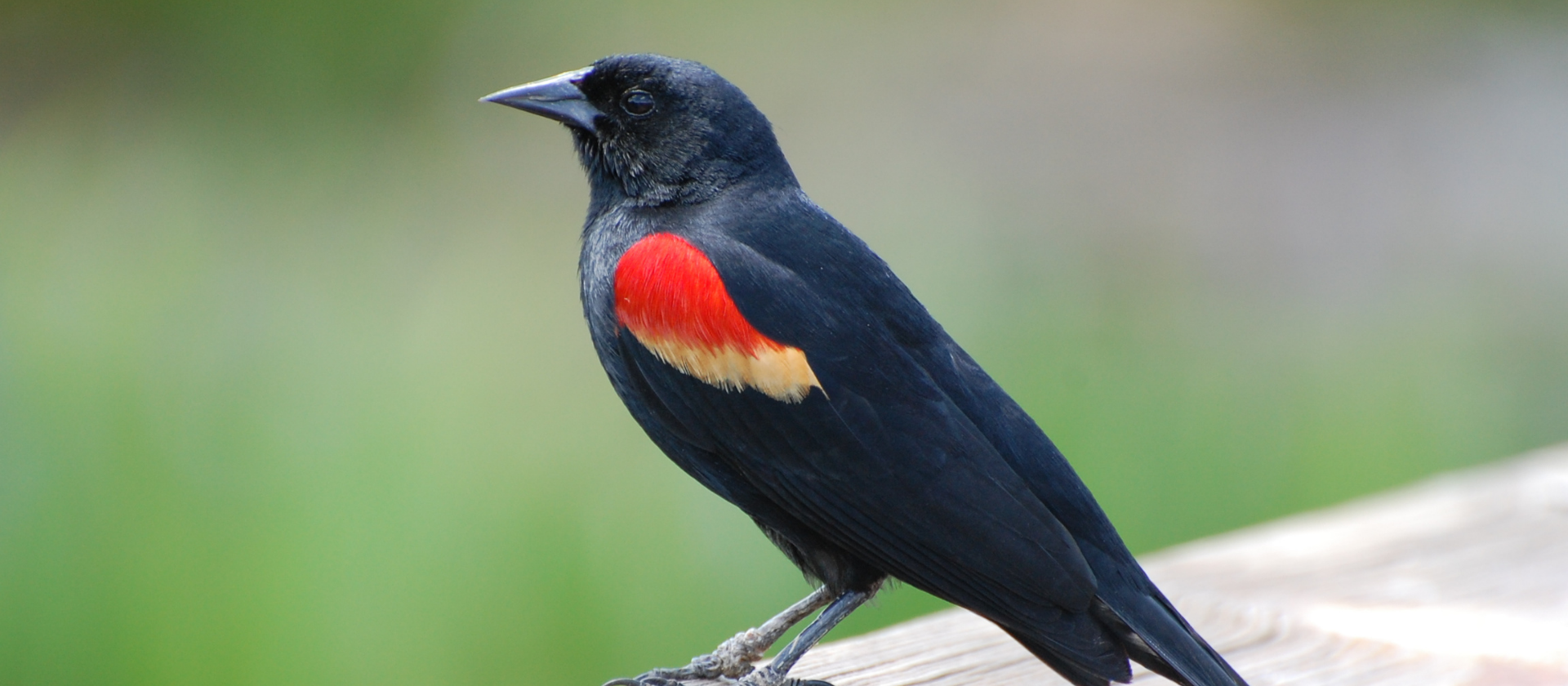
Chapter 10, Redwing and Yellow Wing, brings two very different birds. Redwing the Red-winged Blackbird, a glossy black bird with scarlet shoulder patches, sings his liquid conk-a-ree from the bulrushes of the Smiling Pool and seems to know every secret of the marsh. Yellow Wing the Flicker is a woodpecker that feeds on the ground, flashing golden under his wings and a white patch on his rump as he flies. Peter is surprised to learn that this ground-feeding, ant-eating bird belongs to the woodpecker family at all.
Say what you remember!
Tell what you remember from the last chapter.
What happened in the previous chapter of The Burgess Bird Book for Children, Longbill and Teeter?Have a look
In Chapter 9, Longbill and Teeter, Peter met two birds of wet places: Longbill the Woodcock, who probes the soft ground for worms with his very long bill, and Teeter the Spotted Sandpiper, who bobs along the water's edge and flies low on stiff, quivering wings.
Back to the previous lesson: Longbill and Teeter →Show what you know!
Use your printable Lesson Guide. Fill in the vocabulary you know, then click to check your work and learn some new words today.
What are the difficult or advanced vocabulary words in The Burgess Bird Book for Children Chapter 10, Redwing and Yellow Wing?bearer, intentionally, demurely, homely, aroused, clump, bulrushes, collar, wholly, faintHave a look
- bearer: The person who carries or delivers something; the one who brings news or a gift.
- intentionally: Done on purpose, as the result of a deliberate choice, not by accident.
- demurely: In a quiet, reserved, modestly well-behaved way; without drawing attention.
- homely: Plain and unattractive in appearance; lacking features that catch the eye.
- aroused: Stirred up and brought to life; awakened from a quiet state into energy or feeling.
- clump: A compact group or cluster of plants growing closely together in one spot.
- bulrushes: Tall, stiff plants with long narrow leaves that grow in shallow water at pond edges.
- collar: A band of color that circles an animal's neck, standing out like a ring.
- wholly: Completely and entirely, all the way through; not partially or halfway.
- faint: So soft, weak, or slight as to be barely noticeable; at the edge of the senses.
The Books come Alive!
Read or listen to Chapter 10 of The Burgess Bird Book for Children, the Kindred Thicket Revised Edition.
Read by Kindred Thicket, from the Kindred Thicket Revised Edition. The plain accuracy notes that explain each correction come with the Complete Companion Guide.
Memory becomes Action!
Use the Response Resource* to remember and spell tricky names. Choose one way to narrate.
*Materials in the Lesson Guide.
What is the list of names, people, characters, birds, and places that are important in Chapter 10 of The Burgess Bird Book for Children?Redwing, Yellow Wing, Teeter, Jenny WrenHave a look
- Redwing: The Red-winged Blackbird (Agelaius phoeniceus), a glossy black marsh bird whose scarlet shoulder patches and liquid "conk-a-ree" ring out from the bulrushes.
- Yellow Wing: The Northern Flicker (Colaptes auratus), a brown woodpecker that feeds on the ground on ants and flashes gold under the wings and a white rump in flight.
- Teeter: The Spotted Sandpiper, still working the shore nearby.
- Jenny Wren: The House Wren, guiding Peter's introductions.
Chapter 10 Q & A
A few questions families ask about this chapter and its birds.
What is Redwing's song?
A rich, gurgling "conk-a-ree" or "o-ka-lee," sung from a cattail or reed with the scarlet shoulder patches flared. It is one of the most familiar sounds of North American marshes in spring.
Why is the Flicker an unusual woodpecker?
Because it spends much of its time on the ground eating ants, rather than hammering tree trunks like most woodpeckers. That is why Peter is so surprised to learn it belongs to the woodpecker family, though it still nests in a chiseled tree hole.
Where does the Red-winged Blackbird nest?
In marshes and wet meadows, weaving its nest low among cattails, bulrushes, and reeds. The males arrive first in spring and defend their patch of marsh with song and their bright red shoulders.
Why does the Flicker flash color in flight?
The Northern Flicker shows bright gold (in the eastern "yellow-shafted" form) under the wings and tail and a bold white rump patch as it flies, easy field marks that stand out the moment the plain-looking bird takes off.