The Listening Grove · The Burgess Bird Book for Children
Chapter 9: Longbill and Teeter
A Charlotte Mason nature-study lesson. Press play, with the lesson.
What is The Burgess Bird Book for Children Chapter 9, Longbill and Teeter, about?Parent review
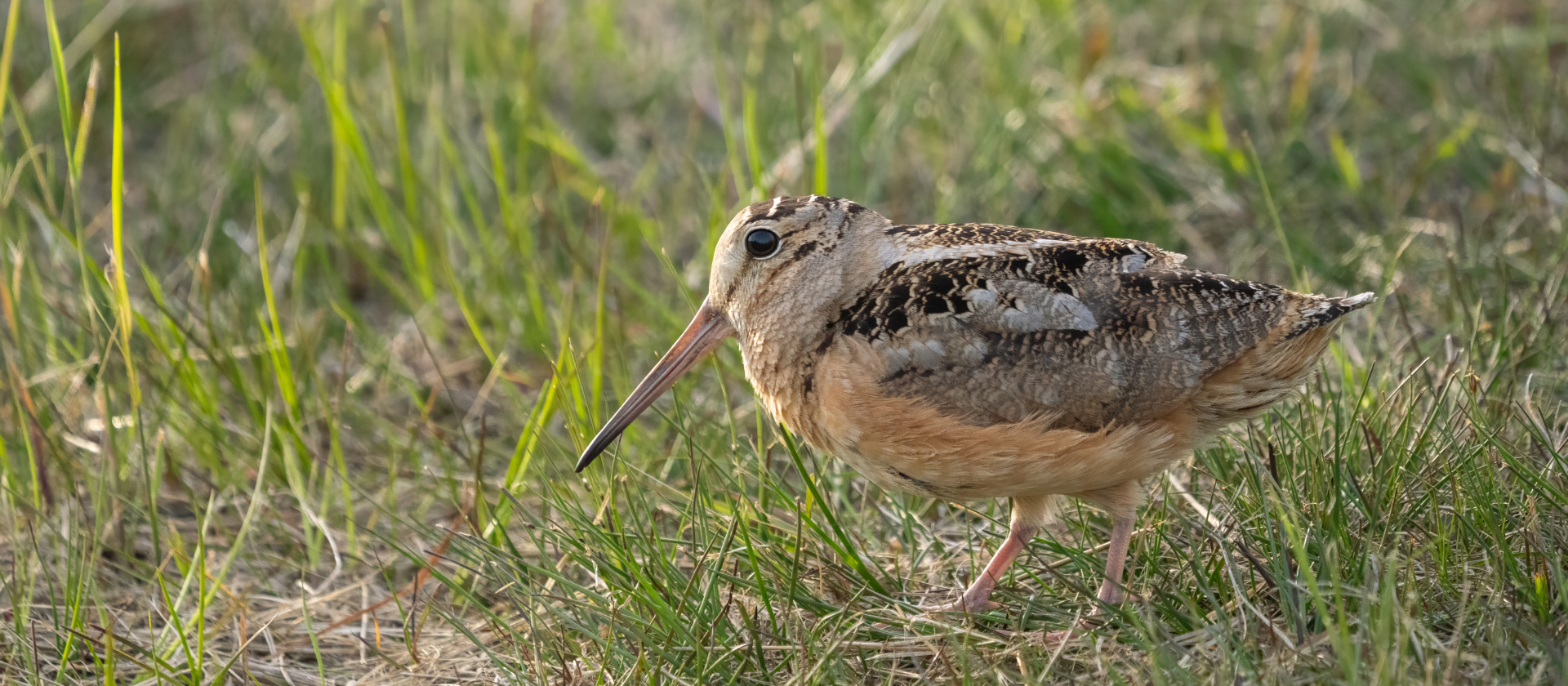
Chapter 9, Longbill and Teeter, takes Peter to wetter ground to meet two birds of the water's edge. Longbill the Woodcock, a plump brown bird of damp thickets, has a very long bill he uses to probe the soft earth for worms, and eyes set far back on his head so he can watch for danger while feeding. Teeter the Spotted Sandpiper bobs and teeters along the shore, spotted below in summer, and flies low over the water on stiff, quivering wingbeats. Peter learns that a bird's odd shape usually fits exactly the work it must do.
Say what you remember!
Tell what you remember from the last chapter.
What happened in the previous chapter of The Burgess Bird Book for Children, Old Clothes and Old Houses?Have a look
In Chapter 8, Old Clothes and Old Houses, Peter learned how many birds use hollows and holes that others made: Pewee the Wood Pewee, Skimmer the Tree Swallow, Killy the little falcon we now call the American Kestrel, and his old friends Yank-Yank the Nuthatch and Tommy Tit the Chickadee, all nesting in old woodpecker houses.
Back to the previous lesson: Old Clothes and Old Houses →Show what you know!
Use your printable Lesson Guide. Fill in the vocabulary you know, then click to check your work and learn some new words today.
What are the difficult or advanced vocabulary words in The Burgess Bird Book for Children Chapter 9, Longbill and Teeter?stately, resemblance, marshy, bore, testily, blotches, glimpse, astonishment, plunged, teeteredHave a look
- stately: Moving or behaving in a slow, dignified, impressive way that commands respect.
- resemblance: The way two things look or seem similar; a visible likeness between them.
- marshy: Wet, soft, and boggy; ground so waterlogged it feels spongy underfoot.
- bore: To make a hole by pushing steadily and turning, the way a drill presses through wood.
- testily: In a short-tempered, irritated way; quick to snap at the smallest thing.
- blotches: Irregular patches of color spread unevenly, larger than specks but smaller than bands.
- glimpse: A very brief, quick look at something, caught in passing before it disappears.
- astonishment: A feeling of great surprise and wonder; being completely taken aback.
- plunged: Pushed suddenly and with full force into something, going deep in one swift motion.
- teetered: Rocked or swayed unsteadily from side to side, as if lightly balanced.
The Books come Alive!
Read or listen to Chapter 9 of The Burgess Bird Book for Children, the Kindred Thicket Revised Edition.
Read by Kindred Thicket, from the Kindred Thicket Revised Edition. The plain accuracy notes that explain each correction come with the Complete Companion Guide.
Memory becomes Action!
Use the Response Resource* to remember and spell tricky names. Choose one way to narrate.
*Materials in the Lesson Guide.
What is the list of names, people, characters, birds, and places that are important in Chapter 9 of The Burgess Bird Book for Children?Longbill, Teeter, Redwing, Welcome Robin, Jenny WrenHave a look
- Longbill: The American Woodcock (Scolopax minor), a plump, short-legged bird of damp thickets with a very long bill for probing the soft ground and eyes set high and far back.
- Teeter: The Spotted Sandpiper (Actitis macularius), a small shorebird spotted below in summer that constantly bobs its tail and flies low on stiff, quivering wings.
- Redwing: The Red-winged Blackbird, heard from the nearby marsh.
- Welcome Robin: The American Robin, a fellow worm-hunter by contrast.
- Jenny Wren: The House Wren, along to make introductions.
Chapter 9 Q & A
A few questions families ask about this chapter and its birds.
What is the Woodcock's long bill for?
For probing deep into soft, damp soil to feel and grip earthworms, its main food. The tip of the bill is flexible and full of nerves, so the bird can catch a worm underground without seeing it, exactly the tool the job needs.
Why does the Spotted Sandpiper teeter?
No one is entirely sure, but the constant bobbing, or "teetering," of its tail and body is so distinctive that it names the bird. It may help with camouflage against moving water or signal to other sandpipers.
Why are the Woodcock's eyes set so far back?
So it can watch almost all the way around, even behind and above, while its bill is buried in the ground feeding. Set high and far back on the head, the eyes give it a wide guard against danger while it probes for worms.
Where do these birds live?
Longbill the Woodcock likes moist woods and thickets near open ground, while Teeter the Spotted Sandpiper works the edges of ponds, streams, and marshes, the wet places Burgess sends Peter to explore in this chapter.