The Listening Grove · Fifty Famous Stories Retold
Chapter 2: King Alfred and the Beggar
A Charlotte Mason read-aloud lesson. Press play, with the lesson.
What is Fifty Famous Stories Retold Chapter 2, King Alfred and the Beggar, about?Parent review
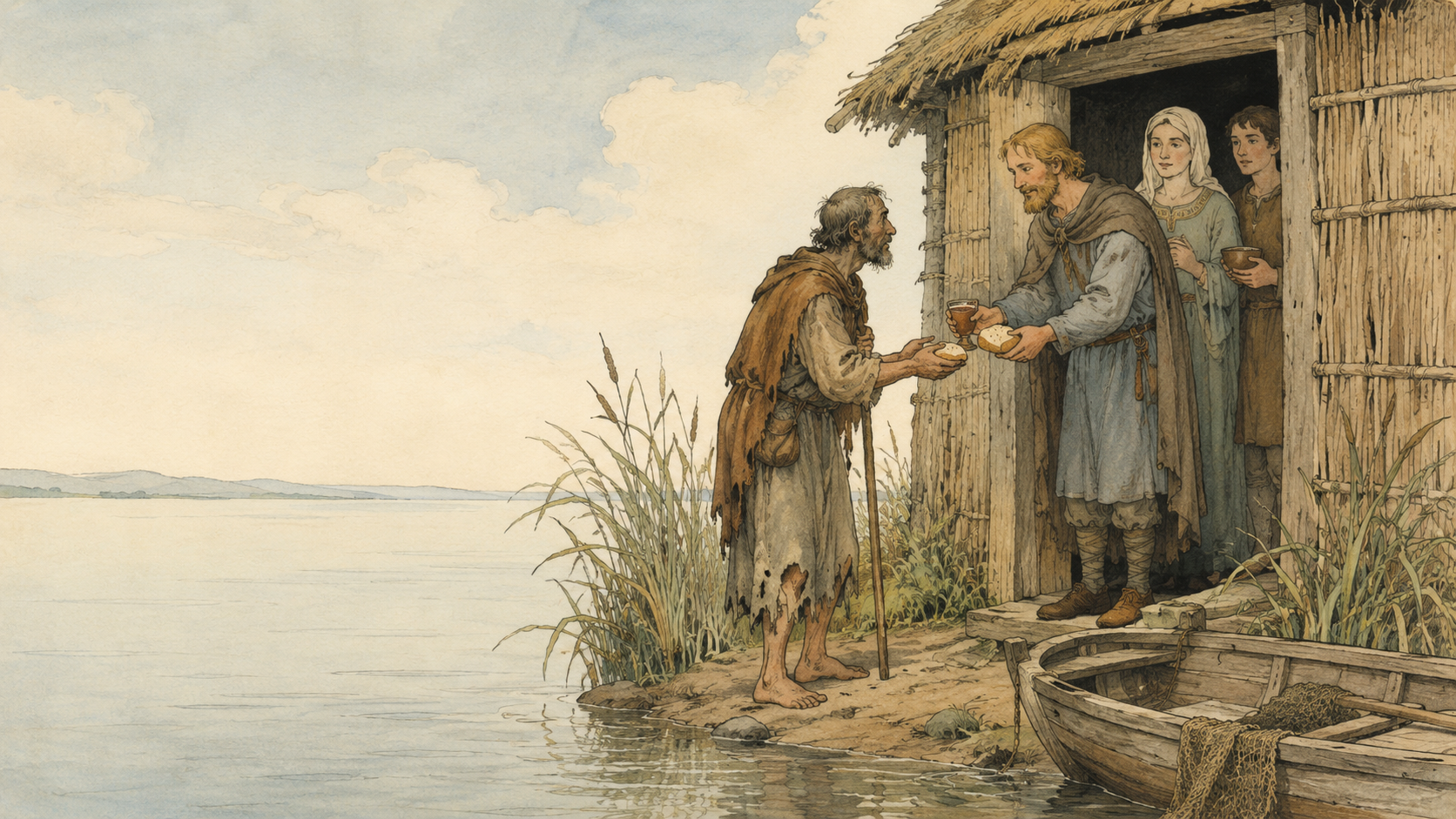
Fifty Famous Stories Retold Chapter 2, King Alfred and the Beggar, follows the hidden king through his hardest days. Still driven from his throne by the Danes, Alfred is sheltering on a little island in the Somerset marshes with only one servant left to him. When a ragged beggar comes asking for food, Alfred gives away half of his last loaf and half of his wine, though he has almost nothing himself. That night the beggar returns to him in a vision and foretells that the king will soon triumph. Sure enough, Alfred rallies his men and beats the Danes at last. It is a warm story of charity given freely from a nearly empty hand.
Say what you remember!
Tell what you remember from the last chapter.
What happened in Fifty Famous Stories Retold Chapter 1, King Alfred and the Cakes?Have a look
In the last chapter, King Alfred and the Cakes, the fierce Danes had overrun England and driven King Alfred into hiding. Ragged and unknown, he took shelter in a woodcutter's hut deep in the country. The woodcutter's wife asked him to watch her cakes as they baked on the hearth, but Alfred was so lost in worry for his kingdom that he let them burn black. The good woman scolded him sharply, never dreaming that the shabby stranger at her fire was really the King of Wessex. Alfred bore her blame quietly and did not tell her who he was.
Read the previous lesson: King Alfred and the Cakes →Show what you know!
Use your printable Lesson Guide. Fill in the vocabulary you know, then click to check your work and learn some new words today.
What are the difficult or advanced vocabulary words in Fifty Famous Stories Retold Chapter 2, King Alfred and the Beggar?fancied, bidden, midst, reignHave a look
- fancied: imagined something, or supposed it to be so
- bidden: told or ordered to do something
- midst: the middle or central part of something
- reign: to rule as a king or queen
Locate it on the map!
Use your printable Lesson Guide. Use an atlas and fill in the blank map if you can find the geographic location, then click to check your work.
What important geographic location connects with Fifty Famous Stories Retold Chapter 2, King Alfred and the Beggar?
- Find Athelney Island (Somerset, England).
See it on the mapHave a look
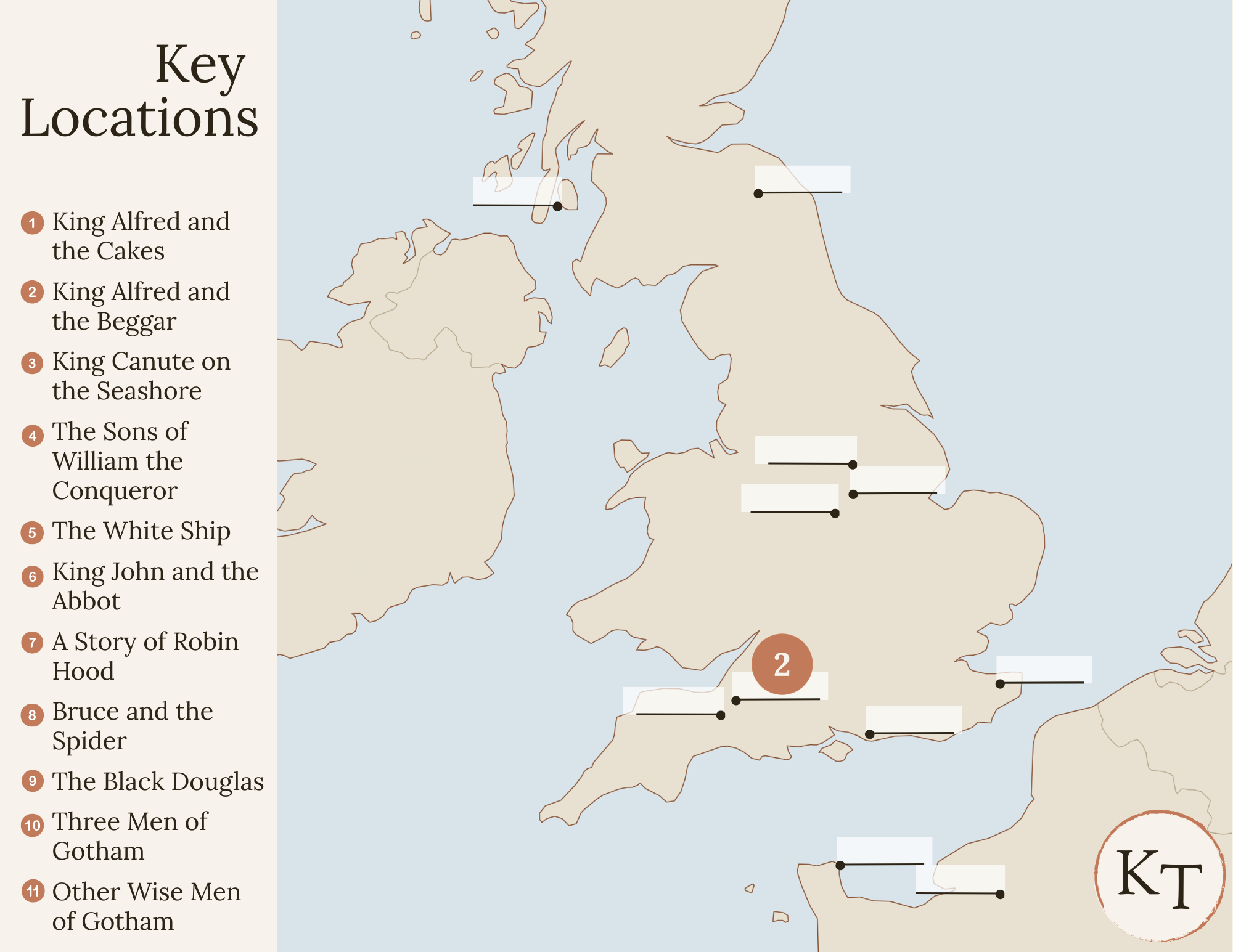
This matches the map in your Lesson Guide.
The Books come Alive!
Read or listen to Chapter 2 of Fifty Famous Stories Retold, the Kindred Thicket Enhanced Edition, read by Laura Caldwell.
Read by Laura Caldwell for LibriVox (public domain), professionally adjusted and trimmed by Kindred Thicket.
What do the Teacher’s Notes tell us about Chapter 2 of Fifty Famous Stories Retold?Parent review
This is a Kindred Thicket Enhanced Edition. Baldwin’s 1896 words are read exactly as he wrote them, and we add Teacher’s Notes with historical and literary context.
- About the whole bookFifty Famous Stories Retold gathers real history together with well-loved legends and traditions. These notes tell you, story by story, which is which.
- This chapterAfter the Danes drove him out in 878, Alfred really did hide in the Somerset marshes on the Isle of Athelney.
- This chapterThe beggar who returns in a vision is Saint Cuthbert, part of a pious legend rather than recorded history.
- This chapterAlfred did rally his men and beat the Danes at Edington, but the horn, the exact five hundred men, and the seven days are legend.
- This chapterAlfred did reign until 899 and is remembered as a wise, reforming king.
Memory becomes Action!
Use the Response Resource* to remember and spell tricky names. Choose one way to narrate.
*Materials in the Lesson Guide.
What is the list of names, people, characters, and places that are important in Chapter 2 of Fifty Famous Stories Retold?King Alfred, The Beggar, The Danes, The Servant, EnglandHave a look
- King Alfred: The hidden king of Wessex who shared his last loaf with a beggar and soon returned to defeat the Danes.
- The Beggar: The poor stranger Alfred fed, who appeared to him that night in a vision and foretold his victory.
- The Danes: The invaders who had driven Alfred from his kingdom and were beaten when he called his men to battle.
- The Servant: The one attendant left on the island, who gave the beggar half of the king's bread and wine.
- England: Alfred's kingdom, lost for a time to the Danes and won back after his hidden days on the island.
Chapter 2 Q & A
This is a Kindred Thicket Enhanced Edition. Baldwin’s stories mingle real history with beloved legend, and here is what to know about this one.
Is the story of King Alfred and the beggar true?
Parts are history and parts are legend. Alfred really did hide in the Somerset marshes on the Isle of Athelney after the Danes drove him out in 878, so his hardship is real. But the beggar who returns in a vision to foretell victory belongs to a pious legend rather than recorded history. Old tradition says the beggar was really Saint Cuthbert.
Who was the beggar?
In the tale the beggar is a poor stranger who asks Alfred for food and later appears to him in a vision, promising he will soon win back his kingdom. By old tradition the beggar is Saint Cuthbert, a much-loved English saint. This part of the story is a devout legend, meant to show that kindness to the poor is richly rewarded.
Did Alfred really defeat the Danes?
Yes. Alfred did rally his men and beat the Danes at the Battle of Edington. That victory is true history. But the storybook details, the horn blown three times, the exact five hundred men, and the seven days, are legend added to make a good tale. Alfred went on to reign until 899 as a wise and reforming king.
What is the lesson of the story?
The story teaches generosity and faith. Alfred shares half of his last loaf and wine with a beggar when he has almost nothing himself, and his kindness is repaid with hope and, soon after, victory. For a young learner it gently shows that giving freely, even from little, is the mark of a truly great heart.