The Listening Grove · Fifty Famous Stories Retold
Chapter 33: The Ungrateful Guest
A Charlotte Mason read-aloud lesson. Press play, with the lesson.
What is Fifty Famous Stories Retold Chapter 33, The Ungrateful Guest, about?Parent review
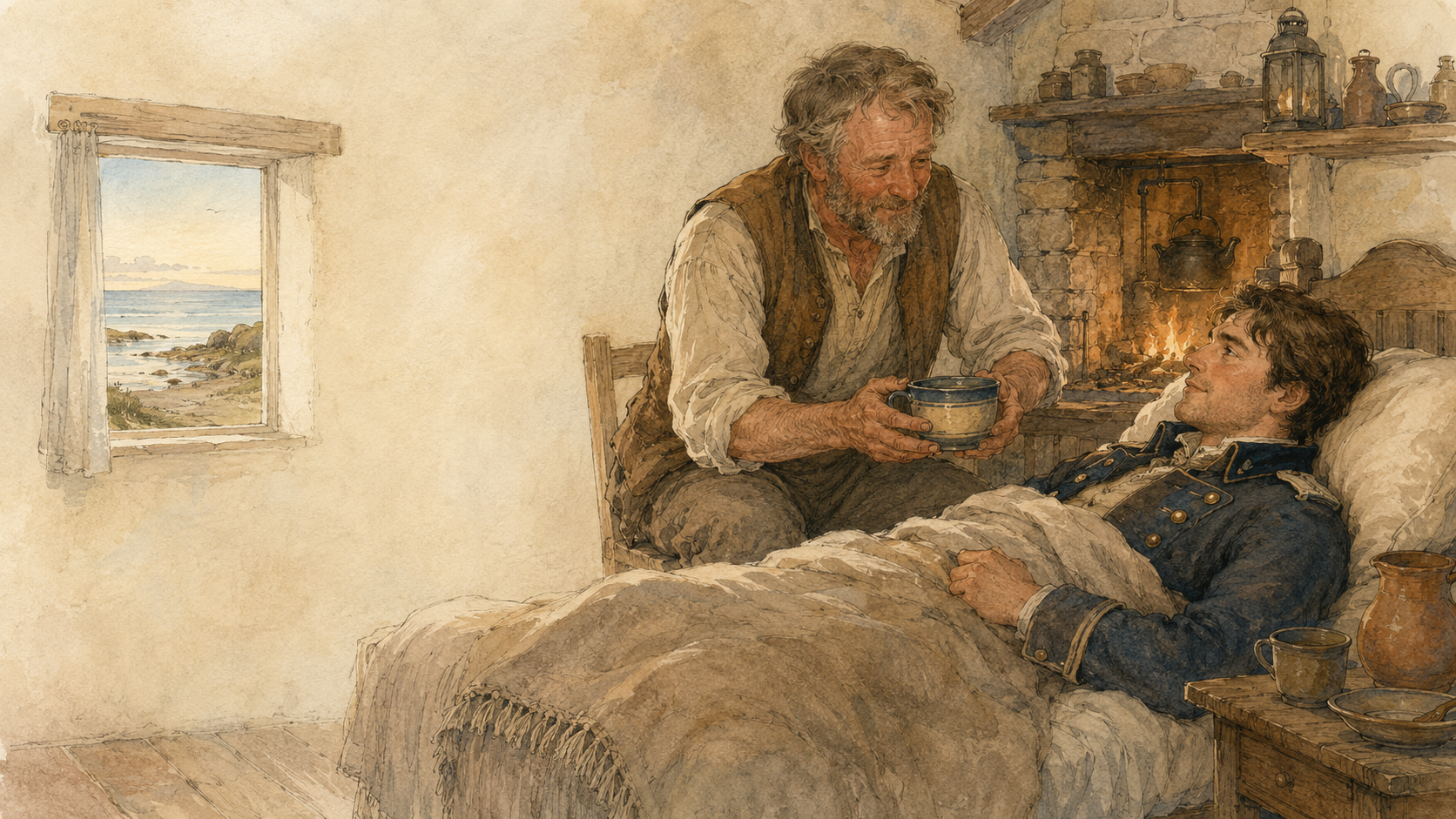
Fifty Famous Stories Retold Chapter 33, The Ungrateful Guest, is a moral tale about gratitude. A soldier of King Philip of Macedon was shipwrecked near the shore, and a kindly farmer who lived close by took him in and nursed him back to health. Instead of thanking the farmer, the soldier begged the king to give him the man's house and land, and Philip granted it, driving the good farmer out. When the wronged farmer told the king the whole truth, Philip was angry at such ingratitude. He ordered the words 'the ungrateful guest' burned upon the soldier's forehead, and ever after all men shunned him. It is a story about thankfulness and honesty.
Say what you remember!
Tell what you remember from the last chapter.
What happened in Fifty Famous Stories Retold Chapter 32, A Laconic Answer?Have a look
In the last chapter, A Laconic Answer, we learned that long ago Greece was not one country but many separate states. The Spartans, who lived in the land of Laconia, were famous for using very few words, which is why a short, plain answer is still called laconic. When Philip, the warlike king of Macedon, had conquered most of Greece, he sent Sparta a letter warning that if he entered Laconia he would level their city. The Spartans sent back a single word: 'If.' It was remembered as a small, bold reply, and as the reason we still use the word laconic today.
Read the previous lesson: A Laconic Answer →Show what you know!
Use your printable Lesson Guide. Fill in the vocabulary you know, then click to check your work and learn some new words today.
What are the difficult or advanced vocabulary words in Fifty Famous Stories Retold Chapter 33, The Ungrateful Guest?ungrateful, churlish, shun, enrichHave a look
- ungrateful: showing no thanks for kindness
- churlish: rude and unfriendly
- shun: to keep away from on purpose
- enrich: to make richer
Locate it on the map!
Use your printable Lesson Guide. Use an atlas and fill in the blank map if you can find the geographic location, then click to check your work.
What important geographic location connects with Fifty Famous Stories Retold Chapter 33, The Ungrateful Guest?
- Find Macedonia (northern Greece): the kingdom ruled by King Philip
See it on the mapHave a look
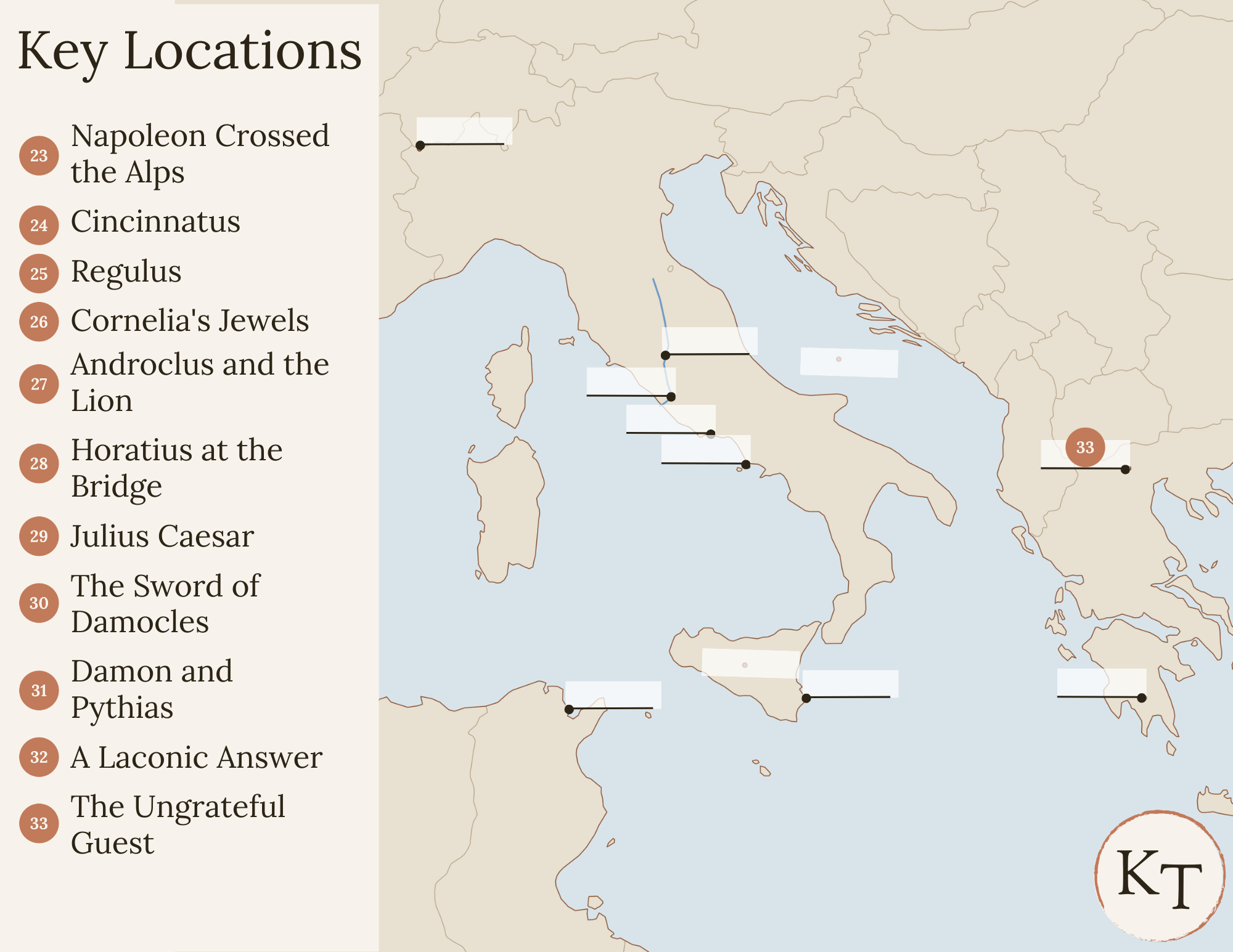
This matches the map in your Lesson Guide.
The Books come Alive!
Read or listen to Chapter 33 of Fifty Famous Stories Retold, the Kindred Thicket Enhanced Edition, read by Laura Caldwell.
Read by Laura Caldwell for LibriVox (public domain), professionally adjusted and trimmed by Kindred Thicket.
What do the Teacher’s Notes tell us about Chapter 33 of Fifty Famous Stories Retold?Parent review
This is a Kindred Thicket Enhanced Edition. Baldwin’s 1896 words are read exactly as he wrote them, and we add Teacher’s Notes with historical and literary context.
- About the whole bookFifty Famous Stories Retold gathers real history together with well-loved legends and traditions. These notes tell you, story by story, which is which.
- This chapterKing Philip of Macedon was a real ruler, but this tale of the ungrateful guest cannot be traced to a reliable historical source. It is best enjoyed as a moral story about gratitude rather than as history.
Memory becomes Action!
Use the Response Resource* to remember and spell tricky names. Choose one way to narrate.
*Materials in the Lesson Guide.
What is the list of names, people, characters, and places that are important in Chapter 33 of Fifty Famous Stories Retold?King Philip, The soldier, The farmerHave a look
- King Philip: Philip II of Macedon, the same king as in the story before this one.
- The soldier: A poor man in Philip's army who had done brave deeds and won the king's trust.
- The farmer: The man living close by the shore whose kind care saves the soldier's life.
Chapter 33 Q & A
This is a Kindred Thicket Enhanced Edition. Baldwin’s stories mingle real history with beloved legend, and here is what to know about this one.
Is The Ungrateful Guest true history or a legend?
King Philip of Macedon was a real ruler, but this tale of the ungrateful guest cannot be traced to a reliable historical source. It is best enjoyed as a moral story about gratitude rather than as history. So while Philip truly lived, the story itself should be read as a lesson tale rather than recorded fact.
Is this the same Philip as in the last story?
Yes. This is Philip of Macedon, the same warlike king who received the Spartans' one-word answer in the story before this one. He was a real ruler of Macedon in northern Greece. Baldwin uses him again here, but the tale of the ungrateful guest is a moral story and cannot be traced to a trustworthy historical record.
Why can't the story be proven true?
Careful checking found no reliable early source that records this particular tale. King Philip was certainly a real person, yet the account of the shipwrecked soldier and the kindly farmer seems to have been passed along as a moral story. For that reason it is best shared as a lesson about gratitude rather than as history that surely happened.
Is the ending too harsh for young children?
At the end the king punishes the ungrateful soldier by having words burned into his forehead. It is stated briefly and without detail, so most children simply understand that ingratitude was shamed and punished. Parents who wish to may preview the chapter first, but the moment passes quickly and the story's real focus is on being thankful.