The Listening Grove · Fifty Famous Stories Retold
Chapter 42: The Endless Tale
A Charlotte Mason read-aloud lesson. Press play, with the lesson.
What is Fifty Famous Stories Retold Chapter 42, The Endless Tale, about?Parent review
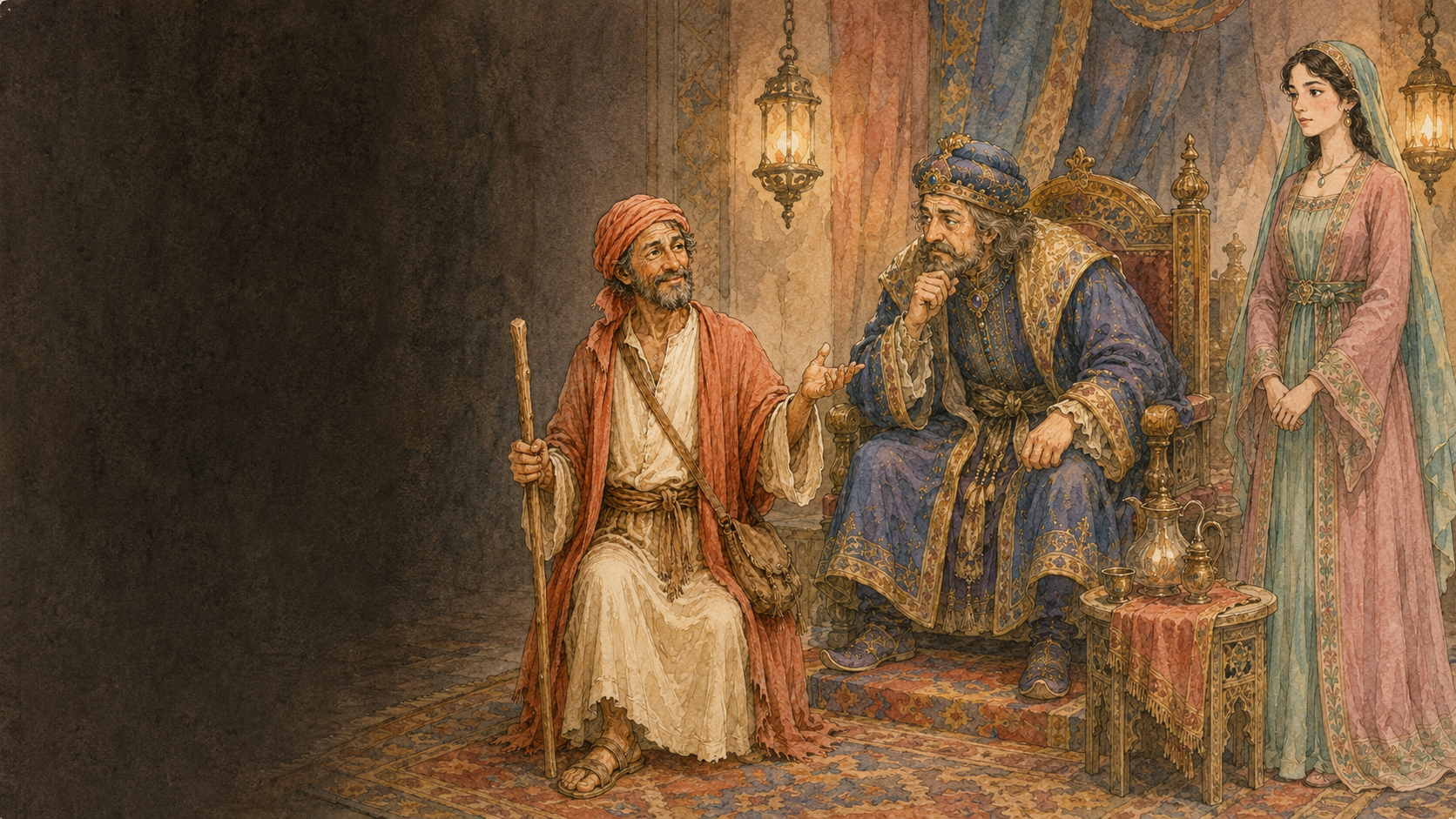
Fifty Famous Stories Retold Chapter 42, The Endless Tale, is a story about a bored king who loves stories so much that no tale is ever long enough for him. A great king in the Far East listens to stories all day and always complains when one ends, so he offers his daughter in marriage, and his kingdom as an inheritance, to anyone who can tell a story that never finishes, but anyone who tries and fails will lose his head. One young man's story lasts three months before he runs out of words. Then a clever stranger from the South offers a tale about locusts carrying corn from a king's granary one grain at a time, repeating the same line over and over for two years until the real king can bear it no longer. He begs the storyteller to stop, giving him his daughter and his throne just to end the endless telling, a clever trick that wins the prize without ever finishing the story.
Say what you remember!
Tell what you remember from the last chapter.
What happened in Fifty Famous Stories Retold Chapter 41, The Barmecide Feast?Have a look
In the last chapter, The Barmecide Feast, we learned that a rich man called the Barmecide invited a starving beggar named Schacabac to a pretend feast, naming course after imaginary course while Schacabac played along and pretended to eat. When Schacabac politely declined the pretend wine because it was forbidden to him, the Barmecide was so delighted by his patience and good humor that he ordered a real feast brought out, then invited Schacabac to stay and manage his house, so that he never went hungry again.
Read the previous lesson: The Barmecide Feast →Show what you know!
Use your printable Lesson Guide. Fill in the vocabulary you know, then click to check your work and learn some new words today.
What are the difficult or advanced vocabulary words in Fifty Famous Stories Retold Chapter 42, The Endless Tale?heir, granary, crevice, cubitHave a look
- heir: one who will inherit a rank or title
- granary: a storehouse for grain
- crevice: a narrow opening made by a split or crack
- cubit: an old length measured along the forearm
Locate it on the map!
Use your printable Lesson Guide. Use an atlas and fill in the blank map if you can find the geographic location, then click to check your work.
What important geographic location connects with Fifty Famous Stories Retold Chapter 42, The Endless Tale?
- Find Spain: This story has no true home: it is an international folktale with no traceable point of origin. The oldest written version anyone has found comes from a 12th-century book compiled from Arabic sources in Spain, so the pin marks a stop in the tale's journey rather than where it began.
See it on the mapHave a look
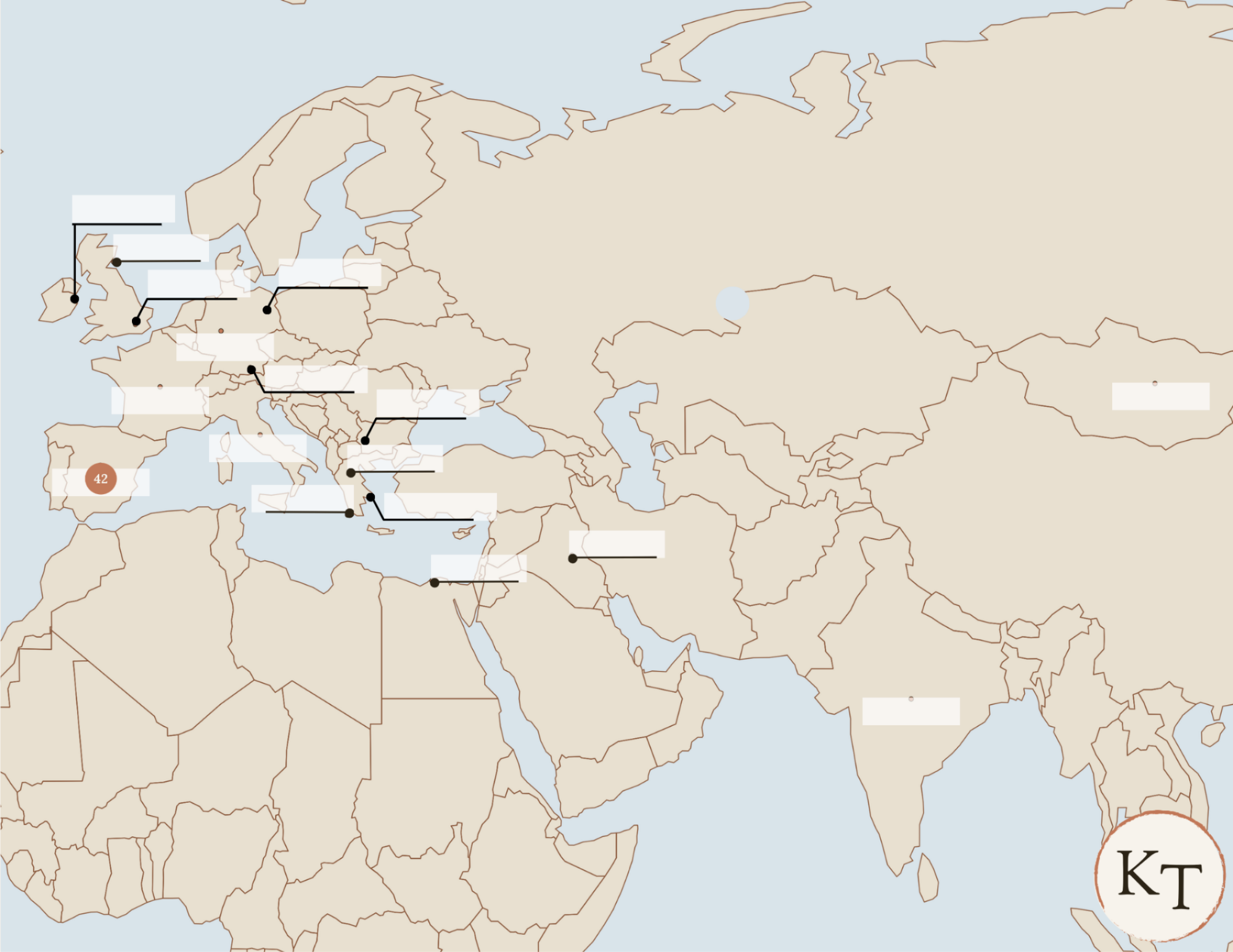
This matches the map in your Lesson Guide.
The Books come Alive!
Read or listen to Chapter 42 of Fifty Famous Stories Retold, the Kindred Thicket Enhanced Edition, read by Laura Caldwell.
Read by Laura Caldwell for LibriVox (public domain), professionally adjusted and trimmed by Kindred Thicket.
What do the Teacher’s Notes tell us about Chapter 42 of Fifty Famous Stories Retold?Parent review
This is a Kindred Thicket Enhanced Edition. Baldwin’s 1896 words are read exactly as he wrote them, and we add Teacher’s Notes with historical and literary context.
- About the whole bookFifty Famous Stories Retold gathers real history together with well-loved legends and traditions. These notes tell you, story by story, which is which.
- "In the Far East"No place is named, and the Far East is a vague label meaning different countries to different people. This tale turns up all over the world, and the oldest written version we can follow came from the Middle East, not East Asia.
- the king's proclamationBoth parts of this bargain turn up again and again in old stories that have nothing else in common. Folklorists list them as standard ways to set up a contest, not as a record of anything anyone actually did.
- "seized upon all the corn"Corn here means grain of any kind, which is what the word meant in England for centuries. It does not mean the yellow corn on the cob, which comes from the Americas. The story uses corn and grain to mean the same thing.
- the locusts at the creviceLocusts are real and can strip a field bare, but they eat where they land. Carrying grain away one piece at a time is what ants do. The story borrows it because a job repeated forever is what makes the tale endless.
- "only one cubit"A cubit is a real old measurement, the length of a forearm from elbow to fingertip, about eighteen inches.
- Parents may wish to preview this chapter. At the opening the king offers his daughter in marriage as the prize in a contest, and promises to behead anyone who tries and fails. No one is harmed and the tale stays light.
Memory becomes Action!
Use the Response Resource* to remember and spell tricky names. Choose one way to narrate.
*Materials in the Lesson Guide.
What is the list of names, people, characters, and places that are important in Chapter 42 of Fifty Famous Stories Retold?The king, The king's daughter, The stranger from the South, The young man, The locusts, The granary, The Far EastHave a look
- The king: A king of the Far East.
- The king's daughter: The king's daughter, promised in marriage to the winner.
- The stranger from the South: A storyteller.
- The young man: An earlier storyteller.
- The locusts: The insects in the stranger's story.
- The granary: The grain store in the stranger's story.
- The Far East: The part of the world the story is set in.
Chapter 42 Q & A
This is a Kindred Thicket Enhanced Edition. Baldwin’s stories mingle real history with beloved legend, and here is what to know about this one.
Where does this story really come from?
Nowhere in particular. This is an international folk "formula tale" known across the world (folklorists classify it as ATU type 2300), and no source can point to a true point of origin.
Then why does the map pin Spain?
Spain marks a stage in the story's journey, not its birthplace. The oldest written version anyone has traced comes from a 12th-century book compiled from Arabic sources in Spain, so the pin shows where the tale passed through in writing, not where it began.
Did a king really offer his daughter and his kingdom for an endless story?
No, this bargain is a storytelling device that turns up again and again in old tales that have nothing else in common. Folklorists treat it as a standard way to set up a contest, not as something anyone actually did.
Is "corn" in this story the same as the corn we eat today?
No. Here corn means grain of any kind, which is what the word meant in England for centuries. It doesn't refer to corn on the cob, which comes from the Americas.