The Listening Grove · Fifty Famous Stories Retold
Chapter 43: The Blind Men and the Elephant
A Charlotte Mason read-aloud lesson. Press play, with the lesson.
What is Fifty Famous Stories Retold Chapter 43, The Blind Men and the Elephant, about?Parent review
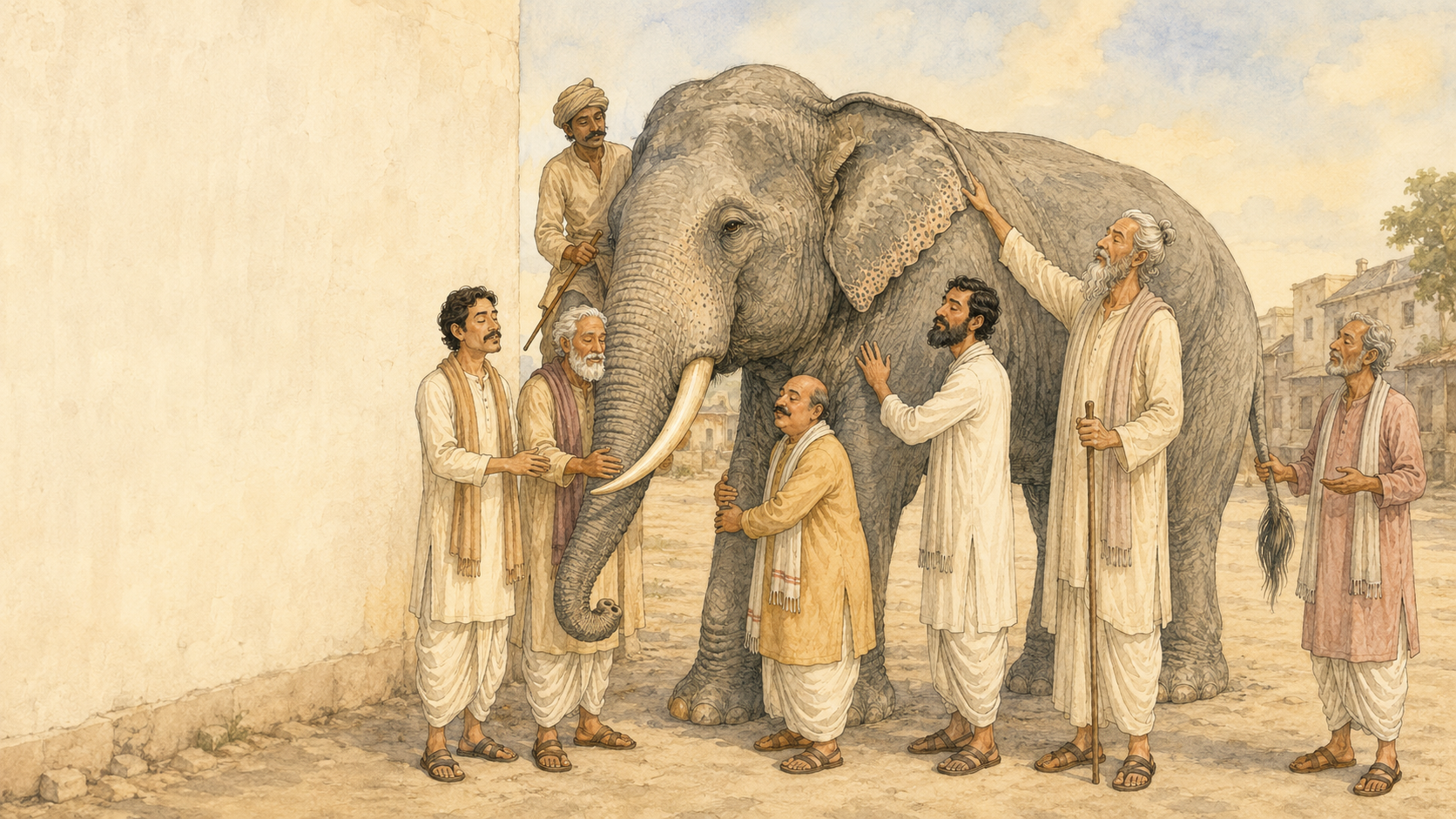
Fifty Famous Stories Retold Chapter 43, The Blind Men and the Elephant, is a story about how easily people mistake a small piece of the truth for the whole truth. Six blind men who beg by the roadside have often heard of elephants but never touched one, so when an elephant is led down their road, they ask the driver to stop so they can feel the animal for themselves. Each man touches a different part, the side, the tusk, the trunk, a leg, the ear, and the tail, and each is certain he alone understands what an elephant is like: a wall, a spear, a snake, a tree, a fan, or a rope. When the elephant is led away, the six men sit by the road all day arguing, each sure the others are wrong, and the story notes that people who can see sometimes act just as foolishly, holding tightly to one small part of the truth.
Say what you remember!
Tell what you remember from the last chapter.
What happened in Fifty Famous Stories Retold Chapter 42, The Endless Tale?Have a look
In the last chapter, The Endless Tale, we learned that a king who loved stories offered his daughter in marriage and his kingdom to anyone who could tell a story with no end, on the condition that failure meant losing one's head. A clever stranger from the South told a slow tale about locusts carrying grain from a granary one piece at a time, repeating the same line for two years until the king begged him to stop, gave him his daughter and his throne, and never wanted to hear another story again.
Read the previous lesson: The Endless Tale →Show what you know!
Use your printable Lesson Guide. Fill in the vocabulary you know, then click to check your work and learn some new words today.
What are the difficult or advanced vocabulary words in Fifty Famous Stories Retold Chapter 43, The Blind Men and the Elephant?beast, tusk, particle, quarreledHave a look
- beast: a four-footed animal
- tusk: a long tooth that sticks out of the mouth
- particle: a very tiny bit of something
- quarreled: argued angrily
Locate it on the map!
Use your printable Lesson Guide. Use an atlas and fill in the blank map if you can find the geographic location, then click to check your work.
What important geographic location connects with Fifty Famous Stories Retold Chapter 43, The Blind Men and the Elephant?
- Find India: Baldwin names no place for this parable. The oldest known telling is set in India in Buddhist scripture, and the English poem that made the story famous calls the men "six men of Indostan," so India is where the pin points even though this is a fable, not history.
See it on the mapHave a look
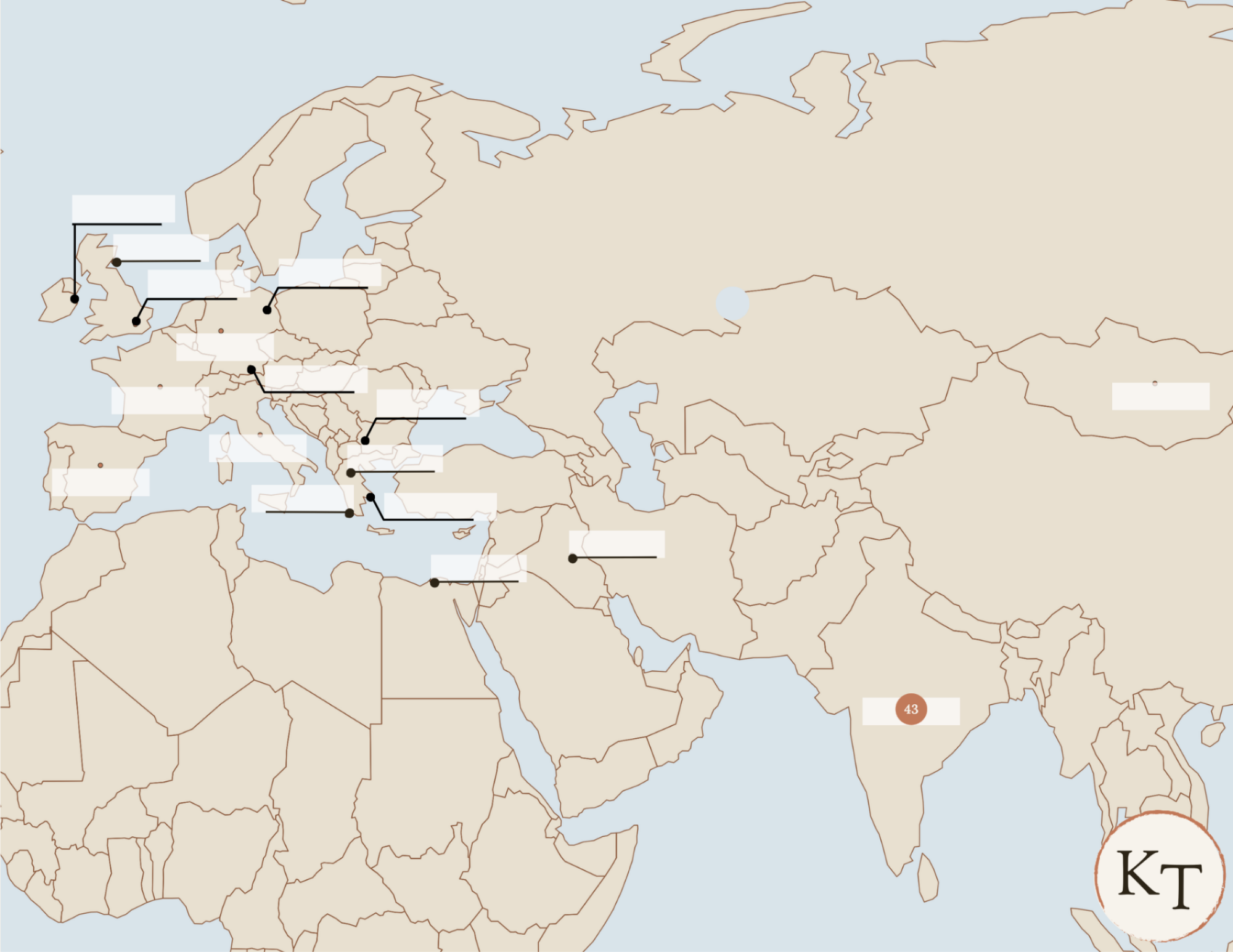
This matches the map in your Lesson Guide.
The Books come Alive!
Read or listen to Chapter 43 of Fifty Famous Stories Retold, the Kindred Thicket Enhanced Edition, read by Laura Caldwell.
Read by Laura Caldwell for LibriVox (public domain), professionally adjusted and trimmed by Kindred Thicket.
What do the Teacher’s Notes tell us about Chapter 43 of Fifty Famous Stories Retold?Parent review
This is a Kindred Thicket Enhanced Edition. Baldwin’s 1896 words are read exactly as he wrote them, and we add Teacher’s Notes with historical and literary context.
- About the whole bookFifty Famous Stories Retold gathers real history together with well-loved legends and traditions. These notes tell you, story by story, which is which.
- "stood by the roadside every day, and begged"In the oldest telling the men are not beggars. A king sends for people blind from birth to try the puzzle, and in the poem this chapter follows they are scholars who go to see the elephant for themselves.
- closing asideThe lesson is much older than this book. It was first told against rival teachers who argued about things none of them could see, each certain he alone was right.
- Parents may wish to preview this chapter. It uses blind men to make its point, which is very old, but the begging by the roadside and the phrase very blind indeed were added later.
Memory becomes Action!
Use the Response Resource* to remember and spell tricky names. Choose one way to narrate.
*Materials in the Lesson Guide.
What is the list of names, people, characters, and places that are important in Chapter 43 of Fifty Famous Stories Retold?The six blind men, The elephantHave a look
- The six blind men: Six blind beggars.
- The elephant: The animal the six men touch.
Chapter 43 Q & A
This is a Kindred Thicket Enhanced Edition. Baldwin’s stories mingle real history with beloved legend, and here is what to know about this one.
Is The Blind Men and the Elephant based on a true event?
No, this is a parable, not history. It has no historical anchor at all; it's a teaching story meant to illustrate a point about partial understanding, not an account of something that happened.
Where does the story actually come from?
The oldest known version appears in the Pali Udana, a Buddhist scripture. The English poem that made the story famous in the West calls the men "six men of Indostan," which is where our familiar version comes from.
Why does the map pin India if Baldwin never names a place?
Baldwin doesn't set the story anywhere. The pin follows the story's own origins instead: the oldest telling is set in India in Buddhist scripture, and the poem that popularized it calls the men "men of Indostan," so India is the best-grounded choice even though it's editorial rather than something the text states.
Were the blind men really beggars?
Not in the oldest telling. There, they aren't beggars at all: a king sends for people blind from birth to try the puzzle, and in the poem this chapter follows, they are scholars who go see the elephant themselves. The roadside begging is a later addition.