The Listening Grove · Fifty Famous Stories Retold
Chapter 45: The Inchcape Rock
A Charlotte Mason read-aloud lesson. Press play, with the lesson.
What is Fifty Famous Stories Retold Chapter 45, The Inchcape Rock, about?Parent review
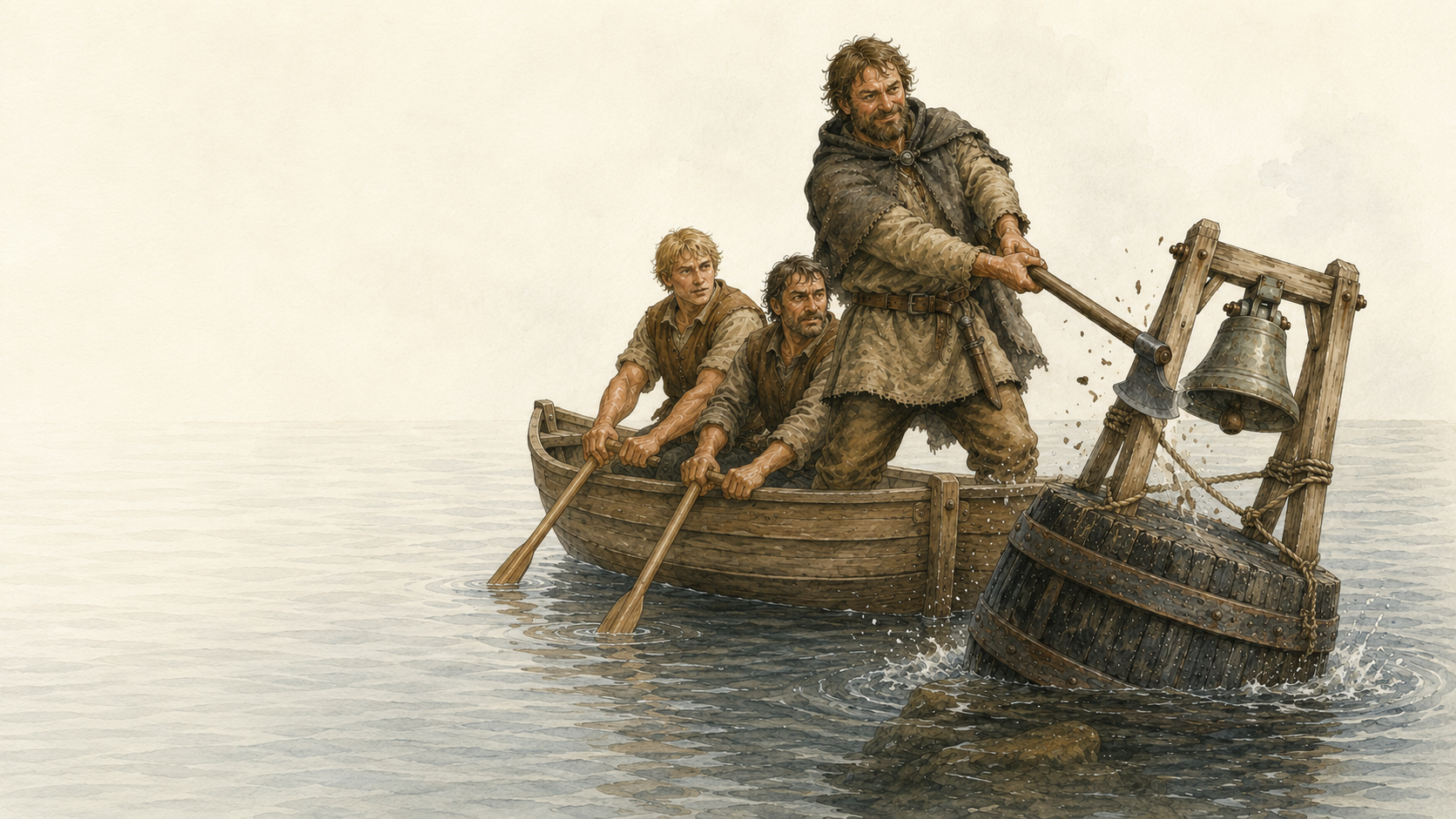
Fifty Famous Stories Retold Chapter 45, The Inchcape Rock, is a story about the danger of playing a cruel joke and the way trouble has a habit of finding its way back to the one who causes it. In the North Sea there is a hidden rock so close to the surface that ships often wrecked upon it, until a kind abbot placed a bell on a floating buoy there so sailors could hear it ringing and steer clear. Sailors blessed the abbot for his kindness. But one calm day a sea robber named Ralph the Rover rowed out to the rock and, just for spite, cut the bell loose and let it sink to the bottom of the sea. He sailed off laughing, thinking only of the trick he had played. Months later, Ralph's own ship was caught in a thick fog near that very spot, with no bell left to warn him of danger. His ship crashed upon the Inchcape Rock and sank, and Ralph realized too late that his own cruel joke had cost him his life.
Say what you remember!
Tell what you remember from the last chapter.
What happened in Fifty Famous Stories Retold Chapter 44, Maximilian and the Goose Boy?Have a look
In the last chapter, Maximilian and the Goose Boy, we learned how a king out walking lost his book and offered a goose boy a gold piece to fetch it, then tried tending the boy's geese himself while he was gone. The geese ran off the moment their true keeper left, proving to the boy, once and for all, that a kind man might make a fine king but would never make a good gooseherd.
Read the previous lesson: Maximilian and the Goose Boy →Show what you know!
Use your printable Lesson Guide. Fill in the vocabulary you know, then click to check your work and learn some new words today.
What are the difficult or advanced vocabulary words in Fifty Famous Stories Retold Chapter 45, The Inchcape Rock?vessel, buoy, plundered, breakersHave a look
- vessel: a boat or ship
- buoy: a float anchored to mark danger in water
- plundered: took goods away by force
- breakers: waves breaking into foam near shore
Locate it on the map!
Use your printable Lesson Guide. Use an atlas and fill in the blank map if you can find the geographic location, then click to check your work.
What important geographic location connects with Fifty Famous Stories Retold Chapter 45, The Inchcape Rock?
- Find the Inchcape Rock (near Arbroath, Scotland): A hidden rock in the North Sea, so close to the surface that ships could strike it without warning; the Abbot of Aberbrothock hung a warning bell on a buoy here to guide sailors safely around it.
See it on the mapHave a look
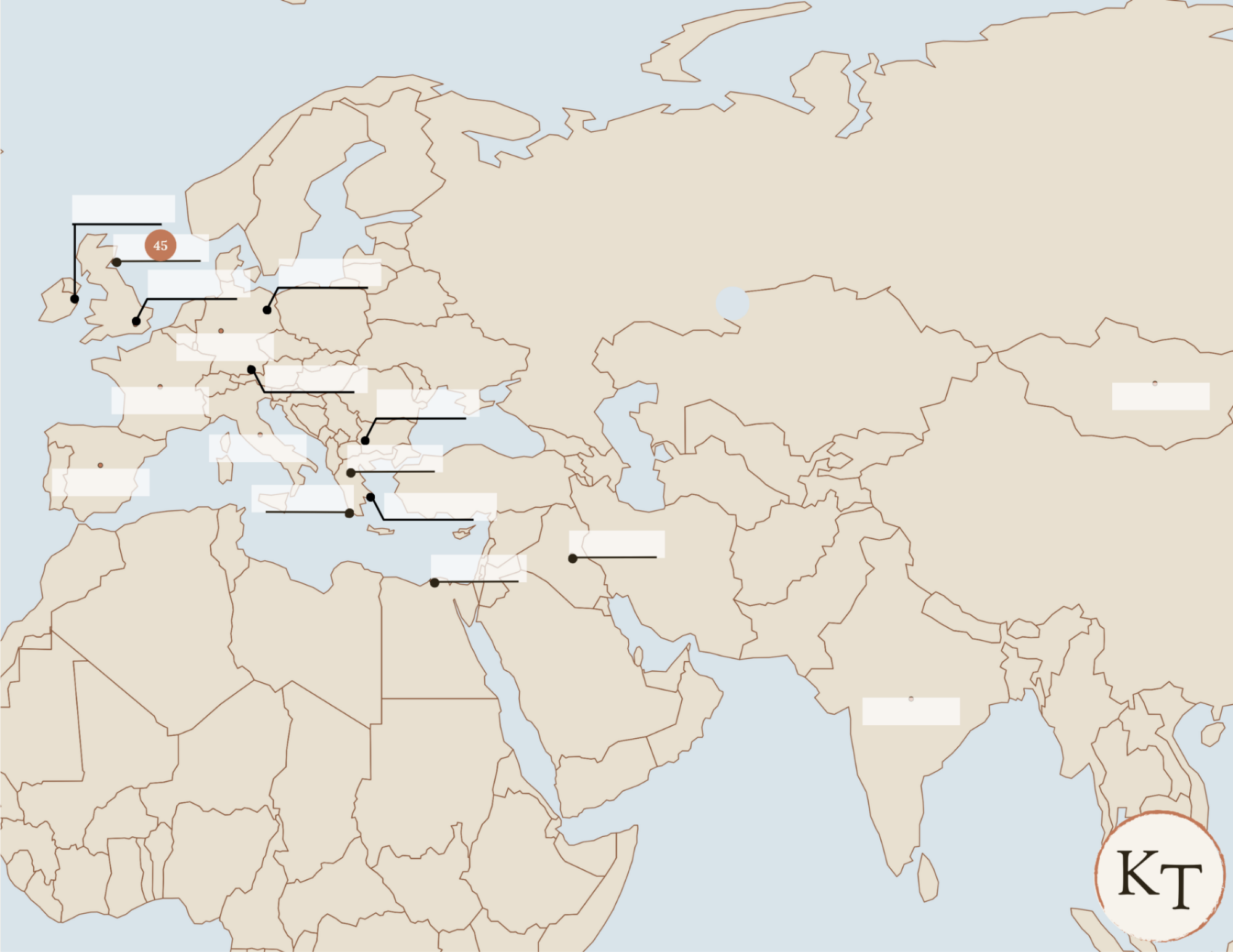
This matches the map in your Lesson Guide.
The Books come Alive!
Read or listen to Chapter 45 of Fifty Famous Stories Retold, the Kindred Thicket Enhanced Edition, read by Laura Caldwell.
Read by Laura Caldwell for LibriVox (public domain), professionally adjusted and trimmed by Kindred Thicket.
What do the Teacher’s Notes tell us about Chapter 45 of Fifty Famous Stories Retold?Parent review
This is a Kindred Thicket Enhanced Edition. Baldwin’s 1896 words are read exactly as he wrote them, and we add Teacher’s Notes with historical and literary context.
- About the whole bookFifty Famous Stories Retold gathers real history together with well-loved legends and traditions. These notes tell you, story by story, which is which.
- "no vessel can sail over it without striking"At high tide the rock lies twelve to sixteen feet under water, hidden but shallow enough for a large ship to strike. Small boats could pass over it safely. That is what made it dangerous: it could not be seen.
- "the Abbot of Aberbrothock"Aberbrothock is the old name for Arbroath, and its abbey lasted from 1178 to 1560. There was no abbot there a hundred years before this book was written, and the abbey papers say nothing about a bell on the rock.
- the buoy, chain and bellThe story has grown with each telling. The oldest account has a bell fixed to a piece of timber, moved by the sea. The floating buoy comes from a poem written in 1802, and the chain appears later still.
- "Ralph the Rover" and the black flagThe pirate has no name in the old account, which calls him only a sea robber. Ralph the Rover was invented for the 1802 poem. The black flag belongs to a much later age of piracy than the abbey ever knew.
- the wreck and drowningThe ending is as old as the story itself. The oldest account already has the pirate wrecked on the same rock a year later. The fog and the sinking scene were added by later tellers.
- the bell at the bottom of the seaThe poem this follows ends differently. The ending here is gentler.
- "twelve miles from any land"The rock lies about eleven miles from Arbroath, the nearest land, not twelve. The twelve comes from the old writer quoted in the 1802 poem rather than from any measurement.
- Parents may wish to preview this chapter. The pirate drowns, and the story treats it as what he had coming. That reading is part of the oldest version rather than a later addition.
Memory becomes Action!
Use the Response Resource* to remember and spell tricky names. Choose one way to narrate.
*Materials in the Lesson Guide.
What is the list of names, people, characters, and places that are important in Chapter 45 of Fifty Famous Stories Retold?The Inchcape Rock, The Abbot of Aberbrothock, Ralph the Rover, The bell and buoy, The North SeaHave a look
- The Inchcape Rock: A rock in the North Sea.
- The Abbot of Aberbrothock: The abbot of the abbey at Aberbrothock, now Arbroath.
- Ralph the Rover: A sea robber.
- The bell and buoy: The abbot's warning, set on the rock.
- The North Sea: The sea the Inchcape Rock lies in.
Chapter 45 Q & A
This is a Kindred Thicket Enhanced Edition. Baldwin’s stories mingle real history with beloved legend, and here is what to know about this one.
Is the Inchcape Rock a real place?
Yes. It lies near Arbroath, Scotland, and at high tide sits twelve to sixteen feet under water, hidden but shallow enough for a large ship to strike, which is exactly what made it so dangerous.
Did an abbot really place a warning bell on the rock?
This part is legend rather than documented history. Aberbrothock's abbey was real and stood from 1178 to 1560, but there was no abbot there in the hundred years before this book was written, and the abbey's own papers say nothing about a bell on the rock.
Was Ralph the Rover a real pirate?
No. The oldest telling of this legend calls the villain only 'a sea robber' with no name at all. Ralph the Rover and his black flag were invented for a poem written in 1802, long after the tale first took shape.
Did the bell really keep ringing at the bottom of the sea?
That closing image comes from Baldwin's retelling, not from the poem it is based on, which ends differently. It is best enjoyed as the story's own gentle, poetic touch rather than as part of the older legend.