The Listening Grove · Fifty Famous Stories Retold
Chapter 46: Whittington and His Cat
A Charlotte Mason read-aloud lesson. Press play, with the lesson.
What is Fifty Famous Stories Retold Chapter 46, Whittington and His Cat, about?Parent review
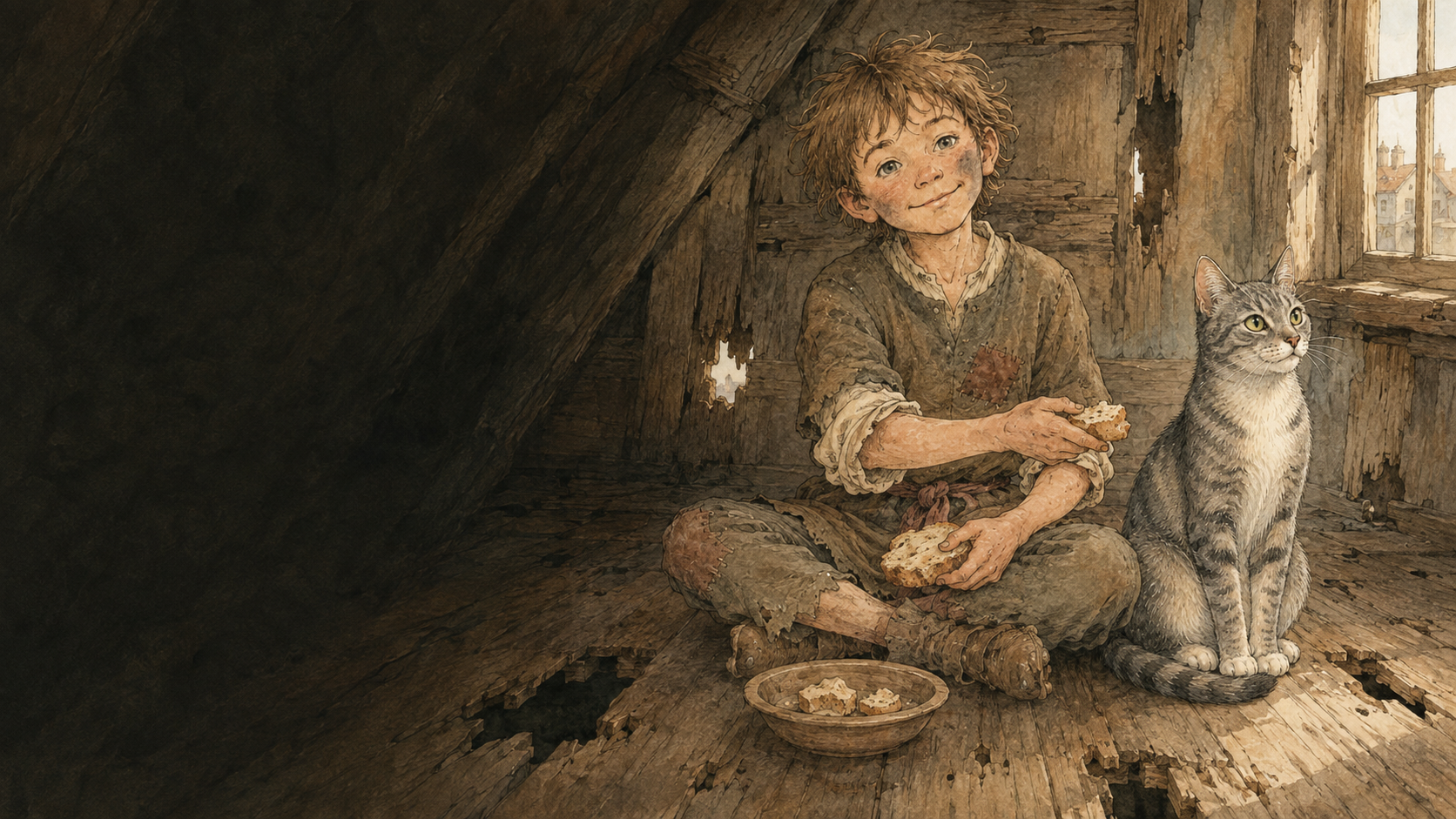
Fifty Famous Stories Retold Chapter 46, Whittington and His Cat, is a story about how kindness and patience can turn even the hardest luck around. Young Dick Whittington travels to London believing its streets are paved with gold, only to find hunger and a hard life instead. He is taken in by the merchant Mr. Fitzwarren but must put up with a cruel cook, until he buys a cat with his only penny to keep the rats out of his attic room. When Mr. Fitzwarren sends a ship out to trade, Dick has nothing of his own to send but that cat, so he gives her up for the voyage. Ready to run away and give up on the city, Dick hears London's bells seem to call him back to become Lord Mayor. Far away, his cat is sold to a foreign king for a fortune after ridding his palace of rats, and Dick receives the riches in return. He grows into a kind and generous merchant, marries Alice Fitzwarren, and rises to become Lord Mayor of London three times over.
Say what you remember!
Tell what you remember from the last chapter.
What happened in Fifty Famous Stories Retold Chapter 45, The Inchcape Rock?Have a look
In the last chapter, The Inchcape Rock, we learned how a kind abbot hung a warning bell on a buoy to protect sailors from a hidden, dangerous rock, and how a cruel sea robber named Ralph the Rover cut the bell loose as a joke. Months later, sailing back through a thick fog, Ralph's own ship struck that very rock and sank, so the joke he played on others became his own ruin.
Read the previous lesson: The Inchcape Rock →Show what you know!
Use your printable Lesson Guide. Fill in the vocabulary you know, then click to check your work and learn some new words today.
What are the difficult or advanced vocabulary words in Fifty Famous Stories Retold Chapter 46, Whittington and His Cat?venture, garret, mouser, merchantHave a look
- venture: something valuable risked in hope of gain
- garret: a small room just under the roof
- mouser: a cat that is good at catching mice
- merchant: a person who buys and sells goods
Locate it on the map!
Use your printable Lesson Guide. Use an atlas and fill in the blank map if you can find the geographic location, then click to check your work.
What important geographic location connects with Fifty Famous Stories Retold Chapter 46, Whittington and His Cat?
- Find London (England): The great city Dick Whittington travels to hoping to find streets paved with gold; instead he finds hunger and hardship at first before slowly building his fortune there and becoming a merchant and Lord Mayor.
See it on the mapHave a look
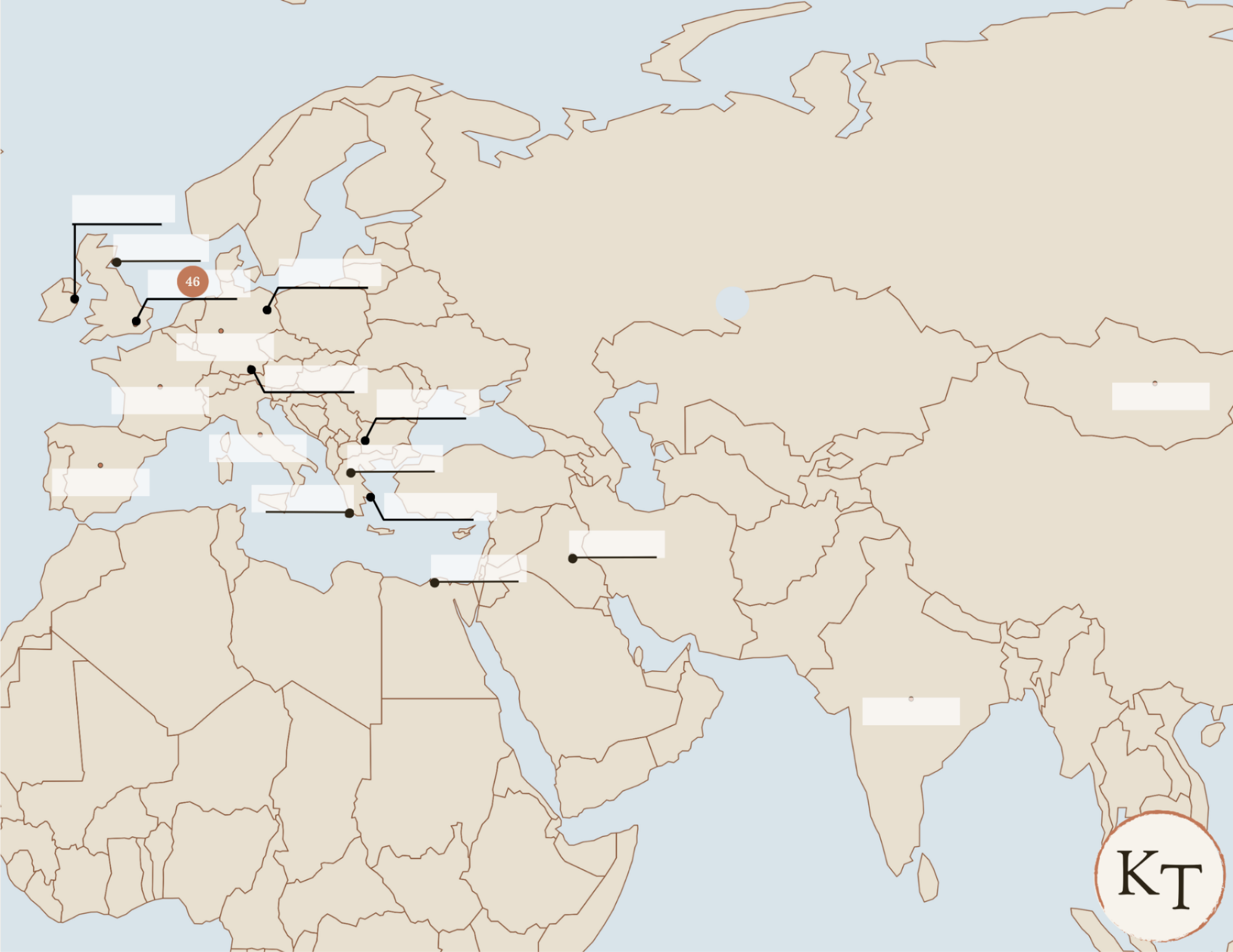
This matches the map in your Lesson Guide.
The Books come Alive!
Read or listen to Chapter 46 of Fifty Famous Stories Retold, the Kindred Thicket Enhanced Edition, read by Laura Caldwell.
Read by Laura Caldwell for LibriVox (public domain), professionally adjusted and trimmed by Kindred Thicket.
What do the Teacher’s Notes tell us about Chapter 46 of Fifty Famous Stories Retold?Parent review
This is a Kindred Thicket Enhanced Edition. Baldwin’s 1896 words are read exactly as he wrote them, and we add Teacher’s Notes with historical and literary context.
- About the whole bookFifty Famous Stories Retold gathers real history together with well-loved legends and traditions. These notes tell you, story by story, which is which.
- the orphan openingRichard Whittington was real, but he was not a poor orphan. He was the son of a Gloucestershire knight, Sir William Whittington, and his mother outlived him. As a younger son he inherited no land and went into trade in London.
- Fitzwarren takes him inFitzwarren is a real name in his story, but not as his master. Whittington married Alice Fitzwaryn, the daughter of a knight, when he was about forty-eight. No record shows him working in that household.
- buying the catThere is no record that he ever had a cat. The story first appears in print about 1605, nearly two hundred years after his death, and the same tale is told of merchants in Persia, Italy and Denmark.
- the servants' ventureNo record shows London merchants asking their servants to stake their own goods on a voyage. It is part of the story rather than a custom anyone has found evidence for.
- the weddingThe marriage is real. Alice Fitzwaryn was the daughter of a knight, and he married her as an established London merchant of about forty-eight, not as a kitchen boy marrying his master's daughter. They had no children.
- Whittington's StoneThe Whittington Stone is real and still stands on Highgate Hill, but it marks the legend, not an event. The present stone dates from 1821, and the cat on it was added in 1964.
- the Bow bells rhymeBow Church and its bells are real. The rhyme is not: the oldest printed version says only "Turn again Whittington, Lord Mayor of London." The word thrice was added by later printers.
- "thrice lord mayor"The City of London's own records count four terms as mayor, in 1397, 1398, 1406 and 1419. The older histories count three, because the first was a royal appointment to finish another man's year. Both are right.
- "made him a knight"He was never knighted. The City's own record of its aldermen calls Sir Richard Whittington altogether erroneous. His father was the knight, Sir William Whittington of Pauntley.
- "He built the famous prison of Newgate"He did not build Newgate. It was a Roman gate rebuilt in the 1100s, with a prison there from at least 1190. He left money in his will, and his executors rebuilt the gaol after his death.
- the stone figure on the archwayThe figure on Newgate was not Whittington. It was a statue of Liberty, with a cat at her feet in allusion to the story. It stood on the gate rebuilt after the Great Fire in 1672, until the gate came down in 1777.
- the ship reaches the strange landThe land is never named here. Older printed versions send the ship to the Barbary coast of North Africa, which had traded with European merchants for centuries. A court that had never seen one belongs to the story, not to history.
- Parents may wish to preview this chapter. The cook beats Dick with a broomstick, and the story later laughs at an unnamed foreign court, at a king losing his turban, and at a queen who cannot speak English.
Memory becomes Action!
Use the Response Resource* to remember and spell tricky names. Choose one way to narrate.
*Materials in the Lesson Guide.
What is the list of names, people, characters, and places that are important in Chapter 46 of Fifty Famous Stories Retold?Dick Whittington, Mr. Fitzwarren, Alice Fitzwarren, The cat, The cook, London, Whittington's Stone, The king and queenHave a look
- Dick Whittington: An orphan boy, later lord mayor of London.
- Mr. Fitzwarren: A London merchant, Dick's master.
- Alice Fitzwarren: Mr. Fitzwarren's daughter, later Dick's wife.
- The cat: Dick's cat.
- The cook: A servant in Mr. Fitzwarren's house.
- London: The city Dick goes to; Bow Church stands here.
- Whittington's Stone: A stone at Holloway, named for Dick.
- The king and queen: The rulers of the land the ship reaches.
Chapter 46 Q & A
This is a Kindred Thicket Enhanced Edition. Baldwin’s stories mingle real history with beloved legend, and here is what to know about this one.
Was Dick Whittington a real person?
Yes, but not the poor orphan of the story. He was the son of a Gloucestershire knight, Sir William Whittington, and as a younger son who would inherit no land, he went into trade in London on his own.
Did he really own a cat that made him rich?
There is no record that he ever owned a cat. The tale first appears in print around 1605, nearly two hundred years after his death, and the very same story is told about merchants in Persia, Italy, and Denmark, so it is best read as a beloved legend rather than fact.
Was he really made a knight, 'Sir Richard Whittington'?
No. The City of London's own record of its aldermen calls the title 'Sir Richard Whittington' altogether erroneous. The real knight in his family was his father, Sir William Whittington.
Did he actually build Newgate Prison?
No. Newgate was a Roman gate rebuilt in the 1100s with a prison there from at least 1190. Whittington left money for it in his will, and it was his executors who rebuilt the gaol after his death.