The Listening Grove · Fifty Famous Stories Retold
Chapter 50: Mignon
A Charlotte Mason read-aloud lesson. Press play, with the lesson.
What is Fifty Famous Stories Retold Chapter 50, Mignon, about?Parent review
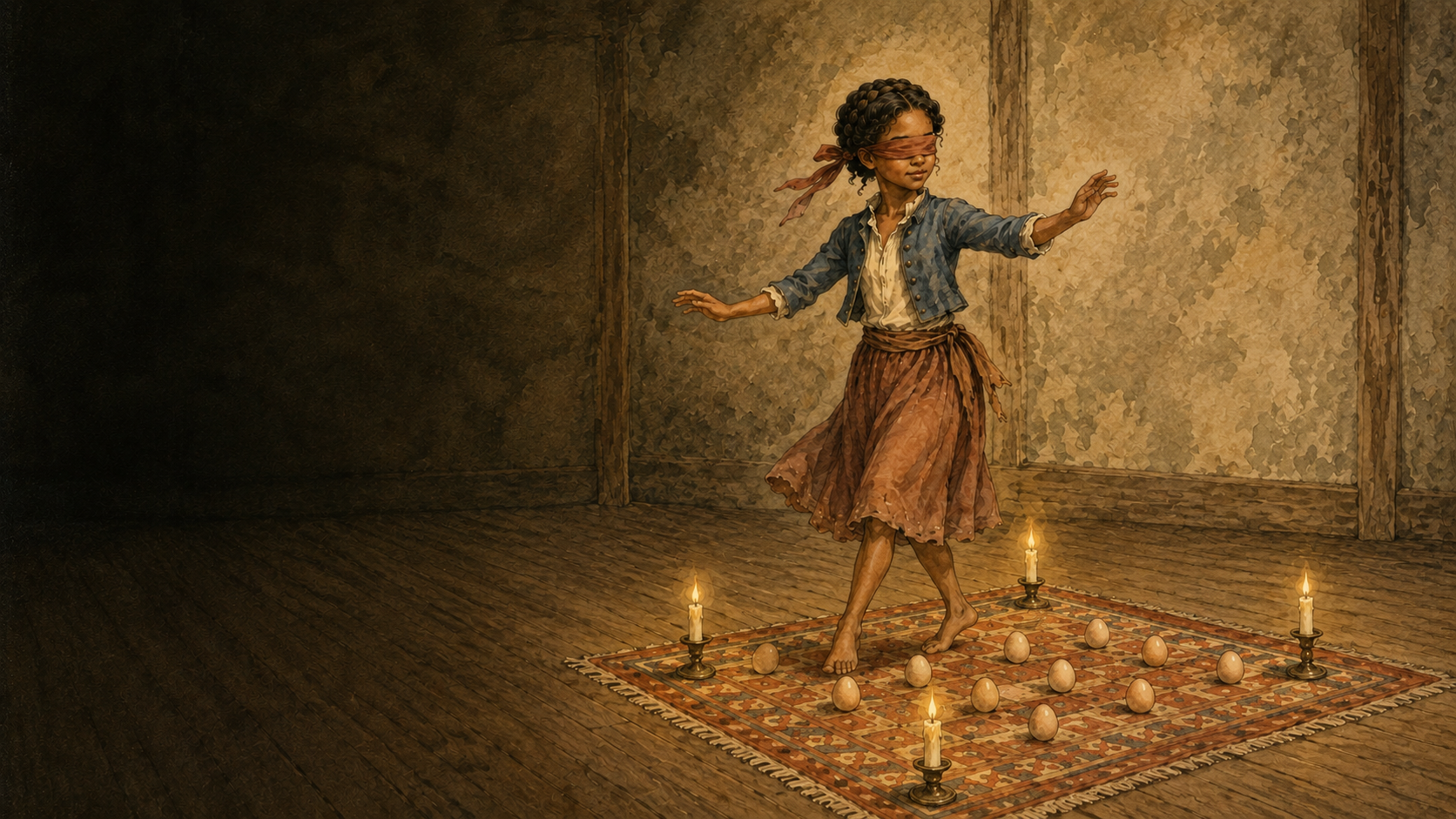
Fifty Famous Stories Retold Chapter 50, Mignon, is a story about a mistreated child finding safety and repaying kindness with quiet devotion. A young man named Wilhelm meets a strange, quiet little girl called Mignon who travels with a troupe of rope-dancers, and when he sees her master beating her, he steps in and takes her away to live with him instead. Mignon repays his kindness by waiting on him faithfully, scrubbing at her face to try to wash away marks the dancers had painted onto her, and speaking to almost no one but him. One weary evening she offers to dance for Wilhelm to lift his spirits, and performs a wonderful, careful dance among a carpet of eggs without disturbing a single one. She also sings him a beautiful, mysterious song about a faraway land where lemon and orange trees grow, a land Wilhelm guesses must be Italy, though Mignon never says whether she has ever truly been there.
Say what you remember!
Tell what you remember from the last chapter.
What happened in Fifty Famous Stories Retold Chapter 49, Picciola?Have a look
In the last chapter, Picciola, we learned how a lonely prisoner named Charney found comfort in caring for a tiny plant that sprouted between the stones of his prison yard, and how his devotion to it eventually won him his freedom after he appealed to the emperor Napoleon to save it from being crushed.
Read the previous lesson: Picciola →Show what you know!
Use your printable Lesson Guide. Fill in the vocabulary you know, then click to check your work and learn some new words today.
What are the difficult or advanced vocabulary words in Fifty Famous Stories Retold Chapter 50, Mignon?outcry, nimbly, weary, citronHave a look
- outcry: a loud cry from many people at once
- nimbly: in a quick, light, graceful way
- weary: worn out in strength or freshness
- citron: a citrus fruit like a large thick lemon
Locate it on the map!
Use your printable Lesson Guide. Use an atlas and fill in the blank map if you can find the geographic location, then click to check your work.
What important geographic location connects with Fifty Famous Stories Retold Chapter 50, Mignon?
- Find Germany: The real setting of Mignon's story: though her song longs for faraway Italy, the tale itself takes place in Germany, in Goethe's novel Wilhelm Meister's Apprenticeship, where Wilhelm actually finds and rescues her.
See it on the mapHave a look
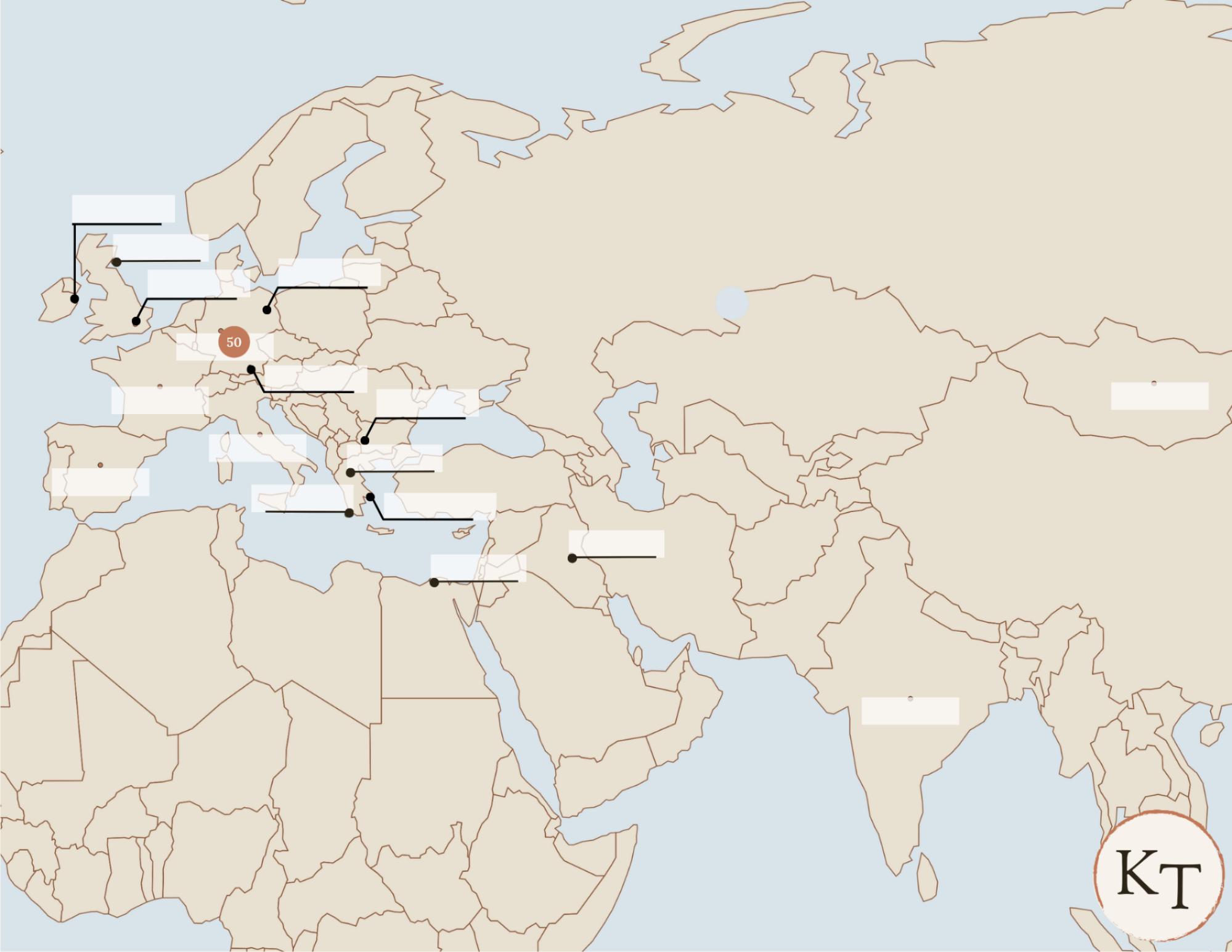
This matches the map in your Lesson Guide.
The Books come Alive!
Read or listen to Chapter 50 of Fifty Famous Stories Retold, the Kindred Thicket Enhanced Edition, read by Laura Caldwell.
Read by Laura Caldwell for LibriVox (public domain), professionally adjusted and trimmed by Kindred Thicket.
What do the Teacher’s Notes tell us about Chapter 50 of Fifty Famous Stories Retold?Parent review
This is a Kindred Thicket Enhanced Edition. Baldwin’s 1896 words are read exactly as he wrote them, and we add Teacher’s Notes with historical and literary context.
- About the whole bookFifty Famous Stories Retold gathers real history together with well-loved legends and traditions. These notes tell you, story by story, which is which.
- "a famous old book"The famous old book is Goethe's Wilhelm Meister's Apprenticeship, published in 1795 and 1796. Mignon is one of the best-known characters in German literature, and this chapter is one episode from a long novel.
- the beatingThe beating is in Goethe. Scholars read it as the last of a long series of cruelties done to this child, which is why the rescue matters so much in the novel.
- the bargain over her clothesThe rescue is Goethe's, but the bargain over the price of her clothes, and the words about her belonging to him, could not be found in the novel or in any published translation of it.
- the washingThe washing is in Goethe, and scholars read it as a sign of what the child had been through rather than as vanity. The details about the color of her skin could not be found in the novel.
- Mignon's songThis is one of Goethe's most famous poems, Kennst du das Land. The version here is a loose rendering. Goethe's original has the oranges glowing gold against dark leaves, and the lemons in blossom rather than simply growing.
- Parents may wish to preview this chapter. A child is beaten in public, then handed over in exchange for money, and the story speaks of her as belonging to the man who paid. She is treated kindly from then on.
Memory becomes Action!
Use the Response Resource* to remember and spell tricky names. Choose one way to narrate.
*Materials in the Lesson Guide.
What is the list of names, people, characters, and places that are important in Chapter 50 of Fifty Famous Stories Retold?Mignon, Wilhelm, The master of the rope-dancers, The rope-dancers, The famous old book, ItalyHave a look
- Mignon: A child taken in by Wilhelm.
- Wilhelm: A young man staying at the inn.
- The master of the rope-dancers: Man who mistreated Mignon.
- The rope-dancers: Travelling performers.
- The famous old book: Goethe's Wilhelm Meister's Apprenticeship, the novel this story comes from.
- Italy: The country in Mignon's song.
Chapter 50 Q & A
This is a Kindred Thicket Enhanced Edition. Baldwin’s stories mingle real history with beloved legend, and here is what to know about this one.
Where does Mignon's story really take place?
In Germany. Baldwin's chapter names Italy only because it is the land Mignon longs for in her song; the novel it comes from, Goethe's Wilhelm Meister's Apprenticeship, actually takes place in Germany, where Wilhelm finds her.
Is Mignon from a real book?
Yes. She comes from Goethe's Wilhelm Meister's Apprenticeship, published in 1795 and 1796, and is one of the best-known characters in German literature.
Is the song Mignon sings a real poem?
Yes, it is one of Goethe's most famous poems, known as Kennst du das Land. The version quoted here is a loose rendering; Goethe's original describes the oranges glowing gold against dark leaves and the lemons in blossom.
Did the beating and rescue really happen in the novel?
Both are in Goethe's original story. However, some details in this retelling, such as the bargain over the price of her clothes and the idea that she now 'belonged' to Wilhelm, could not be found in the novel or its translations.