The Listening Grove · Fifty Famous Stories Retold
Chapter 49: Picciola
A Charlotte Mason read-aloud lesson. Press play, with the lesson.
What is Fifty Famous Stories Retold Chapter 49, Picciola, about?Parent review
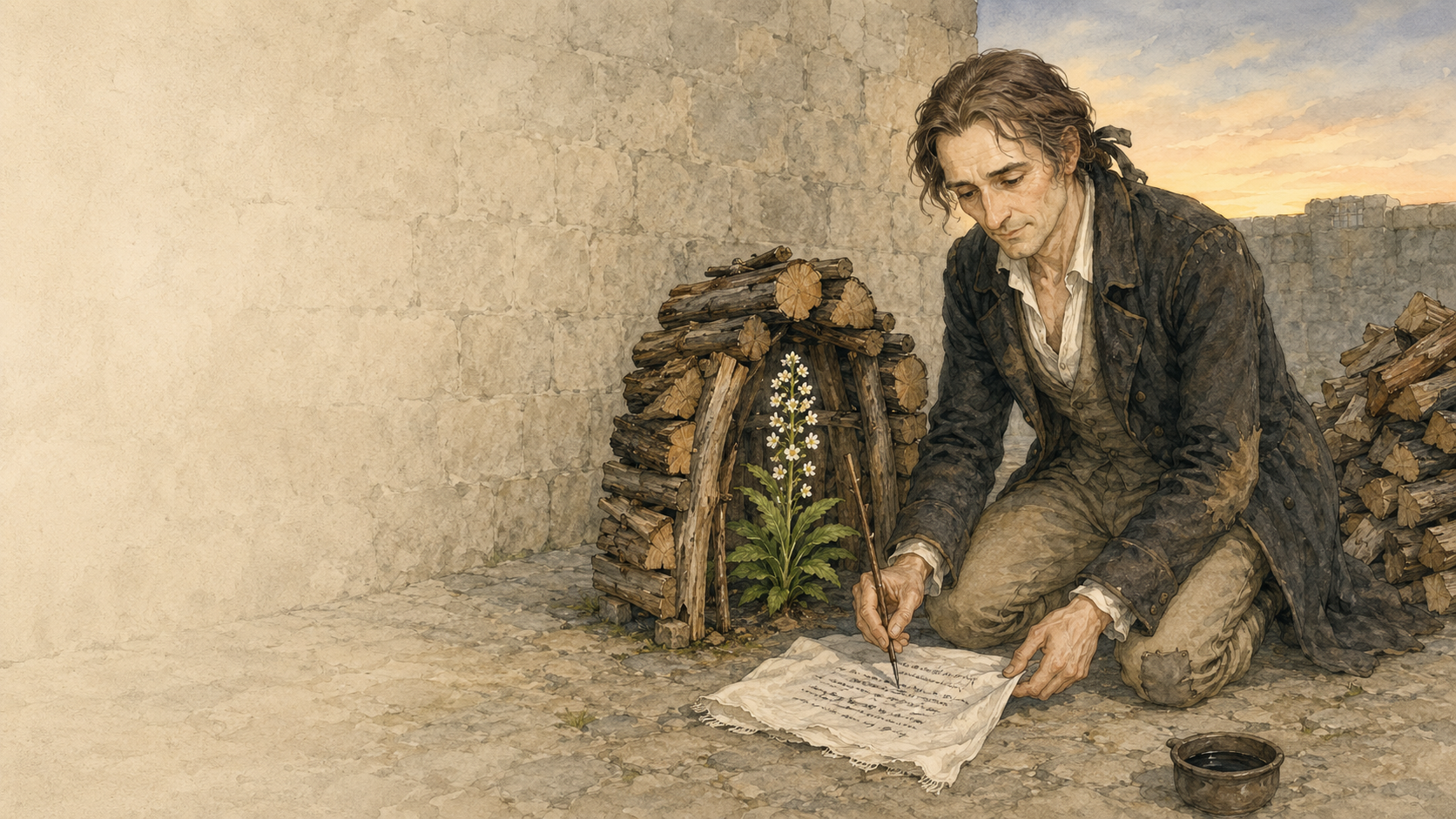
Fifty Famous Stories Retold Chapter 49, Picciola, is a story about how caring for something small and helpless can change a broken heart. A prisoner named Charney sits alone in a French prison, sad and bitter, with nothing to read, nothing to write with, and no one to talk to, until one spring day he notices a tiny plant sprouting between the paving stones of the yard. He names it Picciola and begins watching over it every day, worrying whenever the jailer or his dog nearly step on it, and even building it a little shelter from his own firewood. When the plant begins to wither because its roots have nowhere to grow, Charney realizes the prison stones must be lifted to save it, something only the highest officers in the land can allow. In desperation he writes his story on a handkerchief and sends it to the emperor Napoleon, whose kind wife is moved by his devotion to the little plant. The stones are lifted, Picciola is saved, and Charney himself is set free, no longer the sad and bitter man he had been.
Say what you remember!
Tell what you remember from the last chapter.
What happened in Fifty Famous Stories Retold Chapter 48, Antonio Canova?Have a look
In the last chapter, Antonio Canova, we learned how a poor stonecutter's grandson carved a lion out of butter to save a rich Count's dinner table, astonishing the guests with his skill and earning the chance to be trained by the best artists in the land, which set him on the road to becoming a great sculptor.
Read the previous lesson: Antonio Canova →Show what you know!
Use your printable Lesson Guide. Fill in the vocabulary you know, then click to check your work and learn some new words today.
What are the difficult or advanced vocabulary words in Fifty Famous Stories Retold Chapter 49, Picciola?pastime, sprouted, withering, cherishedHave a look
- pastime: something pleasant that helps time pass
- sprouted: began to grow up out of the ground
- withering: drying up and shrivelling
- cherished: held dear and loved
Locate it on the map!
Use your printable Lesson Guide. Use an atlas and fill in the blank map if you can find the geographic location, then click to check your work.
What important geographic location connects with Fifty Famous Stories Retold Chapter 49, Picciola?
- Find France: Baldwin names France as Charney's prison, and the map follows his own wording, though the novel he is retelling actually places its prisoner in a mountain fortress in Piedmont, Italy, not France.
See it on the mapHave a look
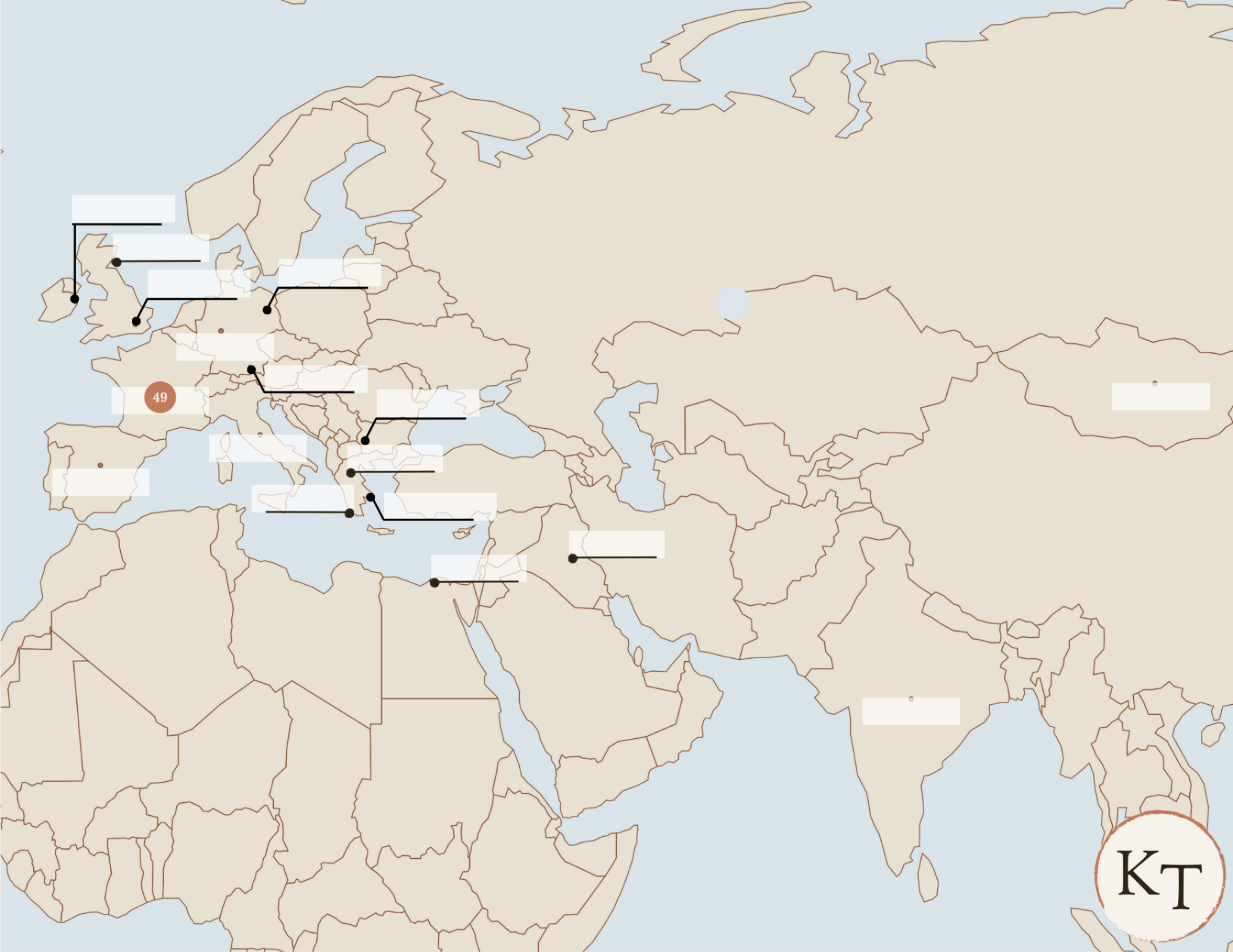
This matches the map in your Lesson Guide.
The Books come Alive!
Read or listen to Chapter 49 of Fifty Famous Stories Retold, the Kindred Thicket Enhanced Edition, read by Laura Caldwell.
Read by Laura Caldwell for LibriVox (public domain), professionally adjusted and trimmed by Kindred Thicket.
What do the Teacher’s Notes tell us about Chapter 49 of Fifty Famous Stories Retold?Parent review
This is a Kindred Thicket Enhanced Edition. Baldwin’s 1896 words are read exactly as he wrote them, and we add Teacher’s Notes with historical and literary context.
- About the whole bookFifty Famous Stories Retold gathers real history together with well-loved legends and traditions. These notes tell you, story by story, which is which.
- the opening, "a poor gentleman named Charney"Charney is a character in a French novel called Picciola. In it he is a count, not a poor gentleman, and the prison is a mountain fortress in Piedmont rather than in France.
- "put into prison wrongfully"The novel is less certain than this. It never quite says the charge was groundless, only that he was accused of plotting against the government. The wrongfulness here is the retelling's judgment.
- the appeal to NapoleonNapoleon was real, but this is a novel, not history. No prisoner was freed by him over a plant. The story puts a real emperor into an invented prison to give the ending its weight.
- the emperor's wifeThe empress is not named, but the novel's dates make her Josephine. Her one decisive sentence does not appear in the novel itself, so it is best treated as part of the retelling.
- Parents may wish to preview this chapter. A man is shut away alone for years, believing no one cares whether he lives. The story is gentle throughout and ends with his release.
Memory becomes Action!
Use the Response Resource* to remember and spell tricky names. Choose one way to narrate.
*Materials in the Lesson Guide.
What is the list of names, people, characters, and places that are important in Chapter 49 of Fifty Famous Stories Retold?Charney, Picciola, The jailer, Napoleon, The emperor's wife, The young girl, FranceHave a look
- Charney: A prisoner in a French prison.
- Picciola: A plant, named by Charney.
- The jailer: Charney's jailer.
- Napoleon: The emperor of France.
- The emperor's wife: Napoleon's wife.
- The young girl: The messenger who carries Charney's handkerchief.
- France: The country the prison is in.
Chapter 49 Q & A
This is a Kindred Thicket Enhanced Edition. Baldwin’s stories mingle real history with beloved legend, and here is what to know about this one.
Is Picciola a true story?
No. Picciola is a novel written by the French author Saintine, so this chapter is fiction rather than history, best enjoyed as a moving story about compassion rather than a historical account.
Was Charney a poor gentleman, and was his prison really in France?
In the original novel Charney is a count, not a poor gentleman, and his prison is a mountain fortress called Fenestrelle in Piedmont, Italy, not France. This retelling follows Baldwin's own wording of France, so the map does the same.
Did Napoleon really free a prisoner because of a plant?
No historical prisoner is known to have been freed this way. Napoleon was a real emperor, but the novel places him inside an invented prison story to give the ending its emotional weight.
Who is the emperor's kind wife in the story?
She is not named, but the novel's own dates point to Josephine. Her single decisive line asking for Charney's release does not actually appear in the novel itself, so it seems to be part of this retelling.