The Listening Grove · Just So Stories
Chapter 3: How the Rhinoceros Got His Skin
A Charlotte Mason read-aloud lesson. Press play, with the lesson.
What is Just So Stories Chapter 3, How the Rhinoceros Got His Skin, about?Parent review
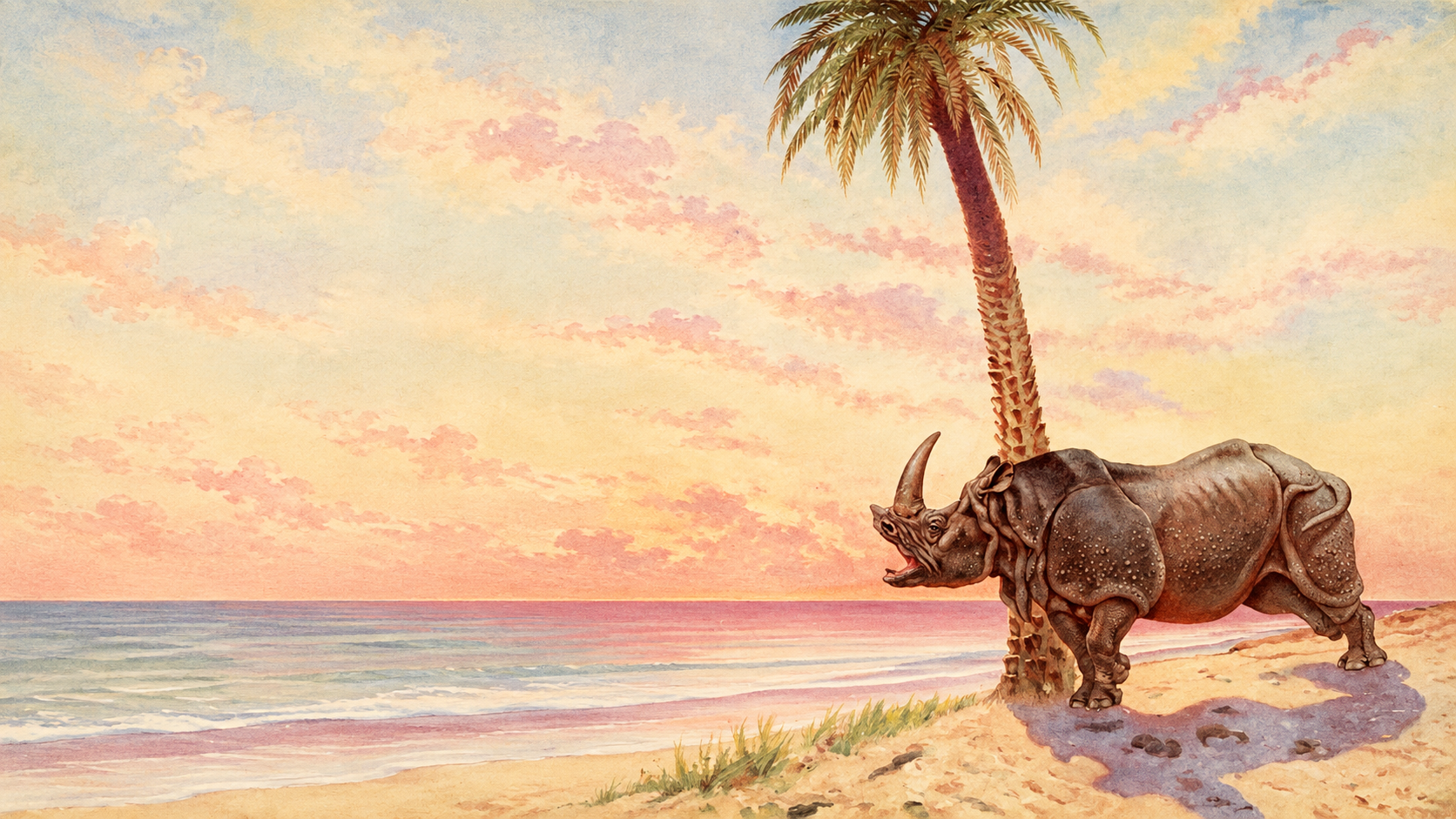
Just So Stories Chapter 3, How the Rhinoceros Got His Skin, is Rudyard Kipling’s tale of a Rhinoceros with a horn on his nose, two piggy eyes, and few manners. On an island in the Red Sea, a Parsee baked himself one enormous cake, but the Rhinoceros upset the stove, spiked the cake on his horn, and ate it all. Five weeks later, in a heat-wave, the Rhinoceros unbuttoned his smooth skin and left it on the beach while he bathed. The Parsee filled it with old, dry, tickly cake-crumbs, and when the Rhinoceros put it back on, he rubbed and rolled and scratched until his skin wrinkled into great folds. From that day to this, every rhinoceros has folds in his skin and a very bad temper, all on account of the cake-crumbs inside.
Say what you remember!
Tell what you remember from the last story.
What happened in Just So Stories Chapter 2, How the Camel Got His Hump?Have a look
In Chapter 2, How the Camel Got His Hump, the Camel would not work and only said “Humph!”, so the Horse, the Dog, and the Ox had to work double-time. The Djinn of All Deserts gave him a great lolloping humph on his back, so he could work three days without eating to make up for the days he missed.
Read the previous lesson: How the Camel Got His Hump →Show what you know!
Say what you think each word means, then click to check your answers and learn some new words today.
What are the difficult or advanced vocabulary words in Just So Stories Chapter 3, How the Rhinoceros Got His Skin?Comestible, uninhabited, desolate, waddledHave a look
- Comestible: something to eat; food
- uninhabited: not lived in by people
- desolate: empty of people; deserted
- waddled: walked with short steps, swaying side to side
The Books come Alive!
Read or listen to Chapter 3 of Just So Stories, the Kindred Thicket Classic Edition.
Read by Phil Chenevert for LibriVox (public domain), adjusted and trimmed by Kindred Thicket.
Memory becomes Action!
Use the names below to remember and spell tricky names. Choose one way to narrate.
What is the list of names, people, characters, and places that are important in Chapter 3 of Just So Stories?The Parsee, The Rhinoceros, The Uninhabited Island, The Altogether Uninhabited InteriorHave a look
- The Parsee: The cake-baking man of the Uninhabited Island.
- The Rhinoceros: The mannerless beast of the Altogether Uninhabited Interior.
- The Uninhabited Island: The Parsee's home on the shores of the Red Sea, off Cape Gardafui.
- The Altogether Uninhabited Interior: The rocky inland country, the Rhinoceros's own quarter.
Chapter 3 Q & A
This is a Kindred Thicket Classic Edition, with Kipling’s words kept as he wrote them. Here are answers to questions families often ask about this story.
How did the Rhinoceros get the folds in his skin?
The Parsee filled the Rhinoceros’s skin with stale, tickly cake-crumbs while he was bathing. When the Rhinoceros put it back on, he rubbed so hard against a palm tree that his skin wrinkled into great folds.
Who is the Parsee?
The Parsee is the man in the story who lives by the Red Sea with nothing but his hat, his knife, and his cooking-stove, and who bakes the great cake the Rhinoceros steals. The word Parsee (also spelled Parsi) names a member of a Zoroastrian community whose ancestors came to India from Persia.
Where does the story take place?
The story takes place on an uninhabited island on the shores of the Red Sea. Kipling’s poem at the end places it off Cape Gardafui, by the beaches of Socotra.
Why does the Rhinoceros have such a bad temper?
Kipling says every rhinoceros has a very bad temper because of the cake-crumbs still tickling inside his skin.
What is a “Superior Comestible”?
It is Kipling’s grand name for the Parsee’s cake. A comestible is something to eat.