The Listening Grove · Just So Stories
Chapter 2: How the Camel Got His Hump
A Charlotte Mason read-aloud lesson. Press play, with the lesson.
What is Just So Stories Chapter 2, How the Camel Got His Hump, about?Parent review
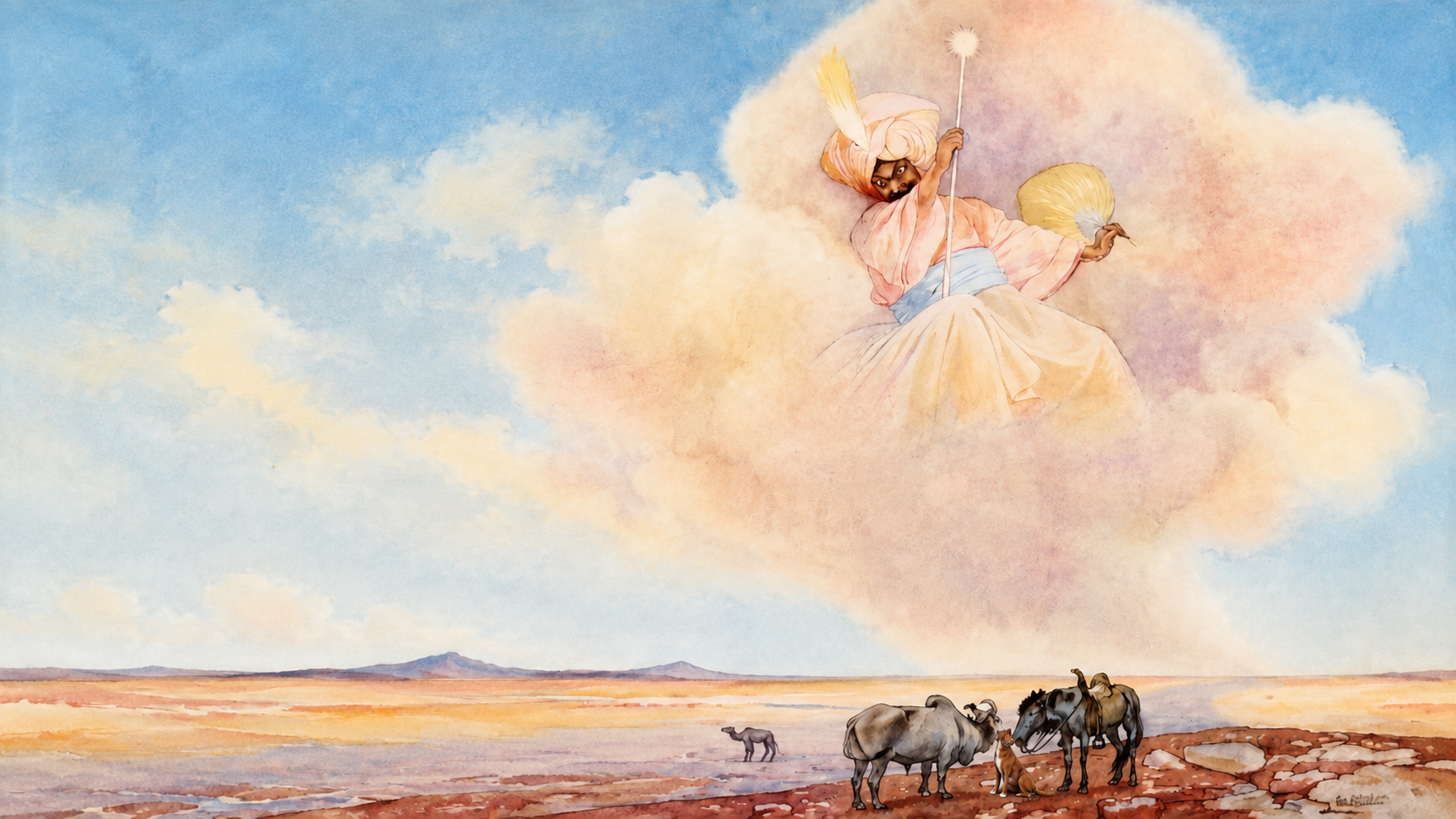
Just So Stories Chapter 2, How the Camel Got His Hump, is Rudyard Kipling’s tale of a Camel who lived in the middle of a Howling Desert because he did not want to work. When the Horse, the Dog, and the Ox each asked him to help, he said only “Humph!”, so the Man made the Three work double-time to make up for him. The Djinn in charge of All Deserts found the Camel admiring his reflection in a pool, and when the Camel said “Humph!” once too often, his back puffed up into a great big lolloping humph. Now he can work for three days without eating, to make up for the three days he missed at the beginning of the world.
Say what you remember!
Tell what you remember from the last story.
What happened in Just So Stories Chapter 1, How the Whale Got His Throat?Have a look
In Chapter 1, How the Whale Got His Throat, the Whale ate every fish in the sea except the small ’Stute Fish, who sent him to swallow a shipwrecked Mariner instead. The Mariner jumped and danced inside the Whale until the Whale carried him home, and before he stepped out he wedged a grating, tied with his suspenders, in the Whale’s throat. Ever since, whales can eat only very, very small fish.
Read the previous lesson: How the Whale Got His Throat →Show what you know!
Say what you think each word means, then click to check your answers and learn some new words today.
What are the difficult or advanced vocabulary words in Just So Stories Chapter 2, How the Camel Got His Hump?palaver, tamarisks, yoke, idleHave a look
- palaver: a long talk or meeting
- tamarisks: shrubs and small trees with tiny scaly leaves
- yoke: a wooden bar joining two work animals at the neck
- idle: lazy; not working
The Books come Alive!
Read or listen to Chapter 2 of Just So Stories, the Kindred Thicket Classic Edition.
Read by Phil Chenevert for LibriVox (public domain), adjusted and trimmed by Kindred Thicket.
Memory becomes Action!
Use the names below to remember and spell tricky names. Choose one way to narrate.
What is the list of names, people, characters, and places that are important in Chapter 2 of Just So Stories?The Camel, The Djinn in charge of All Deserts, The Horse, The Dog, The Ox, The Man, The Howling DesertHave a look
- The Camel: The idle beast of the Howling Desert whose only word is 'Humph!'
- The Djinn in charge of All Deserts: The desert's magic master, who calls the Camel his own.
- The Horse: One of the Three, saddled and bitted for Man's service.
- The Dog: One of the Three, the fetcher and carrier for Man.
- The Ox: One of the Three, the beast of the plow under the yoke.
- The Man: The master the Animals work for in the world so new-and-all.
- The Howling Desert: The Camel's home in the middle of the Djinn's deserts.
Chapter 2 Q & A
This is a Kindred Thicket Classic Edition, with Kipling’s words kept as he wrote them. Here are answers to questions families often ask about this story.
Why did the Camel get a hump?
The Djinn of All Deserts gave the Camel his hump because he would not work and kept saying “Humph!” The hump lets him work for three days without eating, to make up for the three days he missed.
Who is the Djinn of All Deserts?
The Djinn of All Deserts is a magical spirit in charge of all the deserts. Kipling says he travels rolling in a cloud of dust, because that is how Djinns always travel.
Who asked the Camel to work?
The Horse, the Dog, and the Ox each came to the Camel and asked him to work like the rest of them. Each time he said only “Humph!”
Why do we say “hump” and not “humph”?
Kipling says we call it “hump” now, not “humph,” so as not to hurt the Camel’s feelings.
What is the poem at the end of the story about?
The poem says that children and grown-ups can get “the hump,” a grumpy, sulky mood, from having too little to do. Its cure is to get outdoors and dig until you gently perspire.