The Listening Grove · Aesop's Fables
Fable 3: The Young Crab and His Mother
A Charlotte Mason fable lesson. Press play, with the lesson.
What is Aesop's fable The Young Crab and His Mother about?Parent review
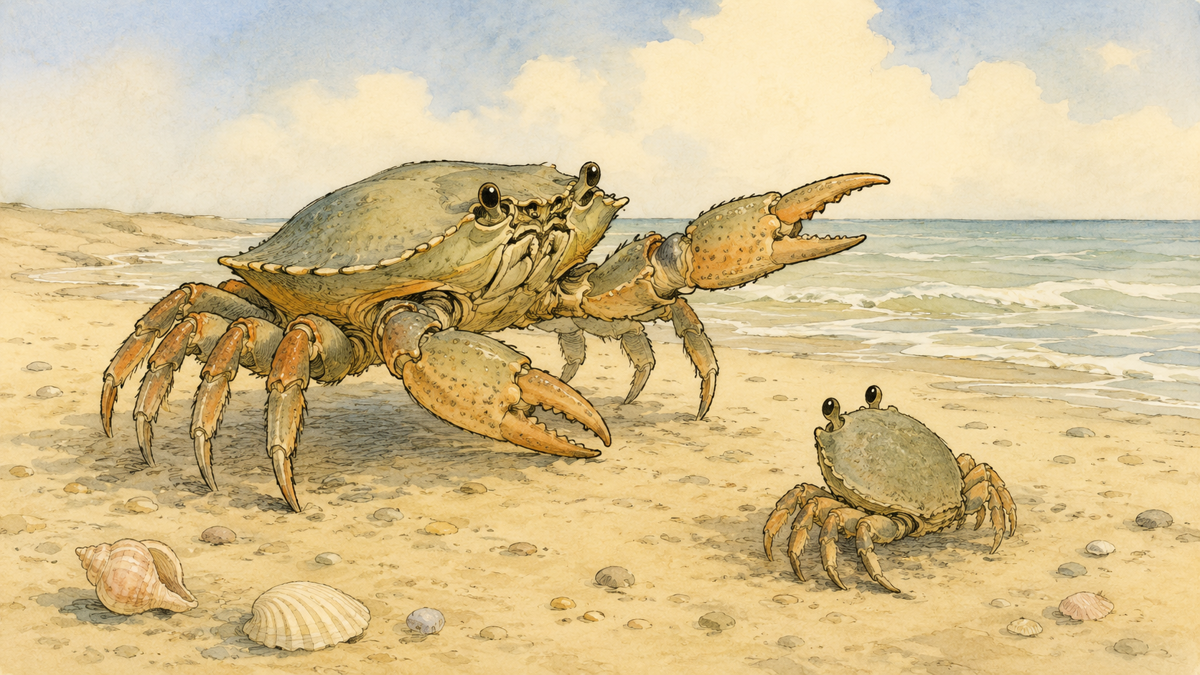
Aesop's Fable 3, The Young Crab and His Mother, is a short, funny tale about setting a good example. A Mother Crab scolds her son for walking sideways and tells him he ought to walk straight forward with his toes turned out. The little Crab, happy to learn, simply asks his mother to show him how. But when she tries, the old Crab finds she can only walk sideways too, and tumbles onto her nose. It is hard to correct others in something we cannot do ourselves.
Say what you remember!
Tell what you remember from the last fable.
What happened in Aesop's fable The Tortoise and the Ducks?Have a look
In the last fable, The Tortoise and the Ducks, a Tortoise who could not travel longed to see the world. Two kind Ducks carried him into the sky on a stick he held in his teeth, warning him to keep quiet. But when a passing Crow called him the King of Tortoises, the Tortoise was too proud to stay silent, opened his mouth to reply, lost his grip, and fell.
Back to the previous lesson: The Tortoise and the Ducks →The Books come Alive!
Read or listen to The Young Crab and His Mother, the Kindred Thicket Revised Edition.
Read by Kindred Thicket, from the Kindred Thicket Revised Edition.
Read along with the fableRead along
"Why in the world do you walk sideways like that?" said a Mother Crab to her son. "You should always walk straight forward with your toes turned out."
"Show me how to walk, mother dear," answered the little Crab obediently, "I want to learn."
So the old Crab tried and tried to walk straight forward. But she could walk sideways only, like her son. And when she wanted to turn her toes out she tripped and fell on her nose.
Memory becomes Action!
Use the character cards* to remember who is in the fable. Choose one way to narrate.
*Character cards are free with the email list; the Composition Prompt and Drawn Narration Sheet are in the Companion Guide.
What is the list of the names, people, characters, and places that are important in Aesop's fable The Young Crab and His Mother?The Mother Crab, The Young Crab, The sandy shoreHave a look
- The Mother Crab: Tells her son to walk straight forward, then finds she cannot do it herself.
- The Young Crab: Her little son, who walks sideways and gladly asks his mother to show him a better way.
- The sandy shore: The place the fable happens: the shore where the two crabs walk.
What is the moral of Aesop's fable The Young Crab and His Mother?Have a look
“Do not tell others how to act unless you can set a good example.”
The Mother Crab was quick to tell her son how to walk, but when she tried to show him she could only walk sideways herself, and tripped. It is hard to correct in others what we cannot do ourselves.
The Young Crab and His Mother Q & A
Common questions about this fable: the other titles it goes by, where it comes from, its lesson, and how to help your child narrate it.
What other names does this fable go by?
You will see it as "The Young Crab and His Mother," "The Crab and Its Mother," and sometimes "The Two Crabs." It is the short one in which a mother crab scolds her son for walking sideways, then cannot walk straight herself. Any of those titles is the same little story.
Where does this fable come from, and where else will my child meet it?
It is a classic Greek fable, and it gave the language an enduring image: you cannot teach a young crab to walk straight if you cannot do it yourself. It is here as part of the complete Milo Winter collection, so you can read it whenever you like, and its lesson about teaching by example is one your child will recognize for the rest of her life.
What is the lesson, and do I need to explain it?
The mother crab asks of her son what she cannot do herself, so the fable teaches, in the old words, not to tell others how to act unless you can set a good example. This is one a parent feels as keenly as a child does, and it lands best left unspoken. Simply read it and smile.
How do I help my child narrate this one?
It is very short, which makes it a friendly first narration. Read it, then ask: "What did the mother crab want her son to do, and what happened when she tried it?" A quick drawing of the mother crab tumbling on her nose is narration enough for a little one, and the free character cards give her the two crabs to walk across the table as she tells it.