The Listening Grove · The Burgess Bird Book for Children
Chapter 3: Jenny Has a Good Word for Some Sparrows
A Charlotte Mason nature-study lesson. Press play, with the lesson.
What is The Burgess Bird Book for Children Chapter 3, Jenny Has a Good Word for Some Sparrows, about?Parent review
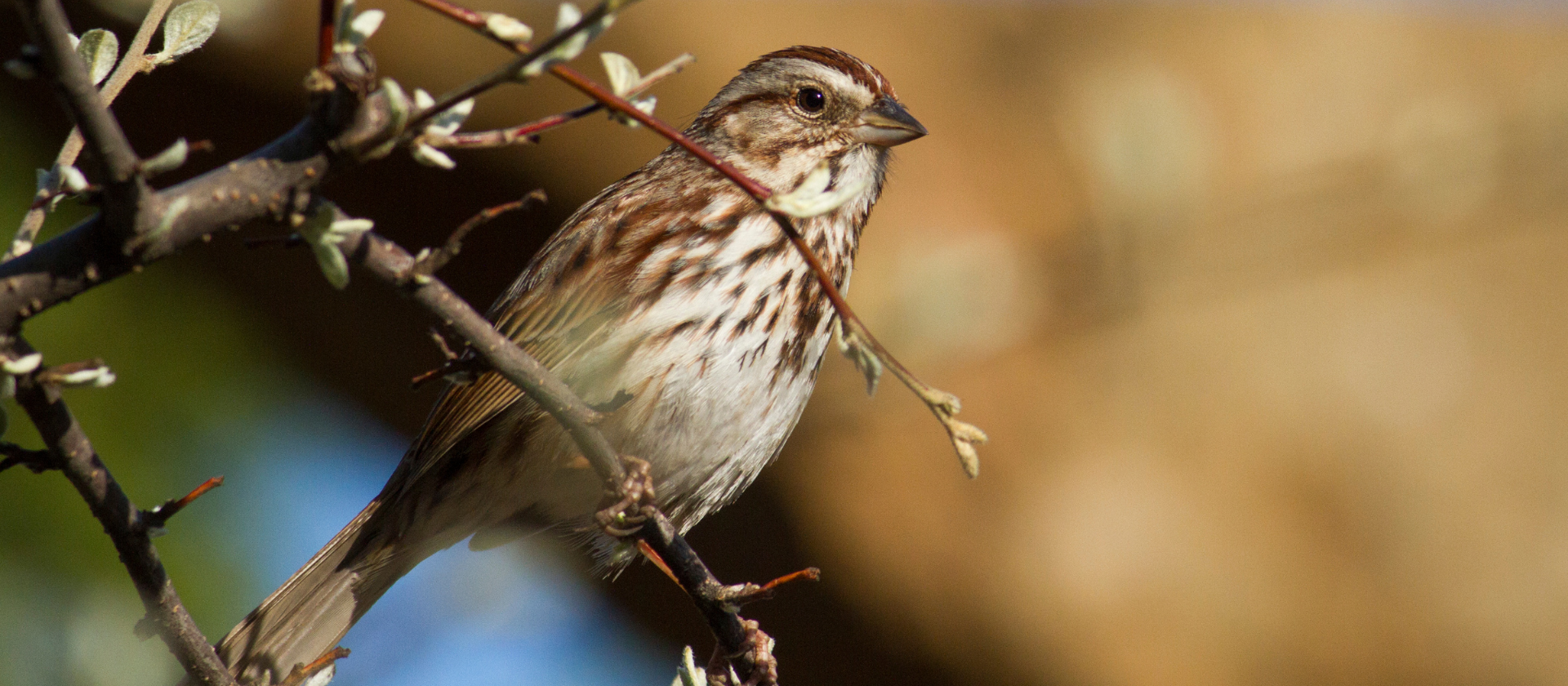
Chapter 3, Jenny Has a Good Word for Some Sparrows, sets things right after the bad manners of Bully. Jenny Wren, who rarely praises anyone, has only kind words for the native sparrows. Peter meets Little Friend the Song Sparrow, who sings his cheerful song from the bushes; Whitethroat the White-throated Sparrow, neat with his white throat and striped crown; and Scratcher the Fox Sparrow, the big reddish sparrow who kicks among the dead leaves for his food. Peter learns that the sparrow family is large, and that most of its members are modest, useful, sweet-voiced birds, nothing at all like the quarrelsome House Sparrow.
Say what you remember!
Tell what you remember from the last chapter.
What happened in the previous chapter of The Burgess Bird Book for Children, The Old Orchard Bully?Have a look
In Chapter 2, The Old Orchard Bully, Peter met Bully the House Sparrow, the quarrelsome newcomer who drives smaller birds from their nests. Jenny Wren scolded his boastful, bullying ways, though even she allowed he had spunk, and Peter learned that this sparrow was brought from across the sea and has crowded out gentler birds ever since.
Back to the previous lesson: The Old Orchard Bully →Show what you know!
Use your printable Lesson Guide. Fill in the vocabulary you know, then click to check your work and learn some new words today.
What are the difficult or advanced vocabulary words in The Burgess Bird Book for Children Chapter 3, Jenny Has a Good Word for Some Sparrows?venture, resent, meekly, busybody, vigorously, modest, retiring, nuisance, streaked, delightHave a look
- venture: To say or suggest something when you are unsure how it will be received, or to try something a little risky.
- resent: To feel bitter or angry about something you think is unfair or undeserved.
- meekly: In a quiet, mild, unprotesting way, without standing up for yourself or arguing back.
- busybody: Someone always curious about and meddling in the affairs of others when it is none of their business.
- vigorously: With strong energy, force, and enthusiasm; in an active, determined, lively way.
- modest: Having a humble, realistic view of yourself; not bragging about your abilities.
- retiring: Naturally shy and preferring to stay out of sight; not looking for attention.
- nuisance: A person or thing that is irritating and makes life harder for those around it.
- streaked: Marked with long, thin lines of a different color running across a surface.
- delight: To take great pleasure in something; to really enjoy it and find it a source of happiness.
The Books come Alive!
Read or listen to Chapter 3 of The Burgess Bird Book for Children, the Kindred Thicket Revised Edition.
Read by Kindred Thicket, from the Kindred Thicket Revised Edition. The plain accuracy notes that explain each correction come with the Complete Companion Guide.
Memory becomes Action!
Use the Response Resource* to remember and spell tricky names. Choose one way to narrate.
*Materials in the Lesson Guide.
What is the list of names, people, characters, birds, and places that are important in Chapter 3 of The Burgess Bird Book for Children?Little Friend, Whitethroat, Scratcher, Jenny Wren, BullyHave a look
- Little Friend: The Song Sparrow (Melospiza melodia), a streaky brown sparrow with a spot on his breast, known for his cheerful, tuneful song from the bushes.
- Whitethroat: The White-throated Sparrow (Zonotrichia albicollis), neat with a bright white throat and a black-and-white striped crown, and a clear whistled song.
- Scratcher: The Fox Sparrow (Passerella iliaca), a large, rich reddish-brown sparrow that scratches among dead leaves for food.
- Jenny Wren: The House Wren, who for once has only good words to say.
- Bully: The House Sparrow, held up by contrast to show how unlike him the native sparrows are.
Chapter 3 Q & A
A few questions families ask about this chapter and its birds.
How is a Song Sparrow different from a House Sparrow?
The Song Sparrow is a native American sparrow with soft streaks and a dark central breast spot, and it is loved for its cheerful, varied song. The House Sparrow is an introduced bird with a black bib in the male and a plainer chirp, and a much bolder, more aggressive manner.
What is the White-throated Sparrow known for?
Its clean white throat, striped crown, and a sweet, clear whistled song often written as "Old Sam Peabody, Peabody, Peabody." It is a favorite feeder bird in much of North America, especially in fall and winter.
Why is the Fox Sparrow called Scratcher?
Because it feeds by kicking backward with both feet at once to scratch away leaf litter and uncover seeds and insects. It is one of the largest sparrows, with warm foxy-red coloring, which is how it got its real name too.
Are sparrows good birds for the garden?
Most native sparrows are gentle, useful birds that eat great numbers of weed seeds and insects, and they sing beautifully. Burgess uses this chapter to clear the family's good name after the bad manners of the introduced House Sparrow.