The Listening Grove · The Burgess Bird Book for Children
Chapter 8: Old Clothes and Old Houses
A Charlotte Mason nature-study lesson. Press play, with the lesson.
What is The Burgess Bird Book for Children Chapter 8, Old Clothes and Old Houses, about?Parent review
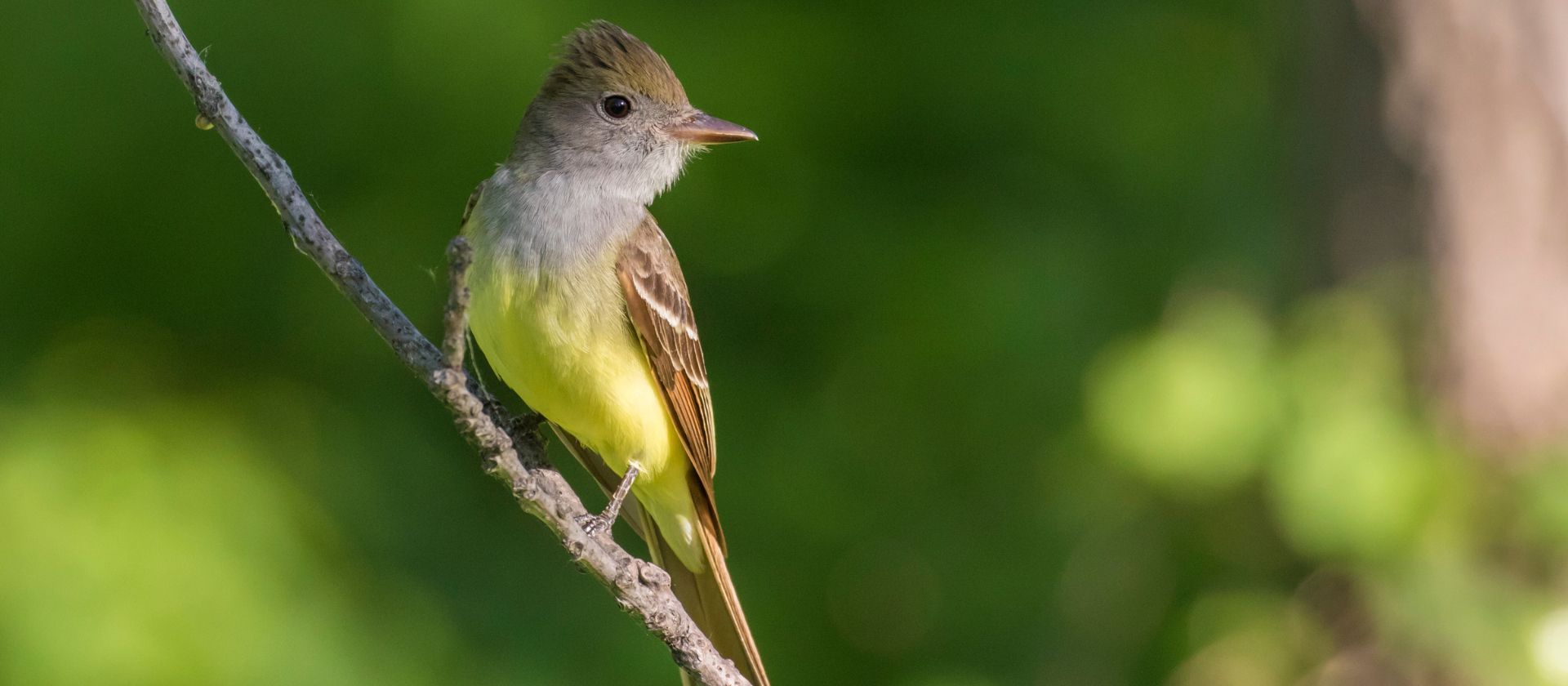
Chapter 8, Old Clothes and Old Houses, is about birds that make use of what others leave behind. Peter meets Pewee the Wood Pewee, whose plaintive whistle drifts from the shady woods; Skimmer the Tree Swallow, who nests in an old woodpecker hole; and Killy the Sparrow Hawk, a little falcon known today as the American Kestrel, who also nests in a hollow. His old friends Yank-Yank the White-breasted Nuthatch and Tommy Tit the Chickadee make their homes in old tree cavities too. Peter learns how many birds depend on the old houses that woodpeckers cut.
Say what you remember!
Tell what you remember from the last chapter.
What happened in the previous chapter of The Burgess Bird Book for Children, The Watchman of the Old Orchard?Have a look
In Chapter 7, The Watchman of the Old Orchard, Peter met Scrapper the Kingbird, who though barely bigger than a robin fearlessly chases crows and hawks from the sky to guard his nest. He also met Cresty the Great Crested Flycatcher, who lines his hollow nest with a cast-off snakeskin.
Back to the previous lesson: The Watchman of the Old Orchard →Show what you know!
Use your printable Lesson Guide. Fill in the vocabulary you know, then click to check your work and learn some new words today.
What are the difficult or advanced vocabulary words in The Burgess Bird Book for Children Chapter 8, Old Clothes and Old Houses?temptation, insist, mischief, hollow, curiosity, impatiently, restful, flitted, twinkled, peepingHave a look
- temptation: A strong urge to do something you know you probably should resist.
- insist: To demand something firmly and refuse to accept any other option.
- mischief: Playful or slightly naughty behavior that causes mild trouble without real harm.
- hollow: A natural empty space inside something, like the inside of a tree trunk.
- curiosity: The strong, restless desire to find out about something; eagerness to know.
- impatiently: In a restless, irritated way that shows you do not want to wait.
- restful: Giving a feeling of quiet calm and peace; soothing after effort or excitement.
- flitted: Moved lightly and quickly from place to place, darting without settling long.
- twinkled: Sparkled with tiny flashes of light or amusement; lit up with a playful gleam.
- peeping: Looking secretly or carefully through a small gap or from a hidden spot.
The Books come Alive!
Read or listen to Chapter 8 of The Burgess Bird Book for Children, the Kindred Thicket Revised Edition.
Read by Kindred Thicket, from the Kindred Thicket Revised Edition. The plain accuracy notes that explain each correction come with the Complete Companion Guide.
Memory becomes Action!
Use the Response Resource* to remember and spell tricky names. Choose one way to narrate.
*Materials in the Lesson Guide.
What is the list of names, people, characters, birds, and places that are important in Chapter 8 of The Burgess Bird Book for Children?Pewee, Skimmer, Killy, Yank-Yank, Tommy TitHave a look
- Pewee: The Eastern Wood-Pewee (Contopus virens), a plain flycatcher of shady woods known for a drowsy, plaintive "pee-a-wee" whistle.
- Skimmer: The Tree Swallow (Tachycineta bicolor), steely blue-green above and white below, who nests in old woodpecker holes and boxes.
- Killy: The American Kestrel (Falco sparverius), Burgess's "Sparrow Hawk," a small, colorful falcon that nests in tree cavities and cries "killy-killy."
- Yank-Yank: The White-breasted Nuthatch (Sitta carolinensis), who climbs head-first down tree trunks and calls a nasal "yank."
- Tommy Tit: The Black-capped Chickadee (Poecile atricapillus), a friendly little cavity-nester and one of Peter's old friends.
Chapter 8 Q & A
A few questions families ask about this chapter and its birds.
What bird is Killy?
Killy is the American Kestrel (Falco sparverius), the smallest and most colorful North American falcon. Burgess calls him by the older name "Sparrow Hawk." He nests in tree hollows and old woodpecker holes and gets his name from his shrill "killy-killy-killy" call.
Why do so many birds use old woodpecker holes?
Because most of these birds cannot dig their own holes. Woodpeckers are the carpenters that cut nest cavities in trees, and when they move on, swallows, nuthatches, chickadees, kestrels, and many others move in, which is the whole point of the chapter.
What does the Wood Pewee's song sound like?
A slow, sweet, slightly sad whistle written as "pee-a-wee," often with a downward "pee-yur," drifting from shady woodland. The bird is plain gray and easiest to know by this drowsy voice.
How does the nuthatch move on a tree?
The White-breasted Nuthatch famously climbs head-first down tree trunks and along the undersides of branches, something few other birds do, searching bark for insects. Its nasal "yank, yank" call gives it away.