The Listening Grove · Fifty Famous Stories Retold
Chapter 47: Casabianca
A Charlotte Mason read-aloud lesson. Press play, with the lesson.
What is Fifty Famous Stories Retold Chapter 47, Casabianca, about?Parent review
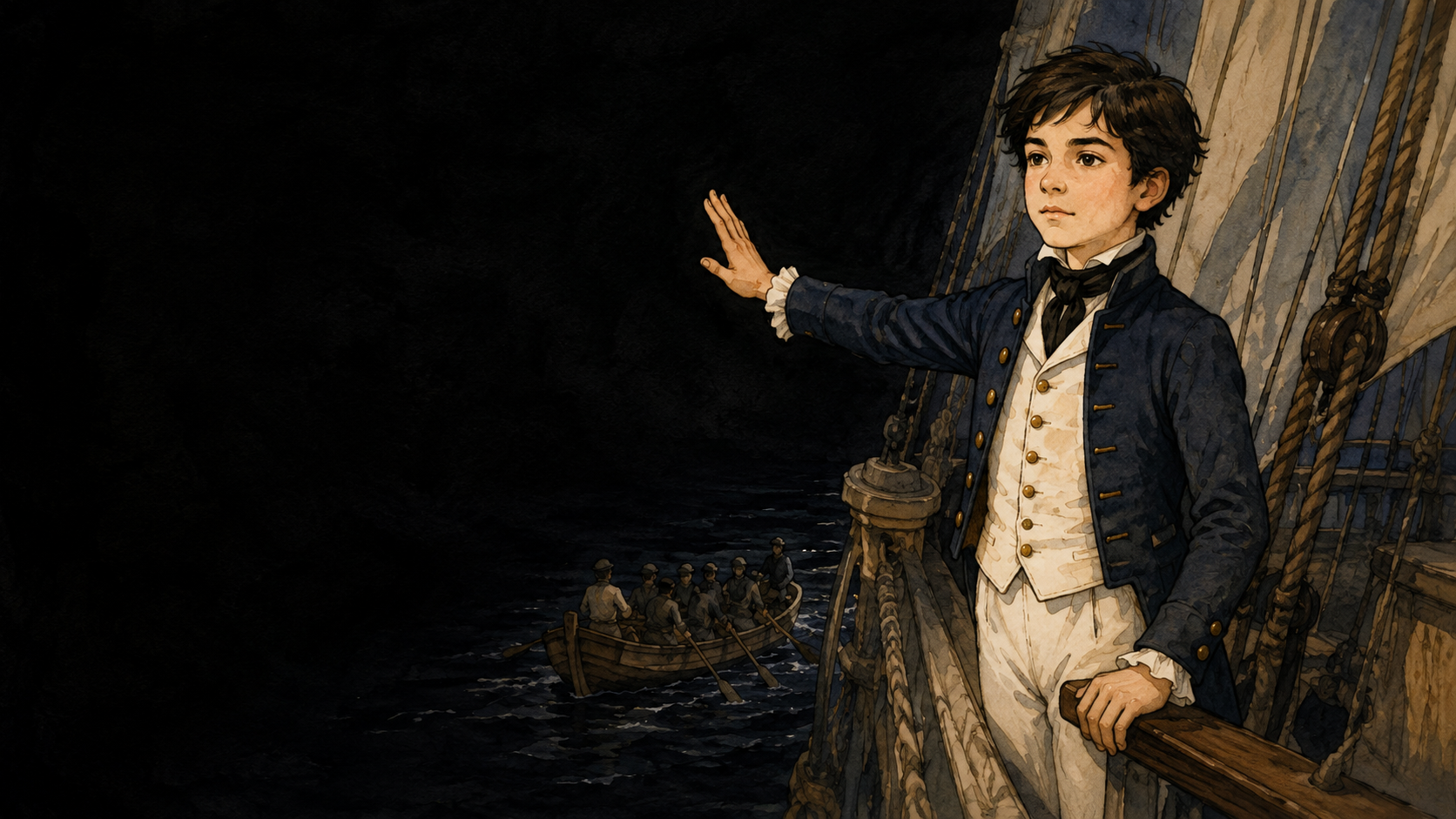
Fifty Famous Stories Retold Chapter 47, Casabianca, is a story about duty and obedience carried all the way to the end. During a fierce battle at sea, a ship catches fire and its crew abandons it in a small boat, but the captain's young son will not leave his post because his father told him to stand there and wait for the order to go. As the flames close in around him, the boy calls out again and again for his father's word to leave, not knowing that his father already lies dead below deck. He never receives an answer, and the ship explodes when the fire reaches the gunpowder stored in the hold. The chapter closes by sharing the opening lines of Mrs. Hemans's famous poem about the boy, which made his brave, obedient death known to readers everywhere.
Say what you remember!
Tell what you remember from the last chapter.
What happened in Fifty Famous Stories Retold Chapter 46, Whittington and His Cat?Have a look
In the last chapter, Whittington and His Cat, we learned how a poor young man named Dick Whittington traveled to London hoping to find fortune, endured hunger and a hard life in a merchant's kitchen, and grew wealthy after his cat was sold to a foreign king who needed her to catch rats. His good fortune and honest hard work eventually made him a great merchant and three times Lord Mayor of London.
Read the previous lesson: Whittington and His Cat →Show what you know!
Use your printable Lesson Guide. Fill in the vocabulary you know, then click to check your work and learn some new words today.
What are the difficult or advanced vocabulary words in Fifty Famous Stories Retold Chapter 47, Casabianca?strewn, heroic, timber, quiversHave a look
- strewn: covered by things scattered about
- heroic: of or like a hero
- timber: a large shaped piece of wood
- quivers: shakes with a slight trembling motion
Locate it on the map!
Use your printable Lesson Guide. Use an atlas and fill in the blank map if you can find the geographic location, then click to check your work.
What important geographic location connects with Fifty Famous Stories Retold Chapter 47, Casabianca?
- Find Aboukir Bay (near Alexandria, Egypt): The real setting behind Baldwin's unnamed 'great battle at sea': the Battle of the Nile, fought here on 1 August 1798, where the French flagship exploded much as the story describes.
See it on the mapHave a look
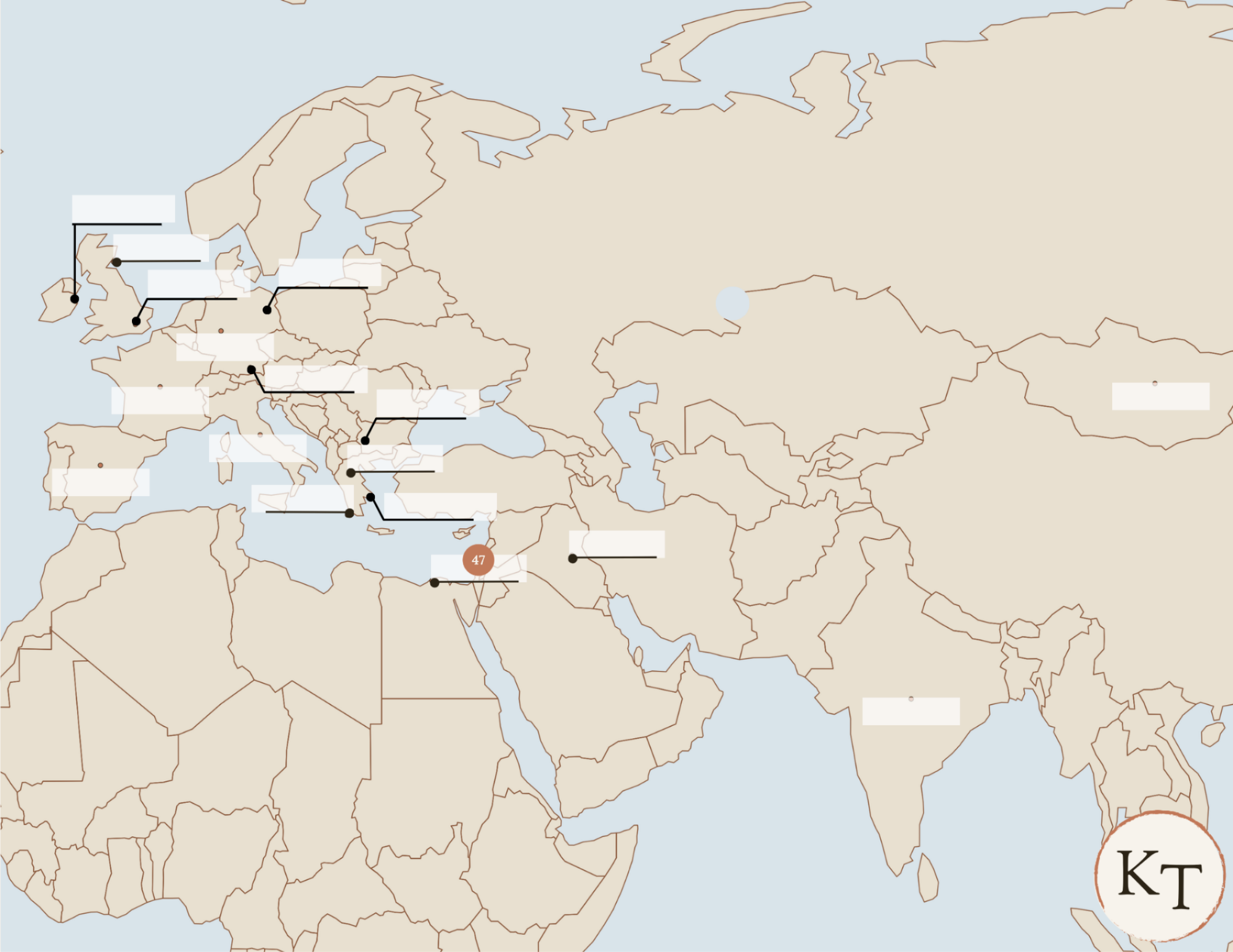
This matches the map in your Lesson Guide.
The Books come Alive!
Read or listen to Chapter 47 of Fifty Famous Stories Retold, the Kindred Thicket Enhanced Edition, read by Laura Caldwell.
Read by Laura Caldwell for LibriVox (public domain), professionally adjusted and trimmed by Kindred Thicket.
What do the Teacher’s Notes tell us about Chapter 47 of Fifty Famous Stories Retold?Parent review
This is a Kindred Thicket Enhanced Edition. Baldwin’s 1896 words are read exactly as he wrote them, and we add Teacher’s Notes with historical and literary context.
- About the whole bookFifty Famous Stories Retold gathers real history together with well-loved legends and traditions. These notes tell you, story by story, which is which.
- "young Casabianca"The boy was about thirteen, by the account of the poet who made him famous. His father commanded the ship, not the fleet; the admiral was a different man, who died in the same explosion.
- the father struck by a cannon ballThe poem says only that the father lay dying below. The cannon ball, and the idea that it happened at the very start of the battle, are not in it and are not in any account of the battle.
- the boy calling outWhat is recorded is that the boy stayed aboard and died when the fire reached the powder. The calling out, and his father's faint answer, come from the poem rather than from any account of the battle.
- Parents may wish to preview this chapter. A boy dies when his ship explodes, calling for his father, who is already dead below. The narration stays with him as the flames reach him.
Memory becomes Action!
Use the Response Resource* to remember and spell tricky names. Choose one way to narrate.
*Materials in the Lesson Guide.
What is the list of names, people, characters, and places that are important in Chapter 47 of Fifty Famous Stories Retold?Casabianca, His father, The flagship, Mrs. HemansHave a look
- Casabianca: The captain's son.
- His father: The captain of the flagship.
- The flagship: The ship captained by Casabianca's father.
- Mrs. Hemans: The poet who wrote the poem quoted at the end.
Chapter 47 Q & A
This is a Kindred Thicket Enhanced Edition. Baldwin’s stories mingle real history with beloved legend, and here is what to know about this one.
Did this battle really happen?
Yes. Records place it as the Battle of the Nile, fought in Aboukir Bay about fifteen miles from Alexandria on 1 August 1798, where the French flagship caught fire and exploded that night, just as the story describes.
Was the boy really thirteen, and did a cannon ball kill his father at the very start of the fight?
The boy's age of about thirteen comes from the poet who made him famous. The cannon ball and the timing of his father's death are not documented anywhere and are not part of the historical record of the battle.
Did the boy really call out to his father as the story describes?
What is recorded is that the boy stayed aboard and died when the fire reached the gunpowder. The calling out and his father's faint answer come from the poem rather than from any account of the battle itself.
Who wrote the famous poem about Casabianca?
Mrs. Hemans wrote it, and though Baldwin himself calls it 'not a very well written poem,' it became so widely read and memorized that it made this boy's story famous.