The Listening Grove · Fifty Famous Stories Retold
Chapter 48: Antonio Canova
A Charlotte Mason read-aloud lesson. Press play, with the lesson.
What is Fifty Famous Stories Retold Chapter 48, Antonio Canova, about?Parent review
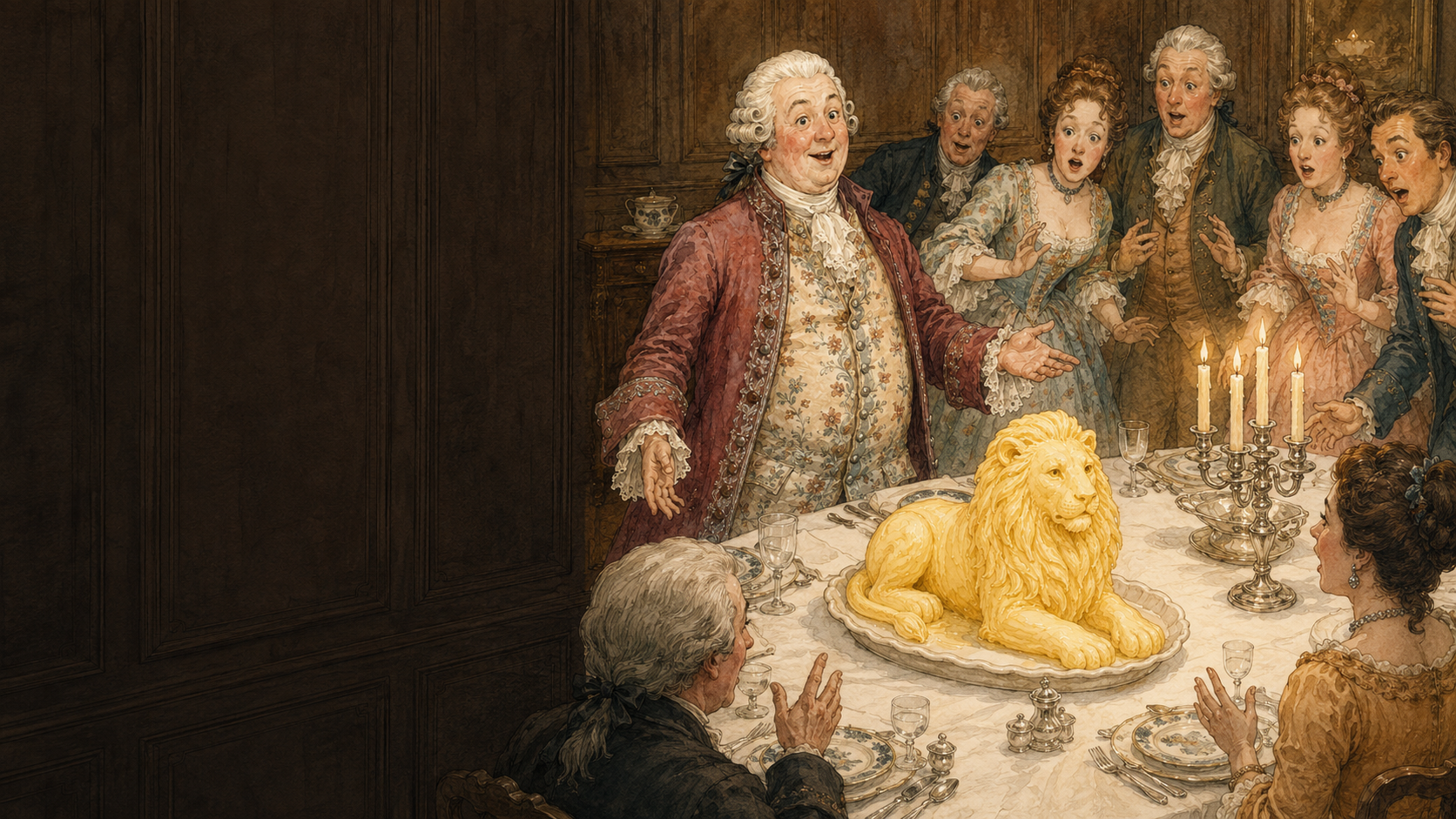
Fifty Famous Stories Retold Chapter 48, Antonio Canova, is a story about a poor boy's hidden talent being discovered almost by accident. Antonio lives with his grandfather, a stonecutter, because his own father has died, and though too frail to play with other boys, he loves shaping little statues from clay and stone chips at the stoneyard. When his grandfather takes him along to help in the kitchen at a rich Count's grand dinner, disaster strikes: a servant accidentally breaks the marble statue meant to decorate the dinner table. With no sculptor at hand, young Antonio offers to try, and in minutes he carves a beautiful crouching lion out of a two-hundred-pound block of butter. The Count's dinner guests, including famous artists, are astonished that a kitchen boy made it, and Antonio is seated among them as guest of honor. The very next day the Count takes Antonio under his wing and arranges for him to be trained by the best artists in the land, setting him on the road to becoming one of the greatest sculptors in the world.
Say what you remember!
Tell what you remember from the last chapter.
What happened in Fifty Famous Stories Retold Chapter 47, Casabianca?Have a look
In the last chapter, Casabianca, we learned about a brave boy who stayed at his post on a burning ship because his father had told him to wait there, calling out again and again for permission to leave until the ship exploded with him still aboard, never knowing his father had already died in the fighting below.
Read the previous lesson: Casabianca →Show what you know!
Use your printable Lesson Guide. Fill in the vocabulary you know, then click to check your work and learn some new words today.
What are the difficult or advanced vocabulary words in Fifty Famous Stories Retold Chapter 48, Antonio Canova?chisel, sculptor, molded, crouchingHave a look
- chisel: a metal tool for cutting stone or wood
- sculptor: an artist who makes statues
- molded: worked a soft material into a shape
- crouching: lying low to the ground with legs bent
Locate it on the map!
Use your printable Lesson Guide. Use an atlas and fill in the blank map if you can find the geographic location, then click to check your work.
What important geographic location connects with Fifty Famous Stories Retold Chapter 48, Antonio Canova?
- Find Italy: The home country of young Antonio Canova, the stonecutter's grandson who carved a butter sculpture so fine it launched him toward becoming one of the greatest sculptors in the world.
See it on the mapHave a look
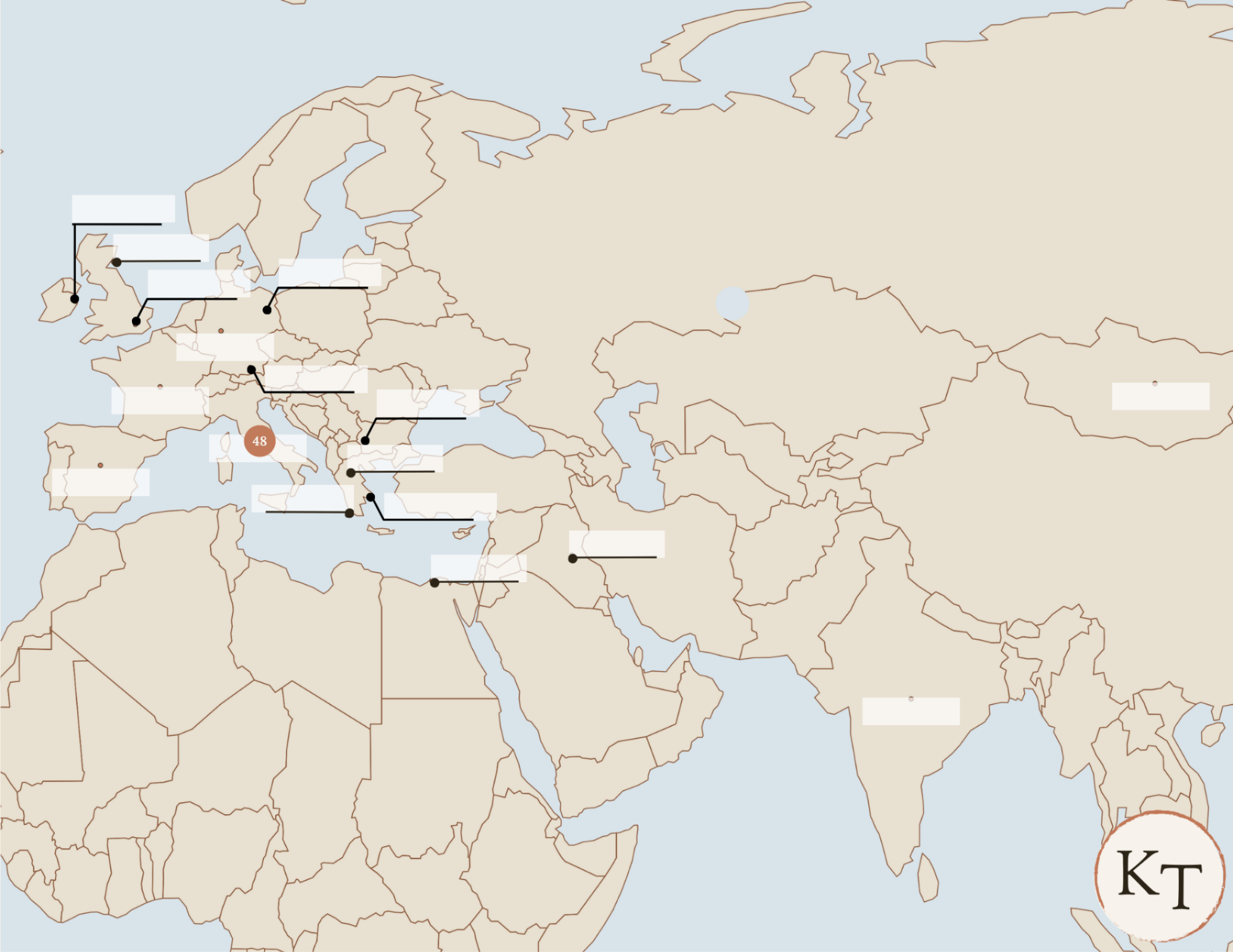
This matches the map in your Lesson Guide.
The Books come Alive!
Read or listen to Chapter 48 of Fifty Famous Stories Retold, the Kindred Thicket Enhanced Edition, read by Laura Caldwell.
Read by Laura Caldwell for LibriVox (public domain), professionally adjusted and trimmed by Kindred Thicket.
What do the Teacher’s Notes tell us about Chapter 48 of Fifty Famous Stories Retold?Parent review
This is a Kindred Thicket Enhanced Edition. Baldwin’s 1896 words are read exactly as he wrote them, and we add Teacher’s Notes with historical and literary context.
- About the whole bookFifty Famous Stories Retold gathers real history together with well-loved legends and traditions. These notes tell you, story by story, which is which.
- "a rich man who was called the Count"The patron was real: Giovanni Falier, a Venetian nobleman, though not a count. His villa was at Asolo, a few miles from Canova's own village. He went on to commission the young sculptor's first important works.
- the grandfather helping in the kitchenIn the older telling it is the boy who works in the kitchen, not his grandfather. Antonio was placed there as a kitchen helper because the family had little money.
- the broken marble statueThere is no broken statue in the older telling. The boy simply carves the lion; the accident that sets it up was added later.
- the butter lionCanova's own museum tells this story too, down to the crouching lion, and calls it a legend from the Romantic age rather than history. His scholarly biography leaves it out entirely.
Memory becomes Action!
Use the Response Resource* to remember and spell tricky names. Choose one way to narrate.
*Materials in the Lesson Guide.
What is the list of names, people, characters, and places that are important in Chapter 48 of Fifty Famous Stories Retold?Antonio Canova, His grandfather, His grandmother, The Count, The butter lion, ItalyHave a look
- Antonio Canova: A stonecutter's grandson, later a famous sculptor.
- His grandfather: A stonecutter and cook, who raised Antonio.
- His grandmother: Antonio's grandmother, who raised him with his grandfather.
- The Count: A rich man of the town, Antonio's patron.
- The butter lion: The figure Antonio carves.
- Italy: Antonio's country.
Chapter 48 Q & A
This is a Kindred Thicket Enhanced Edition. Baldwin’s stories mingle real history with beloved legend, and here is what to know about this one.
Was Antonio Canova a real sculptor?
Yes, he was a real and celebrated Italian sculptor, so his life story can generally be treated as genuine history rather than legend.
Did he really carve a lion out of butter as a boy?
This famous scene is best treated as a cherished legend rather than a documented fact. Canova's own museum tells the same story, crouching lion and all, but calls it a legend from the Romantic age, and his scholarly biography leaves it out entirely.
Was the 'Count' who became his patron a real person?
Yes. The patron was a real Venetian nobleman named Giovanni Falier, though he was not actually a count, and he went on to commission Canova's first important works.
Did the grandfather really work in the Count's kitchen?
In the older telling it is Antonio himself, not his grandfather, who works in the kitchen, placed there because the family had little money. This retelling shifts that detail to the grandfather.