The Listening Grove · Our Island Story
Chapter 1: Albion and Brutus
A Charlotte Mason read-aloud lesson. Press play, with the lesson.
What is Our Island Story Chapter 1, Albion and Brutus, about?Parent review
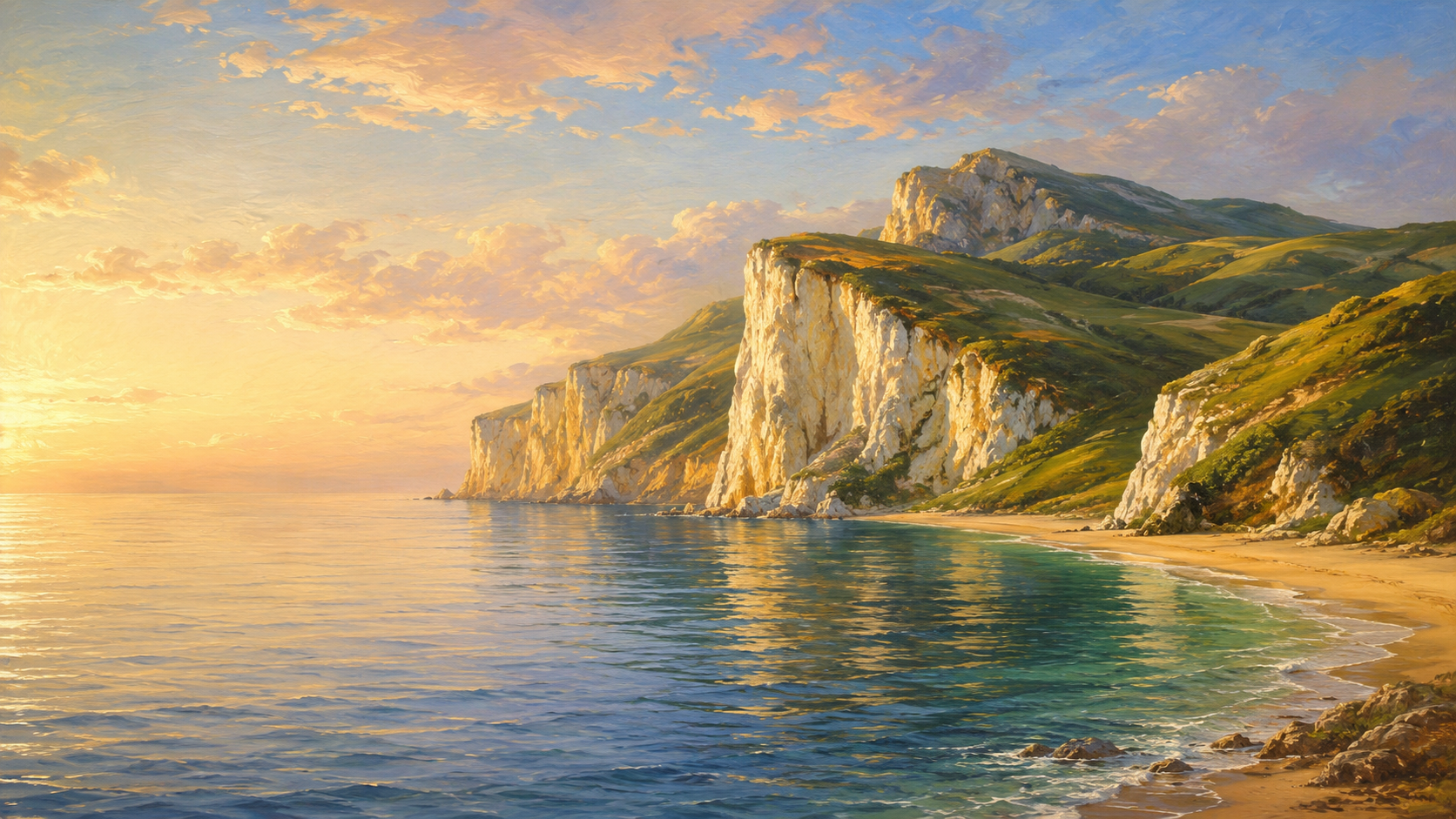
Our Island Story Chapter 1, Albion and Brutus, opens the book with an old legend of how Britain got its names. Neptune, king of the waves and god of the sea, makes each of his sons king over an island, and a great council meets to choose one for his fourth son, Albion. A little mermaid tells of her island, a gem in the bluest of waters with green trees, white cliffs, and golden sands, and when Neptune sees it he cries that Albion shall rule it and it shall be called by his name. Albion reigns for seven years until he is killed in a fight with the hero Hercules. Long after, Brutus, a prince from the far-off city of Troy, lands with his men of war, conquers the giants, and makes himself king of all the islands, which he calls Britain or Britannia. Marshall tells it as a story of many thousand years ago that some people think is only a fairy tale, and then turns to the real subject of the book: the people of Britain, and how they grew to be a great people.
Show what you know!
Say what you think each word means, then click to check your answers and learn some new words today.
What are the difficult or advanced vocabulary words in Our Island Story Chapter 1, Albion and Brutus?scepter, acknowledged, gleefully, councilHave a look
- scepter: a royal staff a king holds to show power
- acknowledged: to admit that something is true or real
- gleefully: in a happy and joyful way
- council: a group that meets to talk and decide
Locate it on the map!
Use an atlas to find the place if you can, then click to check your work on the map.
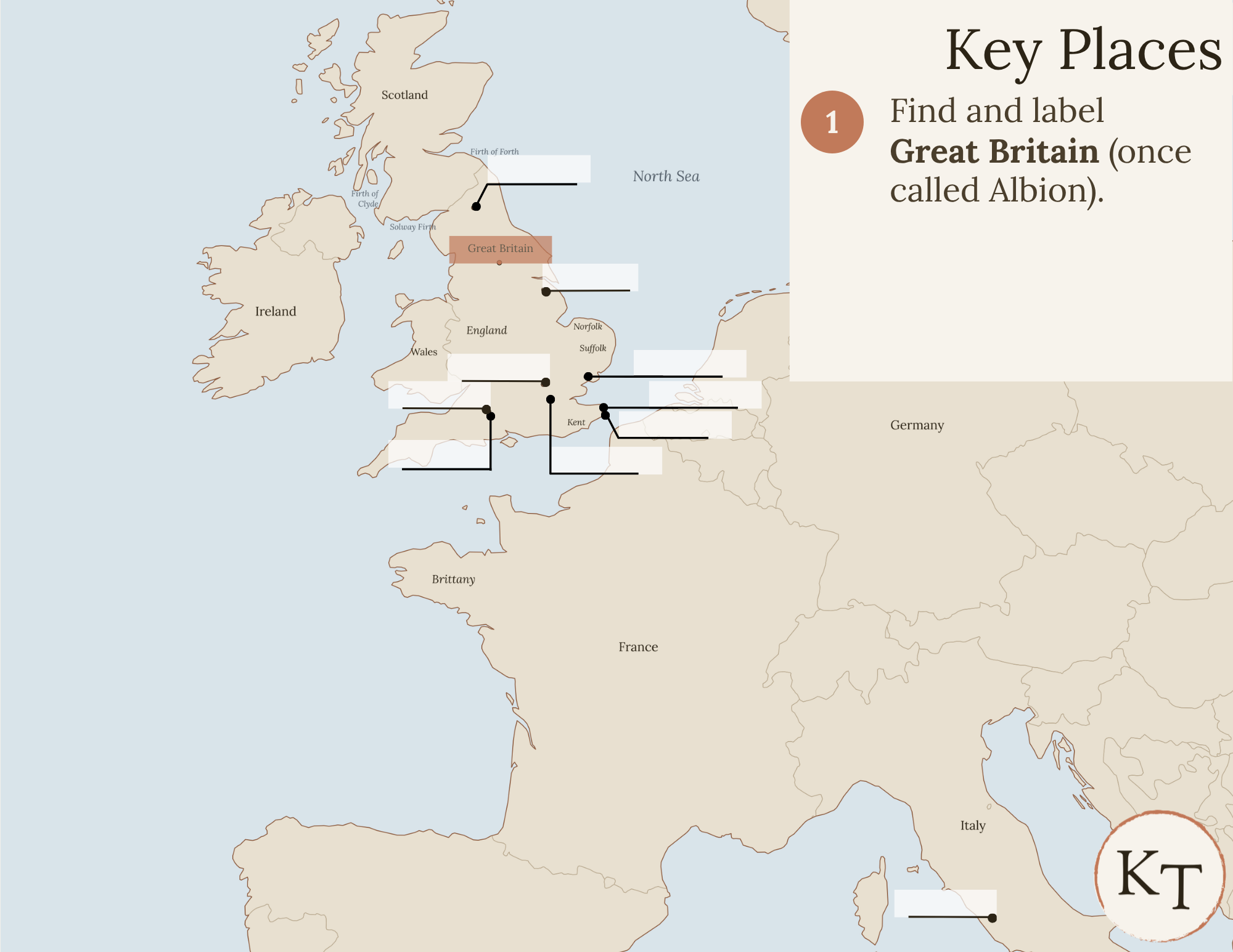
What important geographic locations connect with Our Island Story Chapter 1, Albion and Brutus?
- Find and Label
- Great Britain (once called Albion)
See it on the mapHave a look
The Books come Alive!
Read or listen to Chapter 1 of Our Island Story, the Kindred Thicket Revised Edition.
Read by Kindred Thicket from the Our Island Story Kindred Thicket Revised Edition.
What corrections are made in Chapter 1 of Our Island Story?Parent review
This is a Kindred Thicket Revised Edition. Factual and historical errors are corrected and dated wording is put right, and these notes tell you plainly what we changed and what we left as Marshall wrote it.
- About this sectionThroughout this section we brought Marshall’s British spellings to American English, keeping the original spelling inside quoted material. Punctuation, readability and grammar may also be adjusted. Where offensive or outdated terminology or descriptions were present in Marshall’s original text, with the exception of direct period quotations, we have made minimal revisions.
- Kindred Thicket Revised Edition UpdatesHistorians and etymologists say that the name “Britain” has a complex history rooted in a Greek description of the Celtic People, not to the name “Brutus”. We revised the original text accordingly.
- Teacher's Notes“the cliffs are white and the sands are golden”The famous white cliffs at Dover are white due to the presence of chalk.
- “there came sailing from the far-off city of Troy a prince called Brutus”The story of Brutus and many of the other events told by Marshall in this chapter come from a medieval book written by Geoffrey of Monmouth that historians treat mainly as fiction today.
- “there came sailing from the far-off city of Troy a prince called Brutus”Marshall relates the legend, saying that Brutus sailed from Troy. Troy’s archaeological site is at Hisarlık in modern-day Turkey.
- “These lands form the empire of Greater Britain”When this book was written by Marshall in 1905, Great Britain was a global empire. Although Britain’s holdings have decreased through decolonization, there are 14 British overseas territories still in existence today.
Memory becomes Action!
Use the names below to remember and spell tricky names. Choose one way to narrate.
What is the list of names, people, characters, and places that are important in Chapter 1 of Our Island Story?Neptune, Amphitrite, Albion, The little mermaid, Hercules, Brutus, Troy, SamotheaHave a look
- Neptune: The sea god of Roman myth, Albion's father.
- Amphitrite: Neptune's wife, queen of the sea.
- Albion: Neptune's fourth son and first ruler of the island.
- The little mermaid: The mermaid who chose the island for Albion.
- Hercules: The hero of Greek myth who killed Albion.
- Brutus: A legendary prince of Troy who became king of Britain.
- Troy: The far-off city Brutus came from.
- Samothea: The island's earlier name in the legend.
Chapter 1 Q & A
This is a Kindred Thicket Revised Edition. Marshall’s 1905 history is beautiful but not always right, and here is what the record supports for this chapter.
Is the story of Albion and Brutus true?
No, it is a legend. Neptune and Hercules come from the myths of Rome and Greece, and the story of Brutus comes from a medieval book that historians treat mainly as fiction.
Where does the legend of Brutus come from?
It comes from the History of the Kings of Britain, a medieval book written by Geoffrey of Monmouth. Historians today treat it mainly as fiction, and even in the Middle Ages some writers, such as William of Newburgh, doubted it.
Was Britain named after Brutus?
No. Historians and etymologists say the name “Britain” has a complex history rooted in a Greek description of the Celtic people, not in the name Brutus.
Where was Troy?
Troy was in what is now Turkey. Its archaeological site is at Hisarlık, and it is a UNESCO World Heritage Site.
Why are the cliffs of Britain white?
The famous white cliffs at Dover, on the south-east coast of England, are white because they are made of chalk.
What was the empire of Greater Britain?
Greater Britain is Marshall’s name for the global empire Great Britain ruled when she wrote Our Island Story in 1905. That empire has shrunk greatly through decolonization, though 14 British overseas territories remain today.
Why is Britain sometimes called Albion?
Because Albion is one of the oldest names for the island; the Roman writer Pliny the Elder already recorded it. In Marshall’s legend the name comes from Albion, the son of Neptune, but that part belongs to the fairy tale.