Skip to content
HistoryKindred Thicket Revised Edition

Our Island Story

A Kindred Thicket Revised Edition.

The beloved Charlotte Mason history of England, read aloud chapter by chapter, with custom maps, copywork, key dates, composition, and accuracy notes in the companion guide.

Ways to experience Our Island Story

The reading is free, whichever way you use it. The guides work alongside it.

Watch

On YouTube

The read-aloud with the words and pictures, free, ready to play on your living room television. Each chapter is text-on-screen, with the text already brought up to date.

Watch the playlist
Listen

In the Listening Grove

The Our Island Story audiobook on a page, structured the Charlotte Mason way, so you can listen together with no video to watch.

Start at Chapter 1
Take it anywhere

On YotoComing soon

For the car or bedtime, a free Kindred Thicket audio pack compatible with the Yoto app, so the same narration travels with your family.

See the Yoto packs

Chapters

Press play to hear a chapter read aloud, or open it for the lesson, the video, and more.
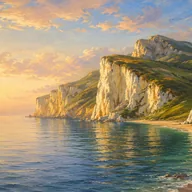
Chapter 1Albion and Brutus

Full Lessons

Teaching Resources

Companion Materials
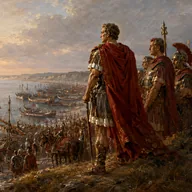
Lesson Guide coming soonCopyworkBonus Materials
Chapter 2The Coming of the Romans

Full Lessons

Teaching Resources

Companion Materials
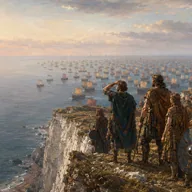
Lesson Guide coming soonCopyworkBonus Materials
Chapter 3The Romans Come Again

Full Lessons

Teaching Resources

Companion Materials
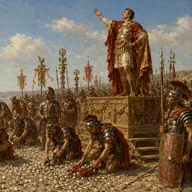
Lesson Guide coming soonCopyworkBonus Materials
Chapter 4Caligula Conquers Britain

Full Lessons

Teaching Resources

Companion Materials
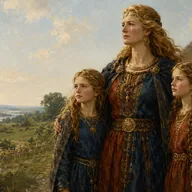
Lesson Guide coming soonCopyworkBonus Materials
Chapter 5The Story of Boadicea

Full Lessons

Teaching Resources

Companion Materials
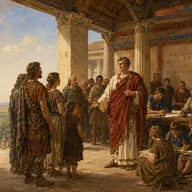
Lesson Guide coming soonCopyworkBonus Materials
Chapter 6The Last of the Romans

Full Lessons

Teaching Resources

Companion Materials
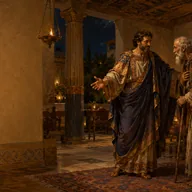
Lesson Guide coming soonCopyworkBonus Materials
Chapter 7The Story of St. Alban

Full Lessons

Teaching Resources

Companion Materials
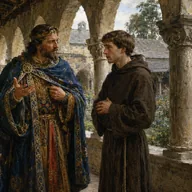
Lesson Guide coming soonCopyworkBonus Materials
Chapter 8Vortigern and King Constans

Full Lessons

Listening Grove coming soonYouTube coming soon

Companion Materials

Lesson Guide coming soonCopyworkBonus Materials
Chapter 9The Story of the Coming of Hengist and Horsa

Full Lessons

Listening Grove coming soonYouTube coming soon

Companion Materials

Lesson Guide coming soonCopyworkBonus Materials
Chapter 10Hengist’s Treachery

Full Lessons

Listening Grove coming soonYouTube coming soon

Companion Materials

Lesson Guide coming soonCopyworkBonus Materials
Chapter 11The Story of How the Giant’s Dance Was Brought to Britain

Full Lessons

Listening Grove coming soonYouTube coming soon

Companion Materials

Lesson Guide coming soonCopyworkBonus Materials

The materials

We do the planning. The read-aloud is free, and the guides bring the rest of the lesson together: the custom maps, copywork, key dates, composition, and accuracy notes, prepared for you.

Complete Companion Guide

The Lesson Guide plus custom maps with map work, copywork at three levels, key dates, composition, and plain accuracy notes, bundled for every chapter.

Coming soon

Lesson Guide

The vocabulary and narration support for every chapter, the open-and-go helps that make each lesson easy to lead.

Coming soon

Copywork

Verbatim passages from the reading at three graduated levels, in both print and cursive, keeping handwriting practice tied to the chapters you are reading.

Shop the Copywork

Bonus Set

Free

Printable helps that make the reading easy to lead, free when you join the Kindred Thicket email list.

Get the free set

Teacher’s Notes & Research

Teacher’s Notes and research are maintained alongside the Kindred Thicket edition. Explore the current Teacher’s Notes for each completed section, or open a chapter below to see the research and editorial decisions behind the text.

Chapters 1–7

Teacher’s Notes

Chapter 1 Teacher’s NotesAlbion and Brutus

  • “the cliffs are white and the sands are golden”The famous white cliffs at Dover are white due to the presence of chalk.
  • “there came sailing from the far-off city of Troy a prince called Brutus”The story of Brutus and many of the other events told by Marshall in this chapter come from a medieval book written by Geoffrey of Monmouth that historians treat mainly as fiction today.
  • “there came sailing from the far-off city of Troy a prince called Brutus”Marshall relates the legend, saying that Brutus sailed from Troy. Troy’s archaeological site is at Hisarlık in modern-day Turkey.
  • “He called them the kingdom of Britain or Britannia”Historians and etymologists say that the name “Britain” has a complex history rooted in a Greek description of the Celtic People, not to the name “Brutus”. We revised the original text accordingly.
  • “These lands form the empire of Greater Britain”When this book was written by Marshall in 1905, Great Britain was a global empire. Although Britain’s holdings have decreased through decolonization, there are 14 British overseas territories still in existence today.

Chapter 2 Teacher’s NotesThe Coming of the Romans

  • “Our great poet Shakespeare has written about one of these kings who was called King Lear”Marshall mentions that Shakespeare wrote about an ancient British king called Lear. Shakespeare did, but Lear belongs to Britain's legendary early history rather than to its securely documented rulers. We left the reference as a doorway to the famous play and added this note for context.
  • “They had taught themselves how to fight, how to make swords and armor, and how to build fortresses”Rome truly was skilled, but it borrowed a great deal from others, including the short sword it took from Spain, so the sentence now credits Roman skill without claiming they outdid everyone on earth.
  • “the shores were strewn with precious pearls”Britain really did produce pearls, including freshwater pearls, but ancient Roman writers themselves described British pearls as small or dull-colored. The picture of shores strewn with precious gems is much more flourish than treasure.
  • “he turned his ships and sailed along the coast until he came to a place where the shore was flat”In the chapter, Marshall does not name the location of Caesar's 55 BC landing. Scholars believe that he landed near Deal, along the stretch between Walmer and Deal.
  • “The rowers sat in long lines down each side of the galley”Roman rowers at this time were mostly free men and not slaves. We removed the reference to chains to better match what historians know today.
  • “The war chariots of the British were very terrible”Chariot wheels in Iron Age Britain almost certainly did not have swords on them. Actual chariots from near this time have been discovered that do not have swords on the wheels. Reliable and detailed descriptions of the weaponry are also available from this time, and they do not mention the swords. For these reasons, we removed the mention of swords on the chariot wheels.

Chapter 3 Teacher’s NotesThe Romans Come Again

  • “In the following year”Marshall's original text says that Caesar's next expedition was in the spring. In fact, it was in July. For this reason, we removed the reference to spring.
  • “he again sailed over to Britain”When Caesar sailed again from France in 54 BC, some archaeologists believe he may have landed at or near Pegwell Bay on the peninsula of the Isle of Thanet.
  • “carried shields rimmed with brass or iron”Marshall’s original text described Roman shields as made of steel and British swords as made of soft copper. Roman shields were made of wood with protective coverings and metal reinforcement along their edges. The ancient historian Polybius describes iron reinforcement on the upper and lower rims. Surviving artifacts include Roman shield-binding fragments made of copper alloy. British Iron Age swords had iron blades, though their handles could include copper-alloy fittings or decoration. Roman swords also had iron blades, and some were hardened by quenching. We revised the original text accordingly.
  • “They gave him some Britons to take back to Rome”In Marshall's original text she describes the hostages as being soldiers. Caesar’s account identifies them only as British hostages. He never says that they are specifically soldiers. We have removed the unsupported detail.

Chapter 4 Teacher’s NotesCaligula Conquers Britain

  • “marched from Italy right through France”Marshall pairs Caligula’s expedition with a British king named Guilderius. There is no record of a Guilderius. Marshall may have confused him with Guiderius, a king in Geoffrey of Monmouth’s book, who refuses to pay tribute to Rome and fights against Claudius, not Caligula (see the Chapter 1 note on Geoffrey of Monmouth’s book). Marshall also suggests that Caligula was afraid of the British army, but the ancient sources say nothing about the Britons gathering a force. Instead, they say Caligula accepted the surrender of a British prince, Adminius, who had been banished by his father and crossed the Channel with a small band of followers. Caligula then sent a boastful letter to Rome as if the whole island had surrendered. The sources suggest he wanted to announce a victory to the Roman people without the trouble of actually invading. The text here is revised accordingly.
  • “he could not thoroughly subdue the Britons”Marshall says Claudius could not thoroughly subdue the Britons. This understates the success of the Roman invasion. In AD 43, Claudius sent a large Roman force under Aulus Plautius. After the initial victories, Claudius himself came to Britain with reinforcements for the capture of Camulodunum, the Catuvellaunian capital. The invasion secured Roman control over a large part of south-central and southeastern Britain and laid the foundation for a durable Roman province. Although the whole island was never fully conquered, warfare and expansion continued for decades.
  • “chose for his camp a place on the top of a hill”Marshall's original text places Caractacus's last fortress on the borders of Shropshire, Cheshire, and Lancashire and says its walls can still be seen today. In truth the site of his final battlefield is unknown. The Roman writer Tacitus places it in the Ordovician territory. Though several sites have been suggested, historians have never agreed on one. We revised the text accordingly.
  • “He called his soldiers together”Caractacus's stirring speech to his soldiers is written by Marshall from Tacitus' account.
  • “his wife and daughter, and all his brothers were made prisoner”Marshall simplifies Caractacus’s capture. After his final defeat, the Romans captured his wife and daughter, while his brothers surrendered. Caractacus himself escaped and sought protection from Cartimandua, queen of the Brigantes, but she had him arrested and handed over to the Romans.
  • “would walk in the Triumph”Marshall presents Caractacus’s appearance before Claudius as a formal Triumph. Claudius’s British Triumph took place in AD 44. Caractacus was captured and brought to Rome around AD 51. Tacitus describes this later occasion as a public display of prisoners before Claudius and the praetorian cohorts, without specifying whether or not it was a formal Triumph.
  • “I fought for my own land and for freedom”Caractacus’s speech before Claudius in Rome is adapted by Marshall from Tacitus’s account, which presents it as direct speech. Direct speech in ancient historical accounts, however, should not automatically be treated as a verbatim quotation.

Chapter 5 Teacher’s NotesThe Story of Boadicea

  • “Her name was Boadicea, and she was a queen”Marshall uses “Boadicea,” a later English form of the name. The name has been spelled many other ways, including by the two ancient accounts. Tacitus writes Boudicca. Cassius Dio’s Greek is Βουδουῖκα (Boudouika), commonly translated as Buduica.
  • “he made the Emperor a present of some of his money”Marshall's original text said Prasutagus, king of the Iceni, left half his property to the emperor and half to his wife and two children. The ancient historian Tacitus says Prasutagus named his daughters co-heirs with the emperor, Nero. We revised the text accordingly.
  • “she tried to make them give back what they had stolen”Marshall is presenting Tacitus's version of events regarding the reasons for the revolt. He says the ill-treatment of Prasutagus's family by the Romans sparked the revolt. By contrast, Cassius Dio partially attributes the start of the revolt to financial grievances, specifically the confiscation of imperial gifts and suddenly called-in loans.
  • “die rather than submit”Boadicea's stirring speech to her soldiers by Marshall is adapted from Cassius Dio's account.
  • “the golden band which bound her forehead”Marshall's description of Boadicea's physical appearance is partially dramatization. Cassius Dio describes her as tall and terrifying with a great mass of tawny hair and a golden torc around her neck, but does not mention her eye color.
  • “Camulodunum (Colchester)”Marshall’s original text listed only London and St Albans among the towns destroyed. However, the rebels first sacked Camulodunum (modern Colchester), then the Roman capital in Britain. We have revised the text accordingly.
  • “bearing in his hand a green branch as a sign of peace”Marshall’s account that the Romans asked for peace and that a Roman leader came bearing a green branch as a sign of peace appears to be the author’s dramatization. This scene is not found in Tacitus's or Cassius Dio's account. Marshall's telling likely draws on the conventional symbol of a green or olive branch as an emblem of peace.
  • “She had poisoned herself, rather than fall again into the hands of the Romans”The accounts of Tacitus and Cassius Dio disagree about how Boadicea died (one says poison, one says illness). Neither says anything about her daughters. In Marshall's text, she says that Boadicea poisoned herself and her daughters. We revised the text accordingly.

Chapter 6 Teacher’s NotesThe Last of the Romans

  • “he built schools”In the original text, Marshall makes a sweeping statement that, before Agricola’s time, Britain had no schools, teachers, or books, and that no one in Britain could read or write. Pre-Roman Britain was not wholly illiterate. We have accounts of Druids using Greek letters, as well as archaeological evidence of styli (writing implements) from before the Roman conquest. Furthermore, Agricola was not promoting public education; he encouraged Roman education to the sons of elite British families. We revised the text to remove the overstatement.
  • “keep back the wild Picts and Scots, or people of the north”Marshall calls the northern Britons "Picts and Scots", however, those names were not yet in use. They were known to the Romans of Agricola’s time as Caledonians and other tribes. “Picts” first appears in Roman sources in the late third century, while “Scots” originally referred to Irish Gaels. Both terms were applied to peoples in northern Britain later.
  • “Later another emperor built the Antonine Wall”In the original text, Marshall briefly mentions a wall built by “Antonine” before describing Hadrian’s Wall later in the chapter. The historical sequence is as follows: Agricola’s forts came first, followed by Hadrian’s Wall, and then the Antonine Wall. The standard modern name of the emperor who ordered the construction of the Antonine Wall is Antoninus Pius. We revised the text accordingly.
  • “This emperor was jealous of Agricola”Marshall is referring to Emperor Domitian, who ruled from AD 81 to 96. Domitian recalled Agricola from Britain around AD 84–85. Tacitus, Agricola’s son-in-law, says Domitian was jealous of Agricola’s success. Modern historians suggest the recall may instead have been due to the cost of the campaigns and their failure to secure lasting territorial gains.
  • “from the Tyne to the Solway”The continuous rampart built from the Wallsend on the Tyne Estuary to Bowness on the Firth of Solway is known as Hadrian's Wall.
  • “The Britons stained their bodies with a dye that may have been woad”Marshall describes some Britons as wearing no clothes and coloring their skin with woad, and presents their education as limited to fishing, hunting, and killing. We revised this portrayal to avoid giving the impression that these descriptions represented British life generally. Although ancient writers such as Herodian describe nakedness and body coloring among some northern Britons, others, such as Julius Caesar, describe clothing as well as body coloring. Archaeological evidence shows that Iron Age communities wore clothing, farmed crops, raised animals, and practiced crafts including weaving, pottery-making, and metalworking. The identification of the body pigment as woad also remains uncertain.
  • “which may mean "oak" or "know."”In the original text, Marshall says that the word "druid" was derived from king named "Druis". The likely root of the word points to "oak" or "to know". We revised the text accordingly.
  • “The Romans said that they even killed human beings in their sacrifices”Marshall stated flatly that the Druids killed human beings in their sacrifices. It is important to understand that this account comes from Roman writers, who may have had political and military reasons to portray the peoples they conquered as barbaric. We revised the text accordingly.
  • “Gradually the Druids disappeared”Marshall's text may suggest that the Druids were cleanly replaced by Christianity. History is not quite so tidy. Roman authorities had already suppressed the Druids during the conquest of Britain. Christianity spread later under Roman rule and was established in Britain by the fourth century. Still later, missionaries such as Augustine, who arrived in 597, worked to convert the pagan Anglo-Saxons.
  • “Christians under his direct rule were sometimes killed”Marshall states that the Roman emperor ruling over Britain killed and tortured Christians who worshipped God and Jesus Christ. The statement implies this also occurred on British soil. The Great Persecution was decreed by the emperor Diocletian, but Britain was then governed by Constantius Chlorus, who enforced the edicts only minimally. Other rulers persecuted Christians far more severely in their own territories. After Constantius died in 306, Britain passed to his son Constantine, who favored Christians. We revised the text accordingly.

Chapter 7 Teacher’s NotesThe Story of St. Alban

  • “When he was a boy he had even traveled to Rome”The detail that Alban traveled to Rome as a boy is not found in Bede’s Ecclesiastical History, completed in 731. The journey to Rome in his youth appears in later accounts.
  • “When the wicked Roman Emperor sent men to kill the Christians in Britain”The date of St Alban’s martyrdom is uncertain, although it is traditionally placed during Diocletian’s persecution, about 304. Please see the note on Diocletian, Constantius Chlorus, and Constantine in Chapter 6 for more information about Christian persecution in Britain at that time.
  • “a holy man that some early historians called Amphibalus”The name "Amphibalus" does not appear in Bede’s Ecclesiastical History, but is first mentioned later in Geoffrey of Monmouth’s History of the Kings of Britain, written about 1136 (see the Chapter 1 note on Geoffrey of Monmouth’s book). The name may have arisen from a misreading of "amphibalus", a Latin word for the cloak Alban wore when he took the priest’s place. We revised the original text accordingly.

Teacher’s Notes may be updated as new research or questions arise. The web edition is the current version.

Research

About this edition

Throughout this section we brought Marshall's British spellings to American English, keeping the original spelling inside quoted material. Punctuation, readability and grammar may also be adjusted. Where offensive or outdated terminology or descriptions were present in Marshall's original text, with the exception of direct period quotations, we have made minimal revisions.

In this section, numerous facts were researched and verified. Where the original text required correction, clarification, or further context, we documented our treatment here. Every item below was checked against the historical and archaeological record before we touched a word. We also note what we chose to leave standing and address some common inquiries.

Chapter 1 Research and Editorial NotesAlbion and Brutus

Corrected in the Revised Edition

IssueEditorial ResponseSources
“He called them the kingdom of Britain or Britannia”Historians and etymologists say that the name “Britain” has a complex history rooted in a Greek description of the Celtic People, not to the name “Brutus”. We revised the original text accordingly.Revised the text and provided note for the teacher.

Kept as It Stands, with a Note for the Parent

IssueEditorial ResponseSources
“the cliffs are white and the sands are golden”Chapter can be better understood with additional context. The famous white cliffs at Dover are white due to the presence of chalk.Kept the text and provided note for the teacher.
“there came sailing from the far-off city of Troy a prince called Brutus”Chapter can be better understood with additional context. The story of Brutus and many of the other events told by Marshall in this chapter come from a medieval book written by Geoffrey of Monmouth that historians treat mainly as fiction today.Kept the text and provided note for the teacher.
“there came sailing from the far-off city of Troy a prince called Brutus”Chapter can be better understood with additional context. Marshall relates the legend, saying that Brutus sailed from Troy. Troy’s archaeological site is at Hisarlık in modern-day Turkey.Kept the text and provided note for the teacher.
“These lands form the empire of Greater Britain”Chapter can be better understood with additional context. When this book was written by Marshall in 1905, Great Britain was a global empire. Although Britain’s holdings have decreased through decolonization, there are 14 British overseas territories still in existence today.Kept the text and provided note for the teacher.

Chapter 2 Research and Editorial NotesThe Coming of the Romans

Corrected in the Revised Edition

IssueEditorial ResponseSources
“They had taught themselves how to fight, how to make swords and armor, and how to build fortresses”Rome truly was skilled, but it borrowed a great deal from others, including the short sword it took from Spain, so the sentence now credits Roman skill without claiming they outdid everyone on earth.Revised the text and provided note for the teacher.
“The rowers sat in long lines down each side of the galley”Roman rowers at this time were mostly free men and not slaves. We removed the reference to chains to better match what historians know today.Revised the text and provided note for the teacher.
“The war chariots of the British were very terrible”Chariot wheels in Iron Age Britain almost certainly did not have swords on them. Actual chariots from near this time have been discovered that do not have swords on the wheels. Reliable and detailed descriptions of the weaponry are also available from this time, and they do not mention the swords. For these reasons, we removed the mention of swords on the chariot wheels.Revised the text and provided note for the teacher.

Kept as It Stands, with a Note for the Parent

IssueEditorial ResponseSources
“Our great poet Shakespeare has written about one of these kings who was called King Lear”Chapter can be better understood with additional context. Marshall mentions that Shakespeare wrote about an ancient British king called Lear. Shakespeare did, but Lear belongs to Britain's legendary early history rather than to its securely documented rulers. We left the reference as a doorway to the famous play and added this note for context.Kept the text and provided note for the teacher.
“the shores were strewn with precious pearls”Chapter can be better understood with additional context. Britain really did produce pearls, including freshwater pearls, but ancient Roman writers themselves described British pearls as small or dull-colored. The picture of shores strewn with precious gems is much more flourish than treasure.Kept the text and provided note for the teacher.
“he turned his ships and sailed along the coast until he came to a place where the shore was flat”Chapter can be better understood with additional context. In the chapter, Marshall does not name the location of Caesar's 55 BC landing. Scholars believe that he landed near Deal, along the stretch between Walmer and Deal.Kept the text and provided note for the teacher.

Chapter 3 Research and Editorial NotesThe Romans Come Again

Corrected in the Revised Edition

IssueEditorial ResponseSources
“In the following year”Marshall's original text says that Caesar's next expedition was in the spring. In fact, it was in July. For this reason, we removed the reference to spring.Revised the text and provided note for the teacher.
“carried shields rimmed with brass or iron”Marshall’s original text described Roman shields as made of steel and British swords as made of soft copper. Roman shields were made of wood with protective coverings and metal reinforcement along their edges. The ancient historian Polybius describes iron reinforcement on the upper and lower rims. Surviving artifacts include Roman shield-binding fragments made of copper alloy. British Iron Age swords had iron blades, though their handles could include copper-alloy fittings or decoration. Roman swords also had iron blades, and some were hardened by quenching. We revised the original text accordingly.Revised the text and provided note for the teacher.
“They gave him some Britons to take back to Rome”In Marshall's original text she describes the hostages as being soldiers. Caesar’s account identifies them only as British hostages. He never says that they are specifically soldiers. We have removed the unsupported detail.Revised the text and provided note for the teacher.

Kept as It Stands, with a Note for the Parent

IssueEditorial ResponseSources
“he again sailed over to Britain”Chapter can be better understood with additional context. When Caesar sailed again from France in 54 BC, some archaeologists believe he may have landed at or near Pegwell Bay on the peninsula of the Isle of Thanet.Kept the text and provided note for the teacher.

Chapter 4 Research and Editorial NotesCaligula Conquers Britain

Corrected in the Revised Edition

IssueEditorial ResponseSources
“marched from Italy right through France”Marshall pairs Caligula’s expedition with a British king named Guilderius. There is no record of a Guilderius. Marshall may have confused him with Guiderius, a king in Geoffrey of Monmouth’s book, who refuses to pay tribute to Rome and fights against Claudius, not Caligula (see the Chapter 1 note on Geoffrey of Monmouth’s book). Marshall also suggests that Caligula was afraid of the British army, but the ancient sources say nothing about the Britons gathering a force. Instead, they say Caligula accepted the surrender of a British prince, Adminius, who had been banished by his father and crossed the Channel with a small band of followers. Caligula then sent a boastful letter to Rome as if the whole island had surrendered. The sources suggest he wanted to announce a victory to the Roman people without the trouble of actually invading. The text here is revised accordingly.Revised the text and provided note for the teacher.
“chose for his camp a place on the top of a hill”Marshall's original text places Caractacus's last fortress on the borders of Shropshire, Cheshire, and Lancashire and says its walls can still be seen today. In truth the site of his final battlefield is unknown. The Roman writer Tacitus places it in the Ordovician territory. Though several sites have been suggested, historians have never agreed on one. We revised the text accordingly.Revised the text and provided note for the teacher.

Kept as It Stands, with a Note for the Parent

IssueEditorial ResponseSources
“he could not thoroughly subdue the Britons”Chapter can be better understood with additional context. Marshall says Claudius could not thoroughly subdue the Britons. This understates the success of the Roman invasion. In AD 43, Claudius sent a large Roman force under Aulus Plautius. After the initial victories, Claudius himself came to Britain with reinforcements for the capture of Camulodunum, the Catuvellaunian capital. The invasion secured Roman control over a large part of south-central and southeastern Britain and laid the foundation for a durable Roman province. Although the whole island was never fully conquered, warfare and expansion continued for decades.Kept the text and provided note for the teacher.
“He called his soldiers together”Chapter can be better understood with additional context. Caractacus's stirring speech to his soldiers is written by Marshall from Tacitus' account.Kept the text and provided note for the teacher.
“his wife and daughter, and all his brothers were made prisoner”Chapter can be better understood with additional context. Marshall simplifies Caractacus’s capture. After his final defeat, the Romans captured his wife and daughter, while his brothers surrendered. Caractacus himself escaped and sought protection from Cartimandua, queen of the Brigantes, but she had him arrested and handed over to the Romans.Kept the text and provided note for the teacher.
“would walk in the Triumph”Chapter can be better understood with additional context. Marshall presents Caractacus’s appearance before Claudius as a formal Triumph. Claudius’s British Triumph took place in AD 44. Caractacus was captured and brought to Rome around AD 51. Tacitus describes this later occasion as a public display of prisoners before Claudius and the praetorian cohorts, without specifying whether or not it was a formal Triumph.Kept the text and provided note for the teacher.
“I fought for my own land and for freedom”Chapter can be better understood with additional context. Caractacus’s speech before Claudius in Rome is adapted by Marshall from Tacitus’s account, which presents it as direct speech. Direct speech in ancient historical accounts, however, should not automatically be treated as a verbatim quotation.Kept the text and provided note for the teacher.

Chapter 5 Research and Editorial NotesThe Story of Boadicea

Corrected in the Revised Edition

IssueEditorial ResponseSources
“he made the Emperor a present of some of his money”Marshall's original text said Prasutagus, king of the Iceni, left half his property to the emperor and half to his wife and two children. The ancient historian Tacitus says Prasutagus named his daughters co-heirs with the emperor, Nero. We revised the text accordingly.Revised the text and provided note for the teacher.
“she tried to make them give back what they had stolen”Marshall is presenting Tacitus's version of events regarding the reasons for the revolt. He says the ill-treatment of Prasutagus's family by the Romans sparked the revolt. By contrast, Cassius Dio partially attributes the start of the revolt to financial grievances, specifically the confiscation of imperial gifts and suddenly called-in loans.Revised the text and provided note for the teacher.
“Camulodunum (Colchester)”Marshall’s original text listed only London and St Albans among the towns destroyed. However, the rebels first sacked Camulodunum (modern Colchester), then the Roman capital in Britain. We have revised the text accordingly.Revised the text and provided note for the teacher.
“She had poisoned herself, rather than fall again into the hands of the Romans”The accounts of Tacitus and Cassius Dio disagree about how Boadicea died (one says poison, one says illness). Neither says anything about her daughters. In Marshall's text, she says that Boadicea poisoned herself and her daughters. We revised the text accordingly.Revised the text and provided note for the teacher.

Kept as It Stands, with a Note for the Parent

IssueEditorial ResponseSources
“Her name was Boadicea, and she was a queen”Chapter can be better understood with additional context. Marshall uses “Boadicea,” a later English form of the name. The name has been spelled many other ways, including by the two ancient accounts. Tacitus writes Boudicca. Cassius Dio’s Greek is Βουδουῖκα (Boudouika), commonly translated as Buduica.Kept the text and provided note for the teacher.
“die rather than submit”Chapter can be better understood with additional context. Boadicea's stirring speech to her soldiers by Marshall is adapted from Cassius Dio's account.Kept the text and provided note for the teacher.
“the golden band which bound her forehead”Chapter can be better understood with additional context. Marshall's description of Boadicea's physical appearance is partially dramatization. Cassius Dio describes her as tall and terrifying with a great mass of tawny hair and a golden torc around her neck, but does not mention her eye color.Kept the text and provided note for the teacher.
“bearing in his hand a green branch as a sign of peace”Chapter can be better understood with additional context. Marshall’s account that the Romans asked for peace and that a Roman leader came bearing a green branch as a sign of peace appears to be the author’s dramatization. This scene is not found in Tacitus's or Cassius Dio's account. Marshall's telling likely draws on the conventional symbol of a green or olive branch as an emblem of peace.Kept the text and provided note for the teacher.

Chapter 6 Research and Editorial NotesThe Last of the Romans

Corrected in the Revised Edition

IssueEditorial ResponseSources
“he built schools”In the original text, Marshall makes a sweeping statement that, before Agricola’s time, Britain had no schools, teachers, or books, and that no one in Britain could read or write. Pre-Roman Britain was not wholly illiterate. We have accounts of Druids using Greek letters, as well as archaeological evidence of styli (writing implements) from before the Roman conquest. Furthermore, Agricola was not promoting public education; he encouraged Roman education to the sons of elite British families. We revised the text to remove the overstatement.Revised the text and provided note for the teacher.
“Later another emperor built the Antonine Wall”In the original text, Marshall briefly mentions a wall built by “Antonine” before describing Hadrian’s Wall later in the chapter. The historical sequence is as follows: Agricola’s forts came first, followed by Hadrian’s Wall, and then the Antonine Wall. The standard modern name of the emperor who ordered the construction of the Antonine Wall is Antoninus Pius. We revised the text accordingly.Revised the text and provided note for the teacher.
“The Britons stained their bodies with a dye that may have been woad”Marshall describes some Britons as wearing no clothes and coloring their skin with woad, and presents their education as limited to fishing, hunting, and killing. We revised this portrayal to avoid giving the impression that these descriptions represented British life generally. Although ancient writers such as Herodian describe nakedness and body coloring among some northern Britons, others, such as Julius Caesar, describe clothing as well as body coloring. Archaeological evidence shows that Iron Age communities wore clothing, farmed crops, raised animals, and practiced crafts including weaving, pottery-making, and metalworking. The identification of the body pigment as woad also remains uncertain.Revised the text and provided note for the teacher.
“which may mean "oak" or "know."”In the original text, Marshall says that the word "druid" was derived from king named "Druis". The likely root of the word points to "oak" or "to know". We revised the text accordingly.Revised the text and provided note for the teacher.
“The Romans said that they even killed human beings in their sacrifices”Marshall stated flatly that the Druids killed human beings in their sacrifices. It is important to understand that this account comes from Roman writers, who may have had political and military reasons to portray the peoples they conquered as barbaric. We revised the text accordingly.Revised the text and provided note for the teacher.
“Christians under his direct rule were sometimes killed”Marshall states that the Roman emperor ruling over Britain killed and tortured Christians who worshipped God and Jesus Christ. The statement implies this also occurred on British soil. The Great Persecution was decreed by the emperor Diocletian, but Britain was then governed by Constantius Chlorus, who enforced the edicts only minimally. Other rulers persecuted Christians far more severely in their own territories. After Constantius died in 306, Britain passed to his son Constantine, who favored Christians. We revised the text accordingly.Revised the text and provided note for the teacher.

Kept as It Stands, with a Note for the Parent

IssueEditorial ResponseSources
“keep back the wild Picts and Scots, or people of the north”Chapter can be better understood with additional context. Marshall calls the northern Britons "Picts and Scots", however, those names were not yet in use. They were known to the Romans of Agricola’s time as Caledonians and other tribes. “Picts” first appears in Roman sources in the late third century, while “Scots” originally referred to Irish Gaels. Both terms were applied to peoples in northern Britain later.Kept the text and provided note for the teacher.
“This emperor was jealous of Agricola”Chapter can be better understood with additional context. Marshall is referring to Emperor Domitian, who ruled from AD 81 to 96. Domitian recalled Agricola from Britain around AD 84–85. Tacitus, Agricola’s son-in-law, says Domitian was jealous of Agricola’s success. Modern historians suggest the recall may instead have been due to the cost of the campaigns and their failure to secure lasting territorial gains.Kept the text and provided note for the teacher.
“from the Tyne to the Solway”Chapter can be better understood with additional context. The continuous rampart built from the Wallsend on the Tyne Estuary to Bowness on the Firth of Solway is known as Hadrian's Wall.Kept the text and provided note for the teacher.
“Gradually the Druids disappeared”Chapter can be better understood with additional context. Marshall's text may suggest that the Druids were cleanly replaced by Christianity. History is not quite so tidy. Roman authorities had already suppressed the Druids during the conquest of Britain. Christianity spread later under Roman rule and was established in Britain by the fourth century. Still later, missionaries such as Augustine, who arrived in 597, worked to convert the pagan Anglo-Saxons.Kept the text and provided note for the teacher.

Chapter 7 Research and Editorial NotesThe Story of St. Alban

Corrected in the Revised Edition

IssueEditorial ResponseSources
“a holy man that some early historians called Amphibalus”The name "Amphibalus" does not appear in Bede’s Ecclesiastical History, but is first mentioned later in Geoffrey of Monmouth’s History of the Kings of Britain, written about 1136 (see the Chapter 1 note on Geoffrey of Monmouth’s book). The name may have arisen from a misreading of "amphibalus", a Latin word for the cloak Alban wore when he took the priest’s place. We revised the original text accordingly.Revised the text and provided note for the teacher.

Kept as It Stands, with a Note for the Parent

IssueEditorial ResponseSources
“When he was a boy he had even traveled to Rome”Chapter can be better understood with additional context. The detail that Alban traveled to Rome as a boy is not found in Bede’s Ecclesiastical History, completed in 731. The journey to Rome in his youth appears in later accounts.Kept the text and provided note for the teacher.
“When the wicked Roman Emperor sent men to kill the Christians in Britain”Chapter can be better understood with additional context. The date of St Alban’s martyrdom is uncertain, although it is traditionally placed during Diocletian’s persecution, about 304. Please see the note on Diocletian, Constantius Chlorus, and Constantine in Chapter 6 for more information about Christian persecution in Britain at that time.Kept the text and provided note for the teacher.

These notes are maintained as a living research record and may be updated as new scholarship or reader inquiries warrant.

Questions about Our Island Story

What is Our Island Story about?

Our Island Story is a living-book history of England, told as a connected narrative chapter by chapter rather than as a list of facts. It is also published as An Island Story and as A Child's History of England. Kindred Thicket reads it aloud, clearly and accurately, with the Charlotte Mason lesson rhythm woven around the reading.

Who wrote Our Island Story?

Our Island Story was written by H. E. Marshall. It is one of the best-loved living-book histories in the Charlotte Mason world, and Kindred Thicket prepares the read-aloud and the companion guide around it.

Is Our Island Story historically accurate?

Like most histories written long ago, the original carries some dated framing and wording. The version Kindred Thicket reads aloud is the Revised Edition, in which factual and historical errors are corrected and dated wording is put right, so what your child hears is the corrected text. Where the question is one of perspective rather than fact, we leave the passage and flag it, so you decide what to discuss. The plain accuracy notes, an errata explaining each change, come with the companion guide.

What did the Kindred Thicket Revised Edition change?

For Our Island Story, we corrected factual and historical errors and put dated wording right, while keeping the beauty of the original living book. Matters of perspective are left in place and flagged for you to weigh, and every change is explained in plain accuracy notes in the companion guide, so nothing is quietly changed.

Which ages and curriculum years use Our Island Story?

Our Island Story suits Form 1 and Form 2, roughly the early through middle years. Many families read it with children in the early years, and many AmblesideOnline families read it across their first few years, often with several ages gathered together. One reading serves the whole group, each child narrating in her own way.

How does the map work relate to the chapters?

Map work in the companion guide pairs custom maps, drawn and keyed to each chapter's own events, with a basic atlas, and adds discussion questions laddered from kindergarten through the upper years. The geography grows out of the story rather than a worksheet of places to fill in, so it is ready chapter by chapter without piecing it together.

What should parents know about older language and historical perspective?

Our Island Story is an older history, and some passages reflect the framing of its time. In the Revised Edition, factual and historical errors and dated wording are corrected. Where a matter is one of perspective rather than fact, we leave the passage and flag it plainly in the accuracy notes, so you can decide what to discuss with your child. You stay the one who decides.

Is it free?

Yes. The read-aloud is free on YouTube, and the printable Bonus Set is free with the Kindred Thicket email list. The Lesson Guide and Complete Companion Guide are the paid part, where the rest of the lesson is prepared for you: the custom maps, copywork, key dates, composition, and accuracy notes.

Do I need to prepare anything before we start?

No. These are open-and-go lessons. The hook, the vocabulary, and the narration support are already prepared and woven into the reading, so you press play and read along together.

Can I use this with several ages at once?

Yes. One reading serves the whole gathering, and each child narrates in her own way, whether she is five or thirteen.

What is a Kindred Thicket Revised Edition?

We keep the beauty of the original living book and correct its factual errors and dated wording, with every change explained in plain accuracy notes, so you can see exactly what we changed and decide what to share.

We do the planning. The books come alive. Your child does the learning.

Last updated October 22, 2026