The Listening Grove · Our Island Story
Chapter 7: The Story of St. Alban
A Charlotte Mason read-aloud lesson. Press play, with the lesson.
What is Our Island Story Chapter 7, The Story of St. Alban, about?Parent review
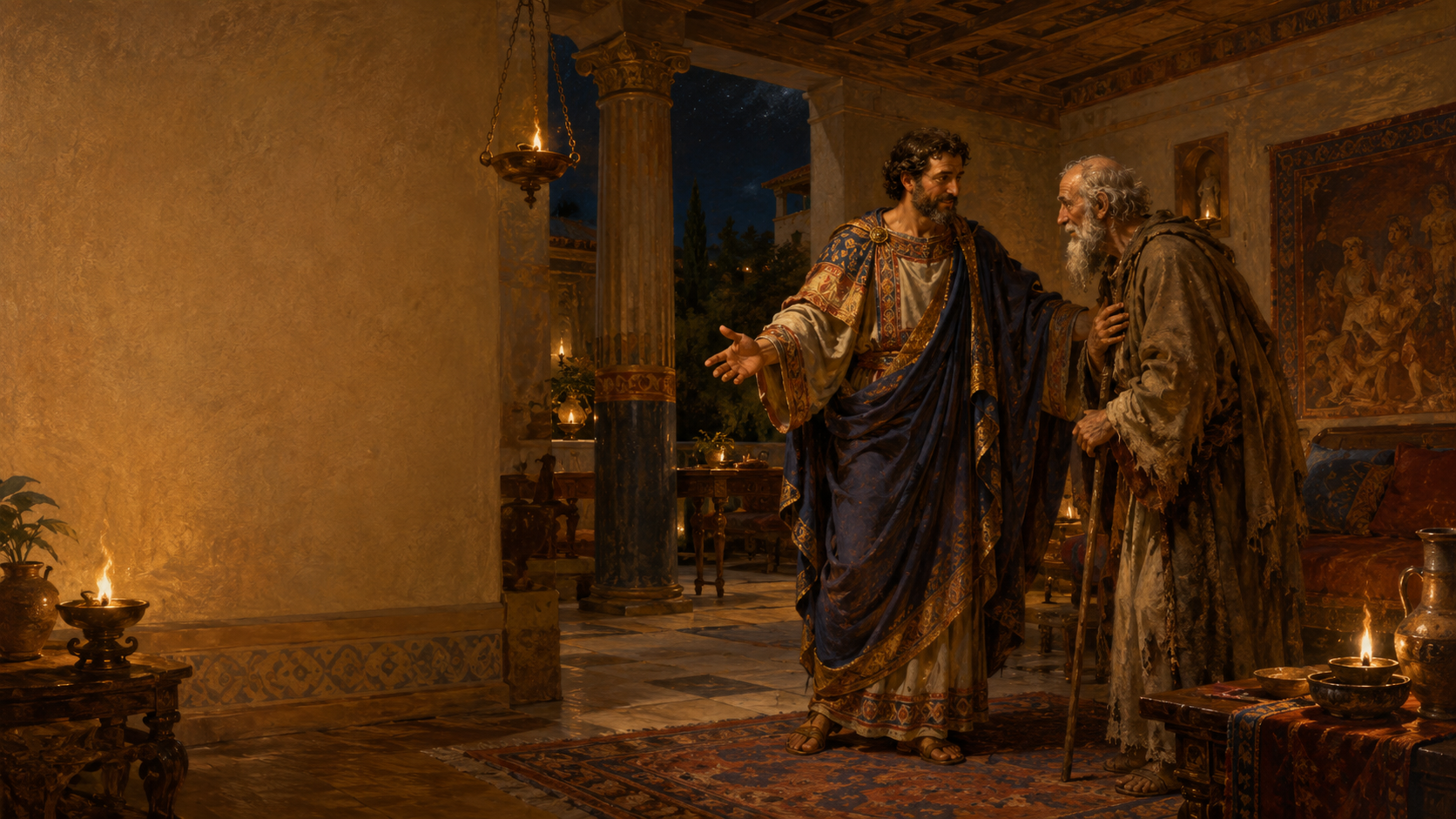
Our Island Story Chapter 7, The Story of St. Alban, tells of Alban, a kind and generous Briton of the Roman town of Verulamium, who is remembered as the first Christian martyr in Britain. When soldiers came to kill the Christians, Alban hid a Christian priest in his house and listened as the old man told him the story of Christ. When the soldiers found the hiding place, Alban put on the priest's robe so the old man could escape. Brought before the Roman Governor, Alban refused to sacrifice to the old gods, and he was put to death on a hill outside the town, along with a soldier who would not strike him. The town was later renamed St. Albans, and a church stands on the spot where he died.
Say what you remember!
Tell what you remember from the last chapter.
What happened in Our Island Story Chapter 6, The Last of the Romans?Have a look
In Chapter 6, The Last of the Romans, the emperor sent the general Agricola to govern Britain. He ruled with kindness, took away heavy taxes, built schools and halls, and built a line of forts from the Forth to the Clyde. Later the emperor Hadrian built a great wall across the north of England. The chapter also told of the Druids and of how the Christian faith came to Britain, and about the year 410 the Romans left Britain altogether.
Read the previous lesson: The Last of the Romans →Show what you know!
Say what you think each word means, then click to check your answers and learn some new words today.
What are the difficult or advanced vocabulary words in Our Island Story Chapter 7, The Story of St. Alban?astonishment, defy, pursuing, nobleHave a look
- astonishment: a feeling of great surprise or amazement
- defy: to boldly resist or challenge someone
- pursuing: to chase after someone to catch them
- noble: having very fine, honorable personal qualities
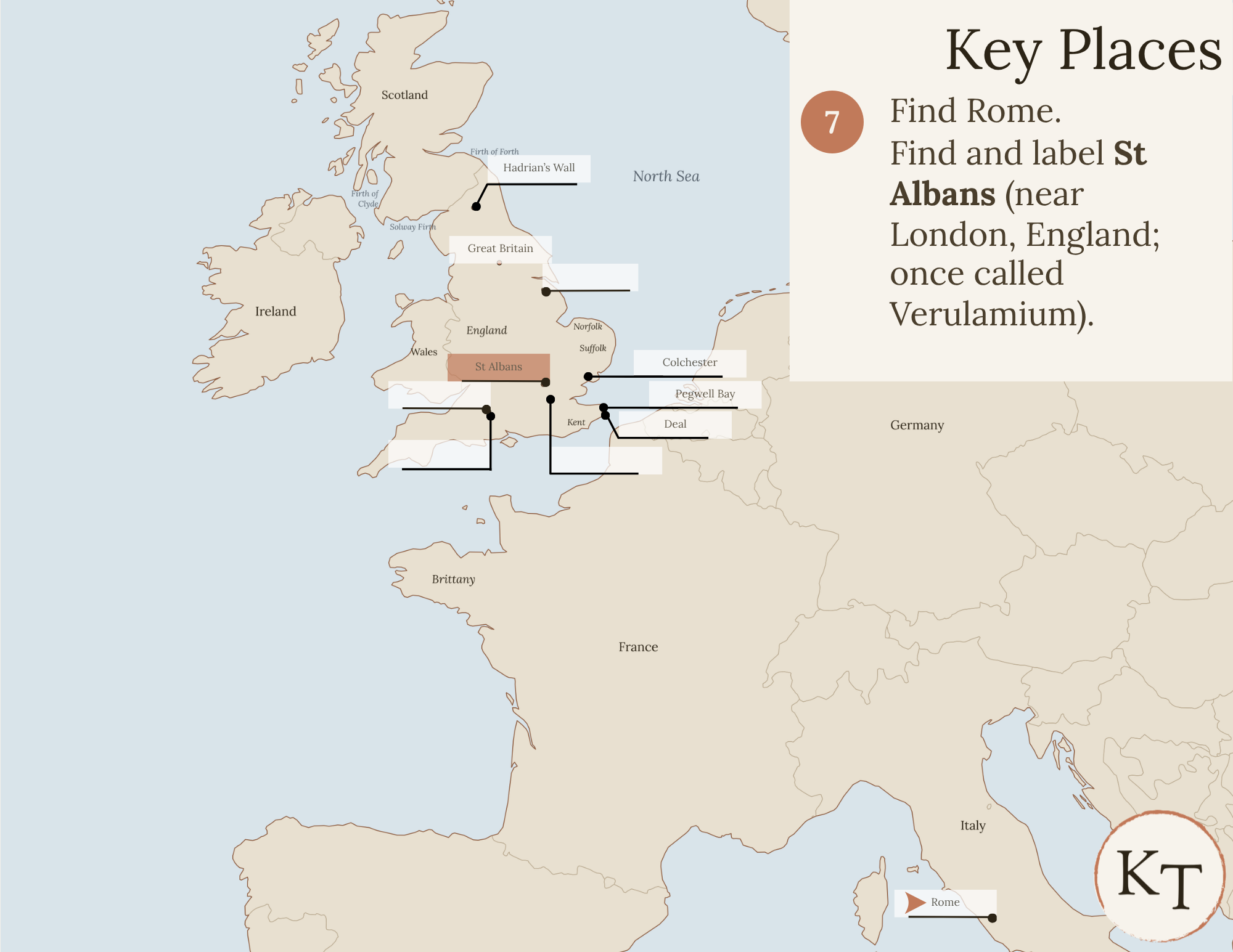
Locate it on the map!
Use an atlas to find the place if you can, then click to check your work on the map.
What important geographic locations connect with Our Island Story Chapter 7, The Story of St. Alban?
- Find
- Rome
- Find and Label
- St Albans (near London, England; once called Verulamium)
See it on the mapHave a look
The Books come Alive!
Read or listen to Chapter 7 of Our Island Story, the Kindred Thicket Revised Edition.
Read by Kindred Thicket from the Our Island Story Kindred Thicket Revised Edition.
What corrections are made in Chapter 7 of Our Island Story?Parent review
This is a Kindred Thicket Revised Edition. Factual and historical errors are corrected and dated wording is put right, and these notes tell you plainly what we changed and what we left as Marshall wrote it.
- About this sectionThroughout this section we brought Marshall’s British spellings to American English, keeping the original spelling inside quoted material. Punctuation, readability and grammar may also be adjusted. Where offensive or outdated terminology or descriptions were present in Marshall’s original text, with the exception of direct period quotations, we have made minimal revisions.
- Kindred Thicket Revised Edition UpdatesThe name "Amphibalus" does not appear in Bede’s Ecclesiastical History, but is first mentioned later in Geoffrey of Monmouth’s History of the Kings of Britain, written about 1136 (see the Chapter 1 note on Geoffrey of Monmouth’s book). The name may have arisen from a misreading of "amphibalus", a Latin word for the cloak Alban wore when he took the priest’s place. We revised the original text accordingly.
- Teacher's Notes“When he was a boy he had even traveled to Rome”The detail that Alban traveled to Rome as a boy is not found in Bede’s Ecclesiastical History, completed in 731. The journey to Rome in his youth appears in later accounts.
- “When the wicked Roman Emperor sent men to kill the Christians in Britain”The date of St Alban’s martyrdom is uncertain, although it is traditionally placed during Diocletian’s persecution, about 304. Please see the note on Diocletian, Constantius Chlorus, and Constantine in Chapter 6 for more information about Christian persecution in Britain at that time.
Memory becomes Action!
Use the names below to remember and spell tricky names. Choose one way to narrate.
What is the list of names, people, characters, and places that are important in Chapter 7 of Our Island Story?Alban (later St Alban), Amphibalus, The Roman Governor, The soldier who would not strike, The captain, Verulamium (St Albans), Holywell Hill, RomeHave a look
- Alban (later St Alban): A Briton of Verulamium, the first Christian martyr in Britain.
- Amphibalus: The Christian priest Alban sheltered.
- The Roman Governor: The Roman official who condemned Alban.
- The soldier who would not strike: The Roman soldier who refused to kill Alban.
- The captain: The Roman officer in charge of the soldiers.
- Verulamium (St Albans): Alban's town, later renamed St Albans.
- Holywell Hill: The hill at St Albans where Alban died.
- Rome: The city Alban visited as a boy.
Chapter 7 Q & A
This is a Kindred Thicket Revised Edition. Marshall’s 1905 history is beautiful but not always right, and here is what the record supports for this chapter.
Who was St Alban?
Alban was a Briton who lived in the Roman town of Verulamium. He is remembered as the first Christian martyr in Britain.
Where did Alban live?
Alban lived in Verulamium, a Roman town near where London is today. After his death the town was renamed St Albans in his honor.
Was the priest Alban sheltered really named Amphibalus?
The name does not appear in Bede’s Ecclesiastical History, the earliest full account of Alban. It is first found much later, in Geoffrey of Monmouth’s History of the Kings of Britain, written about 1136, and may come from a misreading of amphibalus, a Latin word for the cloak Alban wore.
When did St Alban die?
The date is uncertain. It is traditionally placed during the emperor Diocletian’s persecution of Christians, about 304.
Did Alban really travel to Rome as a boy?
That detail is not found in Bede’s Ecclesiastical History, completed in 731. The journey to Rome in his youth appears in later accounts.
Can you still visit the place where Alban died?
Yes. The hill at St Albans where he died is still called Holywell Hill, and a church stands on the spot.