The Listening Grove · This Country of Ours
Chapter 1: How the Vikings of Old Sought and Found New Lands
A Charlotte Mason read-aloud lesson. Press play, with the lesson.
What is This Country of Ours Chapter 1, How the Vikings of Old Sought and Found New Lands, about?Parent review
This Country of Ours Chapter 1, How the Vikings of Old Sought and Found New Lands, tells how Norse sailors reached North America about five hundred years before Columbus. Bjarni, sailing for Greenland, is blown off course and sights an unknown shore, but he will not land, and he is scorned at home for it. Leif the Lucky, son of the Greenland chieftain Eric the Red, buys Bjarni’s ship and goes to see for himself. He finds three lands and names them: Helluland, the land of flat stones; Markland, the land of woods; and Vineland, where his foster father Tyrker finds wild grapes. Leif’s brother Thorvald sails after him and is killed by an arrow, and is buried on a headland the Norsemen call Cross Ness. Then Thorfinn, an Icelandic trader, brings a company with cattle to settle, and there his son Snorri is born. But barter with the Skraelings turns to fighting, and in the end the Norsemen give up the country and sail away. For centuries the story survived only in the sagas, told aloud, until the ruins uncovered at L’Anse aux Meadows in 1960 showed that the Norsemen really had been there.
Show what you know!
Use your printable Lesson Guide. Fill in the vocabulary you know, then click to check your work and learn some new words today.
What are the difficult or advanced vocabulary words in This Country of Ours Chapter 1, How the Vikings of Old Sought and Found New Lands?chieftain, hardihood, minstrel, headlandHave a look
- chieftain: the chief of a band, tribe, or clan
- hardihood: firm courage that does not give way
- minstrel: a singer long ago who sang stories aloud
- headland: high land jutting out into the sea
Locate it on the map!
Use your printable Lesson Guide. Use an atlas and fill in the blank map if you can find the geographic location, then click to check your work.
What important geographic locations connect with This Country of Ours Chapter 1, How the Vikings of Old Sought and Found New Lands?
- Find
- Greenland
- Iceland
- Baffin Island (Helluland)
- Labrador (Markland)
- Newfoundland (Vineland)
- Find and Label
- Gulf of St. Lawrence (Canada)
See it on the mapHave a look
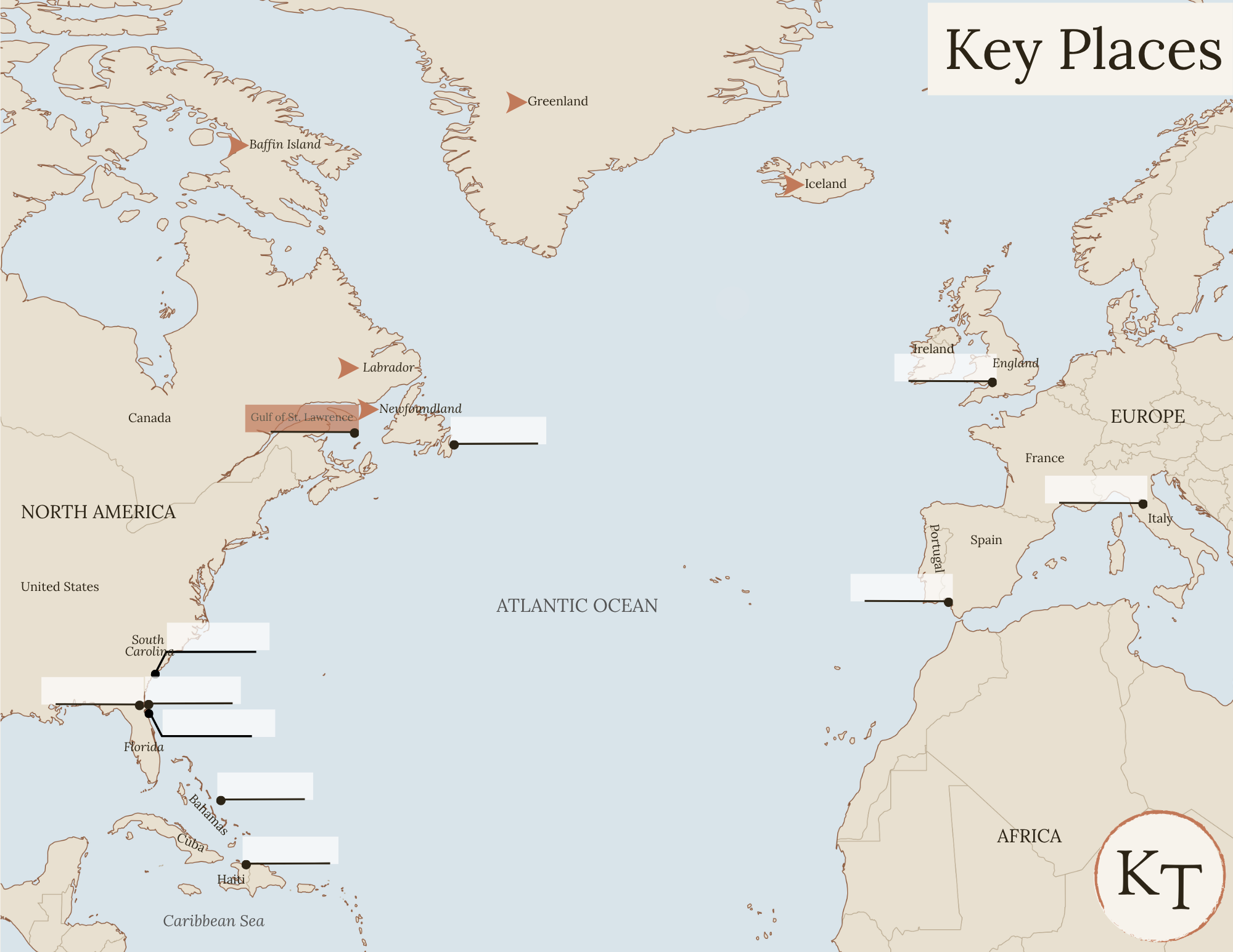
This matches the map in your Lesson Guide.
The Books come Alive!
Read or listen to Chapter 1 of This Country of Ours, the Kindred Thicket Revised Edition.
Read by Kindred Thicket from the This Country of Ours Kindred Thicket Revised Edition.
What corrections are made in Chapter 1 of This Country of Ours?Parent review
This is a Kindred Thicket Revised Edition. Factual and historical errors are corrected and dated wording is put right, and these notes tell you plainly what we changed and what we left as Marshall wrote it.
- About this sectionThroughout this section we brought Marshall’s British spellings to American English, keeping the original spelling inside quoted material.
- Kindred Thicket Revised Edition UpdatesWe thoroughly examined and researched this chapter’s contents against the historical and archaeological record. Five things needed our attention. Marshall calls Eric the Red a king. He was a Norse chieftain who founded Greenland’s first settlement around AD 985, and he held no royal title, so the text now names him a chieftain. Marshall also placed the three lands the Norsemen found at Labrador, Newfoundland, and Nova Scotia. The Norse settlement uncovered at L’Anse aux Meadows in 1960 has since changed what scholars understand about those voyages, and the text now follows the current reading: Helluland is Baffin Island, Markland is Labrador, and Vineland is northern Newfoundland. Marshall also gives Leif a dragon-headed vessel. The sagas have him sail a knarr, a broad cargo ship built for carrying goods and cattle rather than for war, and the chapter itself has him buy the ship of Bjarni the Traveler, a trader. The text now calls it simply his vessel. The other two changes concern how the native people of those lands are described. Throughout the chapter Marshall used a word for them that is now considered derogatory, and we replaced it with Skraelings, the name the Norsemen themselves used, and in places with indigenous people. Marshall also paused to describe the people in terms we would not repeat today, so we removed those lines. Nothing that happens in the chapter is lost with them.
- Teacher's Notes“and was indeed his foster father”The story calls Tyrker Leif’s foster father. That comes from one saga tradition, and the sagas do not fully agree on his place in the household.
- “Thorfinn therefore gathered about sixty men”Thorfinn’s company is given as about sixty men. One saga says sixty, another says a hundred and forty or more. Old sources often disagree, even about numbers.
- “Such are some of the old Norse stories of the first finding of America.”These voyages reach us through the Norse sagas, spoken aloud for generations before anyone wrote them down. The ruins at L’Anse aux Meadows show the sagas kept something true.
Memory becomes Action!
Use the Response Resource* to remember and spell tricky names. Choose one way to narrate.
*Materials in the Lesson Guide.
What is the list of names, people, characters, and places that are important in Chapter 1 of This Country of Ours?Eric the Red, Leif, Thorvald, Bjarni, Tyrker, Thorfinn, The Skraelings, VinelandHave a look
- Eric the Red: A Norse chieftain of Greenland, Leif’s father.
- Leif: Eric the Red’s son, called Leif the Lucky.
- Thorvald: Leif’s brother, who also sailed to Vineland.
- Bjarni: The first Norseman to sight the new land.
- Tyrker: A German of Leif’s household, Leif’s foster father.
- Thorfinn: An Icelandic trader who settled in Vineland with his wife Gudrid.
- The Skraelings: The Norsemen’s name for the indigenous people of Vineland.
- Vineland: The land Leif named for its grapes, beyond Helluland and Markland.
Chapter 1 Q & A
This is a Kindred Thicket Revised Edition. Marshall’s 1917 history is beautiful but not always right, and here is what the record supports for this chapter.
Did the Vikings really reach America before Columbus?
Yes. Norse sailors reached North America about five hundred years before Columbus, around AD 1000. This is not only saga tradition: the Norse settlement excavated at L’Anse aux Meadows in northern Newfoundland, found in 1960, is physical proof that they were there.
Was Eric the Red a king?
No. Marshall calls him a king, and we corrected it. Eric the Red was a Norse chieftain who founded the first European settlement in Greenland about AD 985. He held no royal title, so the Revised Edition names him a chieftain.
Where were Helluland, Markland, and Vineland?
Scholars today identify Helluland as Baffin Island, Markland as Labrador, and Vineland as northern Newfoundland, reaching toward the Gulf of St. Lawrence. Marshall placed them at Labrador, Newfoundland, and Nova Scotia; the discovery at L’Anse aux Meadows in 1960 changed what scholars understand, and the Revised Edition follows the current reading.
Did Leif Ericson sail a dragon-headed ship?
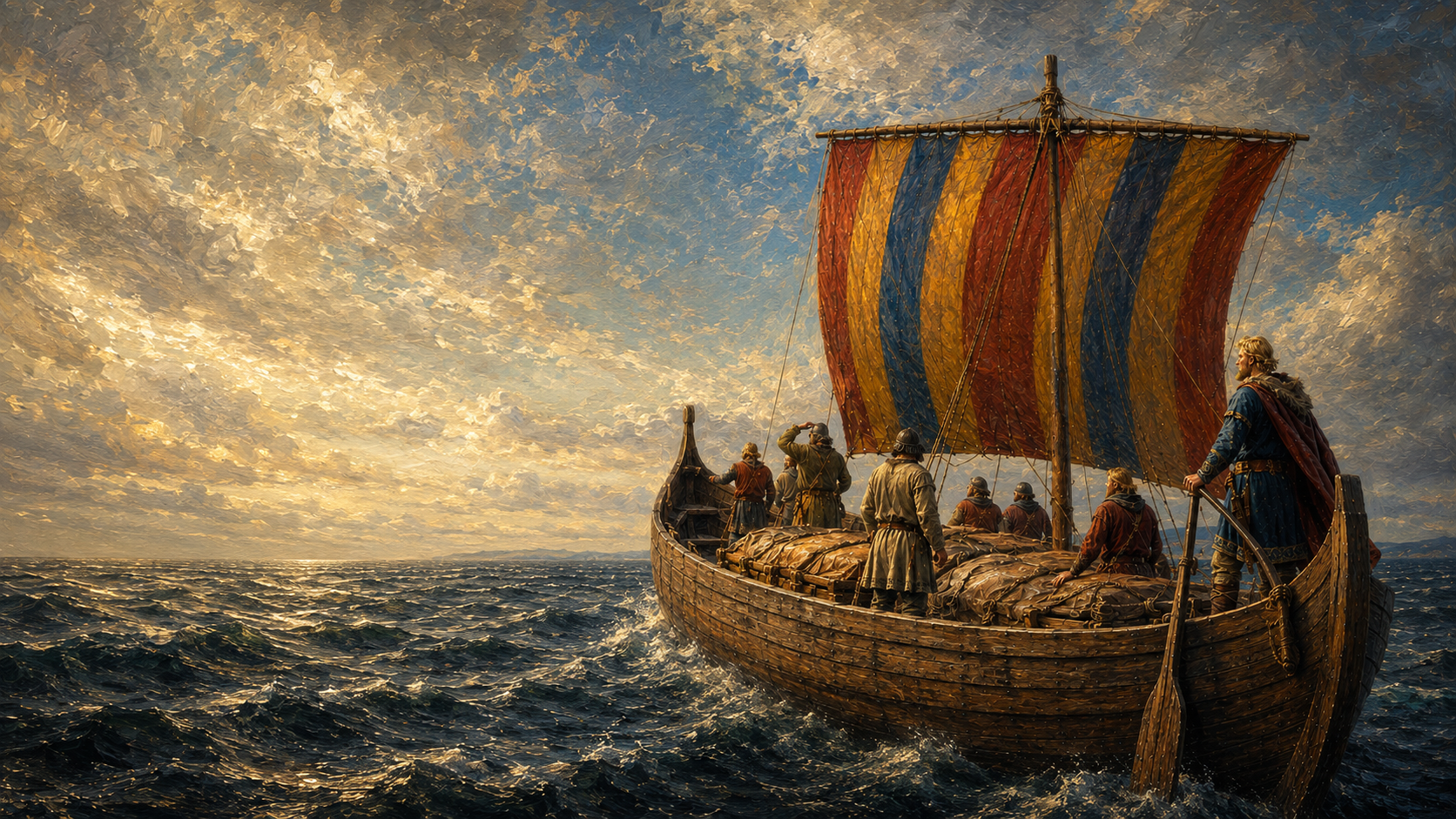
No, and we corrected it. The sagas have Leif buy the ship of Bjarni the Traveler, a trader, which would have been a knarr: a broad cargo ship built for carrying goods and cattle, not an ornamented longship. The dragon head and colored sails are Marshall’s romantic touch, so the text now calls it simply his vessel.
How do we know the story of the Norse voyages?
Chiefly from two Icelandic sagas, the Saga of the Greenlanders and Erik the Red’s Saga. They were spoken aloud for generations before anyone wrote them down, and they do not always agree with each other. The ruins at L’Anse aux Meadows show the sagas kept something true.
How many men sailed with Thorfinn?
The sources disagree. The Saga of the Greenlanders says about sixty, with women and livestock; Erik the Red’s Saga says a hundred and sixty in two ships. Marshall follows the smaller figure, and we kept it and flagged the disagreement rather than choosing for you.
Who were the Skraelings?
Skraelings is the name the Norsemen themselves used for the indigenous people they met in Vineland and Markland. Marshall used a word for them that is now considered derogatory, so the Revised Edition uses Skraelings, and in places indigenous people, instead.
Was Snorri the first child born in America?
The sagas record that Snorri, son of Thorfinn and Gudrid, was born in Vineland, and he is generally described as the first child born to Norse parents there. Marshall goes further and calls him the first white child born on the continent, which the record cannot support: people had lived on that land for thousands of years. This is one of the places we flag rather than let stand unqualified.
Why did the Norse settlement not last?
Trade turned to fighting. The sagas describe barter with the Skraelings, furs given for red cloth and milk, that gave way to violence, and the Norsemen were too few and too far from home to hold the country. They withdrew, and the lands they found were left again.