The Listening Grove · This Country of Ours
Chapter 2: The Sea of Darkness and the Great Faith of Columbus
A Charlotte Mason read-aloud lesson. Press play, with the lesson.
What is This Country of Ours Chapter 2, The Sea of Darkness and the Great Faith of Columbus, about?Parent review
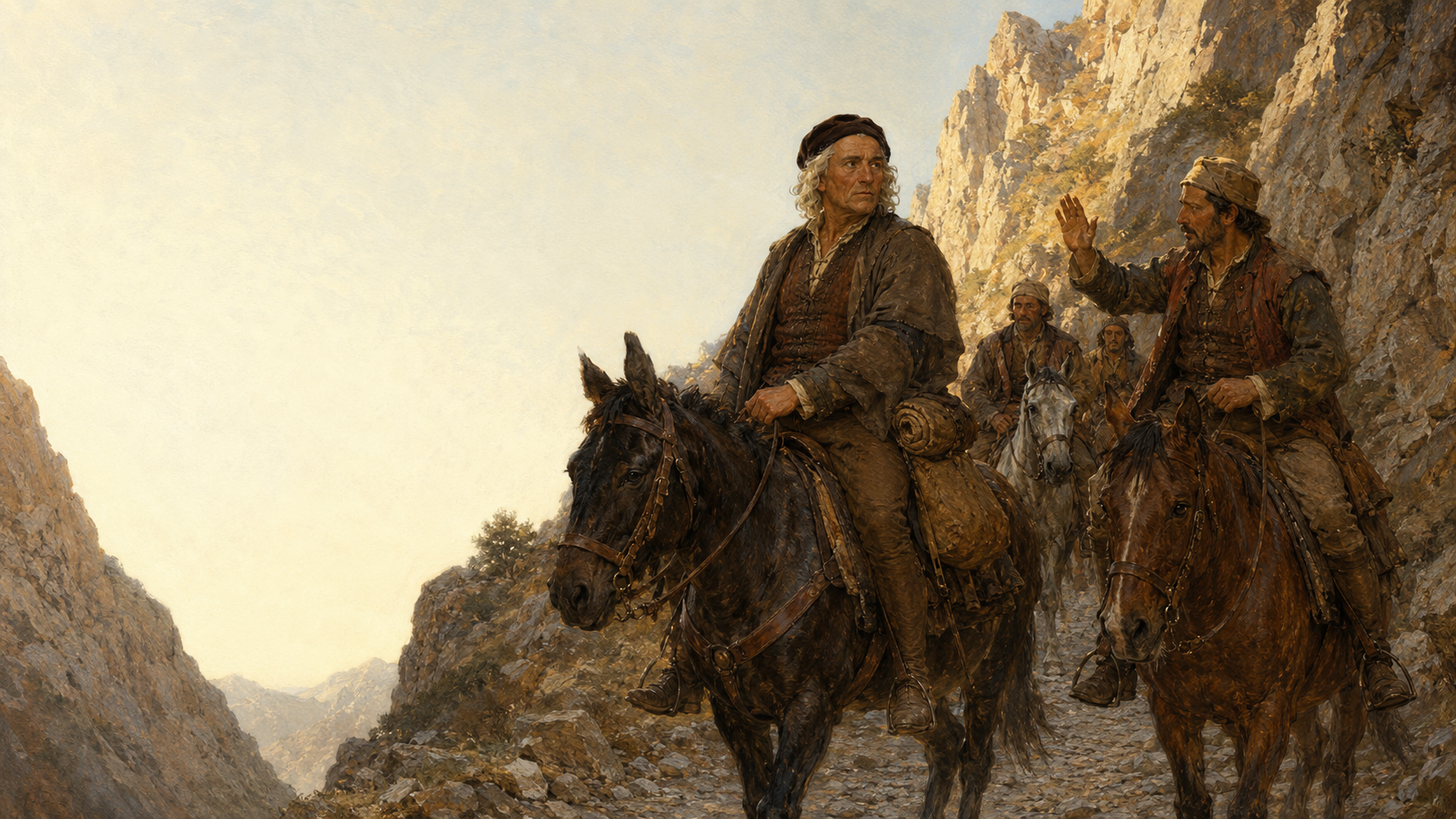
This Country of Ours Chapter 2, The Sea of Darkness and the Great Faith of Columbus, is about why no one sailed west, and how one man spent nearly twenty years persuading kings to let him try. The old trade routes to the East had fallen into other hands, so Europe wanted a new way to reach the riches of Asia. Westward lay the Atlantic, which sailors called the Sea of Darkness and believed was full of monsters. Christopher Columbus was sure that by sailing west he could reach the East, and he went first to the King of Portugal, who refused him. Then he went to Spain, where he waited seven long years while a council of learned men considered and rejected his plan. At last, worn out with waiting, he set off to try his fortune in France, and a messenger overtook him on the road and called him back. Queen Isabella agreed to help him. Even then no man would sail with him, and the King had to give him power to make them go.
Say what you remember!
Tell what you remember from the last chapter.
What happened in This Country of Ours Chapter 1, How the Vikings of Old Sought and Found New Lands?Have a look
In Chapter 1, How the Vikings of Old Sought and Found New Lands, Norse sailors reached North America about five hundred years before Columbus. Bjarni sighted an unknown shore but would not land. Leif the Lucky bought his ship, sailed west, and named three lands: Helluland, Markland, and Vineland, where wild grapes grew. His brother Thorvald was killed by an arrow and buried at Cross Ness, and Thorfinn later brought settlers and cattle, and his son Snorri was born there. But trade with the Skraelings turned to fighting, and the Norsemen sailed away and left the country. For centuries only the sagas remembered it, until ruins found at L'Anse aux Meadows in 1960 proved the story true.
Read the previous lesson: How the Vikings of Old Sought and Found New Lands →Show what you know!
Use your printable Lesson Guide. Fill in the vocabulary you know, then click to check your work and learn some new words today.
What are the difficult or advanced vocabulary words in This Country of Ours Chapter 2, The Sea of Darkness and the Great Faith of Columbus?peril, threadbare, derision, foolhardyHave a look
- peril: great danger of being hurt or lost
- threadbare: worn so thin the threads show through
- derision: mocking laughter that shows you think little of someone
- foolhardy: bold in a foolish, reckless way
Locate it on the map!
Use your printable Lesson Guide. Use an atlas and fill in the blank map if you can find the geographic location, then click to check your work.
What important geographic locations connect with This Country of Ours Chapter 2, The Sea of Darkness and the Great Faith of Columbus?
- Find
- Spain
- Portugal
- Africa
- the Atlantic Ocean (the Sea of Darkness)
- Find and Label
- Palos (Spain)
See it on the mapHave a look
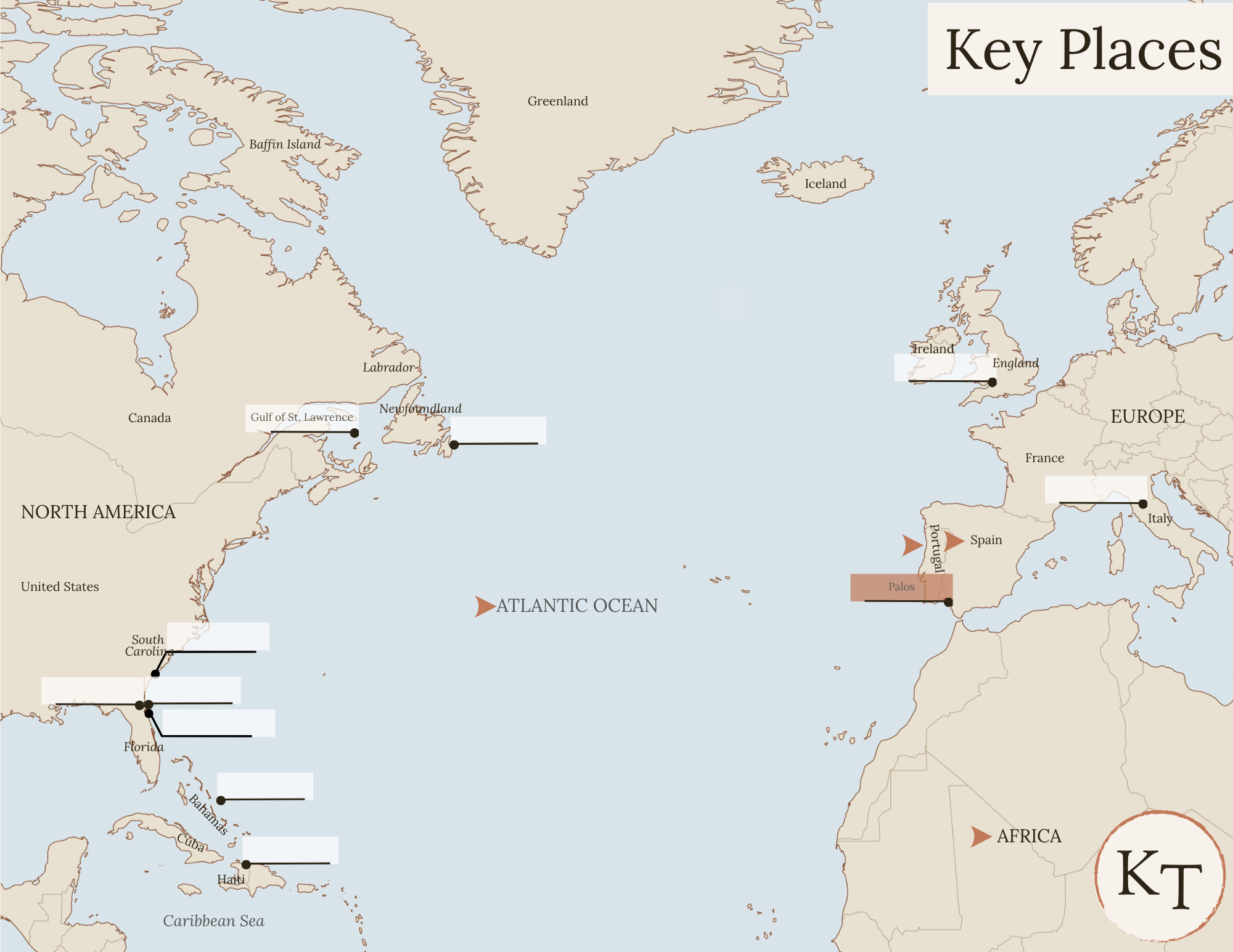
This matches the map in your Lesson Guide.
The Books come Alive!
Read or listen to Chapter 2 of This Country of Ours, the Kindred Thicket Revised Edition.
Read by Kindred Thicket from the This Country of Ours Kindred Thicket Revised Edition.
What corrections are made in Chapter 2 of This Country of Ours?Parent review
This is a Kindred Thicket Revised Edition. Factual and historical errors are corrected and dated wording is put right, and these notes tell you plainly what we changed and what we left as Marshall wrote it.
- About this sectionThroughout this section we brought Marshall’s British spellings to American English, keeping the original spelling inside quoted material.
- Kindred Thicket Revised Edition UpdatesIn This Country of Ours Chapter 2 we thoroughly examined and researched the chapter's contents. Three things needed our attention, two of them small matters of fact about Columbus himself. Marshall writes that Columbus had made Portugal his home for more than ten years. He lived there roughly eight or nine years, from about 1476 to 1485, so the text now says he had made it his home for many years. Marshall also calls him a man over forty at the time he left. Columbus was born around 1451, which would have made him about thirty-four, so we removed the age rather than replace one uncertain number with another. The third change is a matter of language. When the chapter describes the old trade routes falling into new hands, Marshall used a religious insult for the Muslim rulers and sailors of the region, written from a Christian point of view. We replaced the first use with Muslim rulers and removed the second, which leaves the history of the trade routes exactly as Marshall told it, without the insult.
- Teacher's Notes“King John listened kindly enough”The book says King John of Portugal secretly sent ships west of his own. It is a story that grew in the retelling.
- “I will pawn my jewels to do it.”Isabella offering to pawn her jewels was first written down by Las Casas, who admired her greatly.
- “The world was round, said wise men.”Educated Europeans had known the earth was round since the days of the Greeks. What Columbus's critics doubted was the distance to Asia, and there they were right.
- “There was nothing to be gained by venturing upon it, much to be dreaded.”The fears of the old sailors were not simple ignorance. No one had crossed that ocean, and caution about an unknown sea was reasonable.
- “huge and horrible sea-dragons lived there”The sea dragons, the great bird, and the pit of fire in the west were what some people truly believed lay beyond the last known water.
Memory becomes Action!
Use the Response Resource* to remember and spell tricky names. Choose one way to narrate.
*Materials in the Lesson Guide.
What is the list of names, people, characters, and places that are important in Chapter 2 of This Country of Ours?Christopher Columbus, Bartholomew, Ferdinand, Isabella, King John of Portugal, The Sea of Darkness, The Moors, PalosHave a look
- Christopher Columbus: A Genoese sailor seeking sponsorship for a new trade route.
- Bartholomew: Columbus's brother.
- Ferdinand: The king of Spain, Isabella's husband.
- Isabella: The queen of Spain, Ferdinand's wife.
- King John of Portugal: The king of Portugal, who would not back Columbus's plan.
- The Sea of Darkness: Europe's name for the unknown Atlantic Ocean.
- The Moors: The Muslim people who long ruled part of Spain, defeated at Granada.
- Palos: The Spanish port where Columbus's voyage began.
Chapter 2 Q & A
This is a Kindred Thicket Revised Edition. Marshall’s 1917 history is beautiful but not always right, and here is what the record supports for this chapter.
Did people in Columbus's day think the world was flat?
No. Educated Europeans had known the earth was round since the days of the Greeks. What Columbus's critics doubted was the distance to Asia, and on that point they were right: the ocean was far wider than he believed, and he only survived because two continents lay in the way.
How long did Columbus wait for Spain to agree?
About seven years in Spain, after Portugal had already refused him. He had been pressing his idea since roughly 1484 and did not sail until 1492. Marshall's picture of a man worn down by waiting is accurate.
Did Queen Isabella really pawn her jewels?
It is a much-loved story, but it cannot be confirmed. It was first written down by Las Casas, who admired Isabella greatly. The crown found the money by other means, and the offer may never have been made.
Did the King of Portugal secretly send his own ships west?
The book says so, but it is a story that grew in the retelling and the record does not support it. We left the passage and flagged it rather than deciding for you.
How old was Columbus when he sailed?
About forty-one. Marshall calls him a man over forty at the time he left Portugal, which would have made him about thirty-four, so we removed the age rather than swap one uncertain number for another. We also corrected his time in Portugal from more than ten years to many years; it was nearer eight or nine.
Were the sailors' fears of the Atlantic just ignorance?
Not simply. No one had crossed that ocean, and caution about an unknown sea was reasonable. The sea dragons, the great bird, and the pit of fire in the west were what some people genuinely believed lay beyond the last known water.
Why did Europe want a new route to the East?
Because the old ones closed. The spices, silk, and gems of Asia had travelled overland and by the Red Sea to the Mediterranean, and when those routes fell into new hands the trade became difficult and costly. That is what set Europe looking for a way around by sea.
What did Kindred Thicket change in this chapter?
Three things. Two were small facts about Columbus himself, his years in Portugal and his age. The third was language: where Marshall described the old trade routes falling into new hands, she used a religious insult for the Muslim rulers and sailors of the region. We replaced the first use and removed the second, which leaves the history exactly as she told it, without the insult.