The Listening Grove · This Country of Ours
Chapter 10: How a Frenchman Avenged the Death of His Countrymen
A Charlotte Mason read-aloud lesson. Press play, with the lesson.
What is This Country of Ours Chapter 10, How a Frenchman Avenged the Death of His Countrymen, about?Parent review
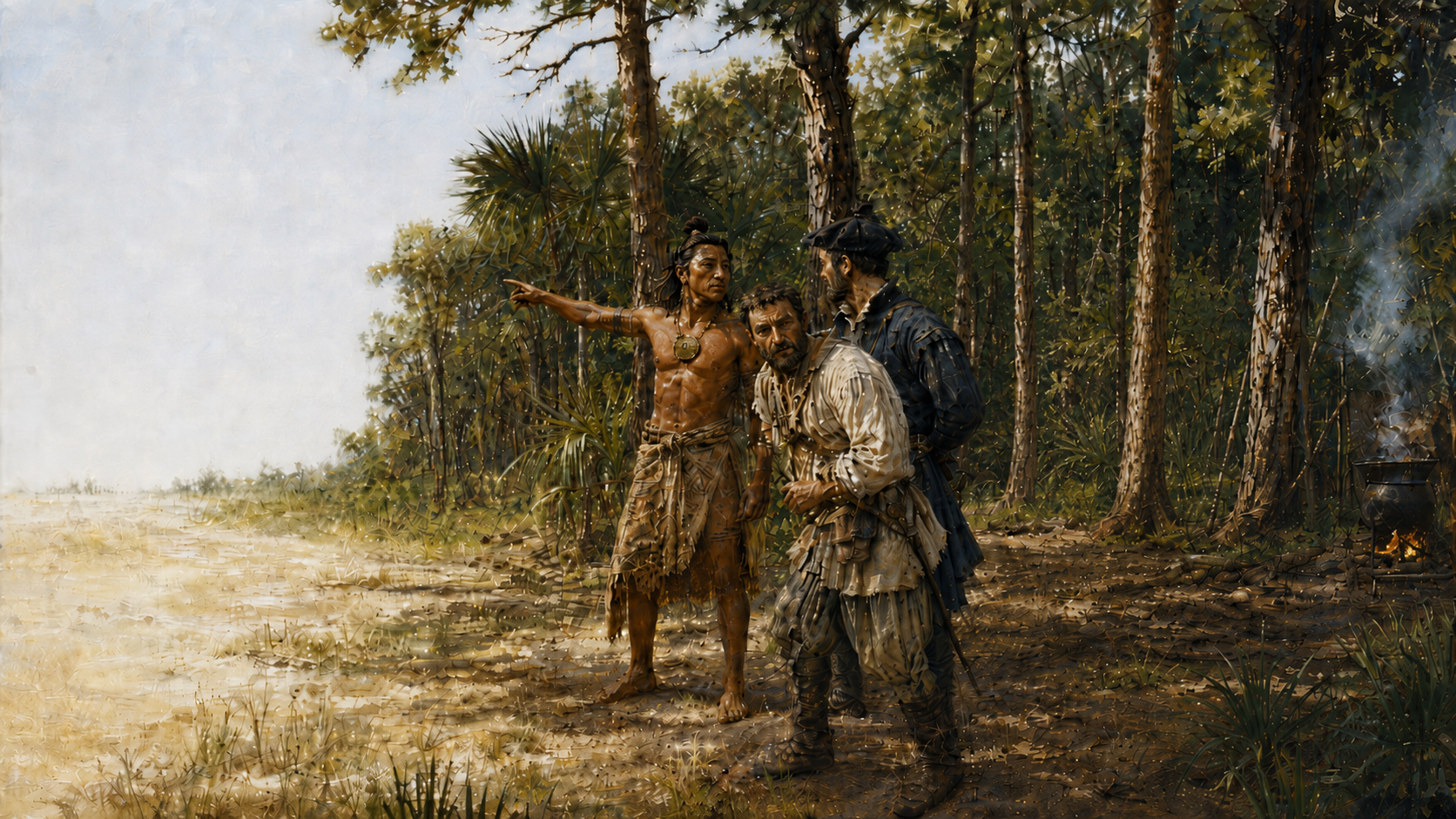
This Country of Ours Chapter 10, How a Frenchman Avenged the Death of His Countrymen, is about what one man did when his country would not act. France did nothing about the killings in Florida, so Dominique de Gourgues sold his estate, fitted out ships in secret, and sailed pretending to be on quite another errand. In Florida he found allies at once: the Timucua had come to hate the Spaniards, and Satouriona joined him. Together they took the three Spanish forts. Gourgues hanged the garrisons on the same trees Menendez had used, and nailed up a tablet of his own, answering the one Menendez had left: this was done not to Spaniards, but to liars, thieves, and murderers. Then he burned the forts and sailed home, where he had to live hunted for years. Nothing was restored, and nothing was undone.
Say what you remember!
Tell what you remember from the last chapter.
What happened in This Country of Ours Chapter 9, How the Spaniards Drove the French Out of Florida?Have a look
In Chapter 9, How the Spaniards Drove the French Out of Florida, Pedro Menendez came with orders to clear the French off that coast. He founded St. Augustine, and when the French sailed out to attack him they were wrecked by a hurricane. Menendez marched overland through the storm and stormed Fort Caroline at dawn. The shipwrecked French companies surrendered at Matanzas Inlet and he put them to death, Ribaut among them, leaving an inscription saying he did it not to Frenchmen but to Lutherans, though the two countries were at peace.
Read the previous lesson: How the Spaniards Drove the French Out of Florida →Show what you know!
Use your printable Lesson Guide. Fill in the vocabulary you know, then click to check your work and learn some new words today.
What are the difficult or advanced vocabulary words in This Country of Ours Chapter 10, How a Frenchman Avenged the Death of His Countrymen?vengeance, redress, alliance, disguiseHave a look
- vengeance: punishment given in return for a wrong
- redress: something given to make up for a wrong
- alliance: a bond joining families, peoples, or states
- disguise: clothing worn to hide who you are
Locate it on the map!
Use your printable Lesson Guide. Use an atlas and fill in the blank map if you can find the geographic location, then click to check your work.
What important geographic locations connect with This Country of Ours Chapter 10, How a Frenchman Avenged the Death of His Countrymen?
- Find
- the Atlantic Ocean
- Florida
- Cuba
- Jacksonville (Fort Caroline, which the Spanish renamed Fort Mateo)
- St. Augustine
- Find and Label
- Mayport (Florida)
See it on the mapHave a look
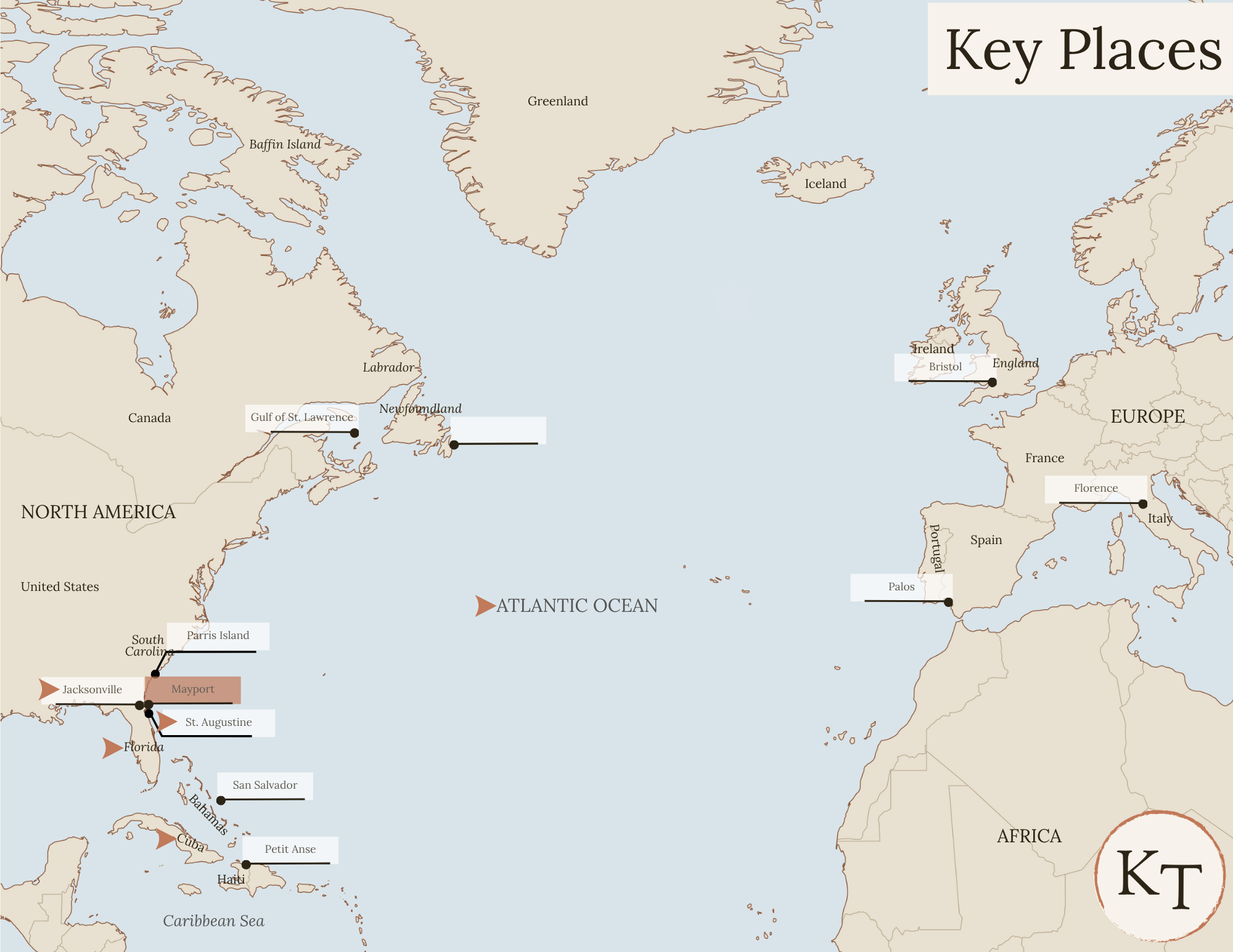
This matches the map in your Lesson Guide.
The Books come Alive!
Read or listen to Chapter 10 of This Country of Ours, the Kindred Thicket Revised Edition.
Read by Kindred Thicket from the This Country of Ours Kindred Thicket Revised Edition.
What corrections are made in Chapter 10 of This Country of Ours?Parent review
This is a Kindred Thicket Revised Edition. Factual and historical errors are corrected and dated wording is put right, and these notes tell you plainly what we changed and what we left as Marshall wrote it.
- About this sectionThroughout this section we brought Marshall’s British spellings to American English, keeping the original spelling inside quoted material.
- Kindred Thicket Revised Edition UpdatesIn This Country of Ours Chapter 10 we thoroughly examined and researched the chapter's contents. Three things needed our attention. The first is the inscription Gourgues burned into the tablets he nailed above the hanged Spaniards. It has come down to us in more than one English rendering. The text gives the one recorded in the Florida sources: This is done, not as unto Spaniards, but as unto liars, thieves, and murderers. The historian Francis Parkman renders the same line with traitors and robbers where this version has liars and thieves. The retort is the point of the scene either way, since Menendez had left an inscription of his own on those same trees. The other two concern how the native people of Florida are described. Marshall used a word for them that is now considered derogatory, and we replaced it. And in one place the narration added imagery that sensationalized them at their expense, which we removed. Their part in Gourgues's campaign, and everything that happens in this chapter, stands as Marshall wrote it.
- Teacher's Notes“Even the boy King, Charles IX, Catholic though he was, demanded redress.”Charles IX is called a boy King. He had been declared of age at thirteen and was eighteen by this time, though his mother Catherine de' Medici held the real power.
Memory becomes Action!
Use the Response Resource* to remember and spell tricky names. Choose one way to narrate.
*Materials in the Lesson Guide.
What is the list of names, people, characters, and places that are important in Chapter 10 of This Country of Ours?Dominique de Gourges, Satouriona, Fort San Mateo, Charles IX, Philip of Spain, Menendez, Queen Elizabeth, FloridaHave a look
- Dominique de Gourges: A French soldier resolved to avenge his countrymen.
- Satouriona: The chief who joined Gourges against the Spaniards.
- Fort San Mateo: The Spanish name for the captured Fort Caroline.
- Charles IX: The king of France, who demanded redress of Spain.
- Philip of Spain: The king of Spain, Menendez's master.
- Menendez: The Spanish commander of the Florida massacre.
- Queen Elizabeth: The queen of England, Gourges's later patron.
- Florida: The coast the French and Spanish fought over.
Chapter 10 Q & A
This is a Kindred Thicket Revised Edition. Marshall’s 1917 history is beautiful but not always right, and here is what the record supports for this chapter.
Why did Gourgues act alone instead of France?
Because France would not. The killings went unanswered by the state, so Gourgues sold everything he had, fitted out ships in secret, and went on his own account. It is private vengeance standing in for public justice, which is part of why the chapter is uncomfortable.
What did the tablet Gourgues nailed up say?
The text gives the rendering recorded in the Florida sources: this is done, not as unto Spaniards, but as unto liars, thieves, and murderers. The historian Francis Parkman renders the same line with traitors and robbers where this version has liars and thieves. The retort is the point either way, because Menendez had left an inscription of his own on those same trees.
Why did the Timucua help Gourgues?
Because they had come to hate the Spaniards who now held the forts. Their alliance is the reason the campaign succeeded, and the Teacher's Notes carry the identification the text itself does not give.
Was Charles IX really a boy king?
He had been declared of age at thirteen and was eighteen by this time, so boy king overstates it, though his mother Catherine de' Medici held the real power.
Did Gourgues restore the French colony?
No. He destroyed the Spanish forts and burned them, then sailed home. Nothing was rebuilt and no colony was recovered, and he himself had to live hunted for years afterward.
What did Kindred Thicket change in this chapter?
Three things. We used the Florida-sources rendering of the tablet inscription and recorded Parkman's different wording in the notes; we replaced a word for the native people of Florida that is now considered derogatory; and we removed one place where the narration added imagery that sensationalized them at their expense. Their part in the campaign, and everything that happens, stands as Marshall wrote it.