The Listening Grove · This Country of Ours
Chapter 9: How the Spaniards Drove the French Out of Florida
A Charlotte Mason read-aloud lesson. Press play, with the lesson.
What is This Country of Ours Chapter 9, How the Spaniards Drove the French Out of Florida, about?Parent review
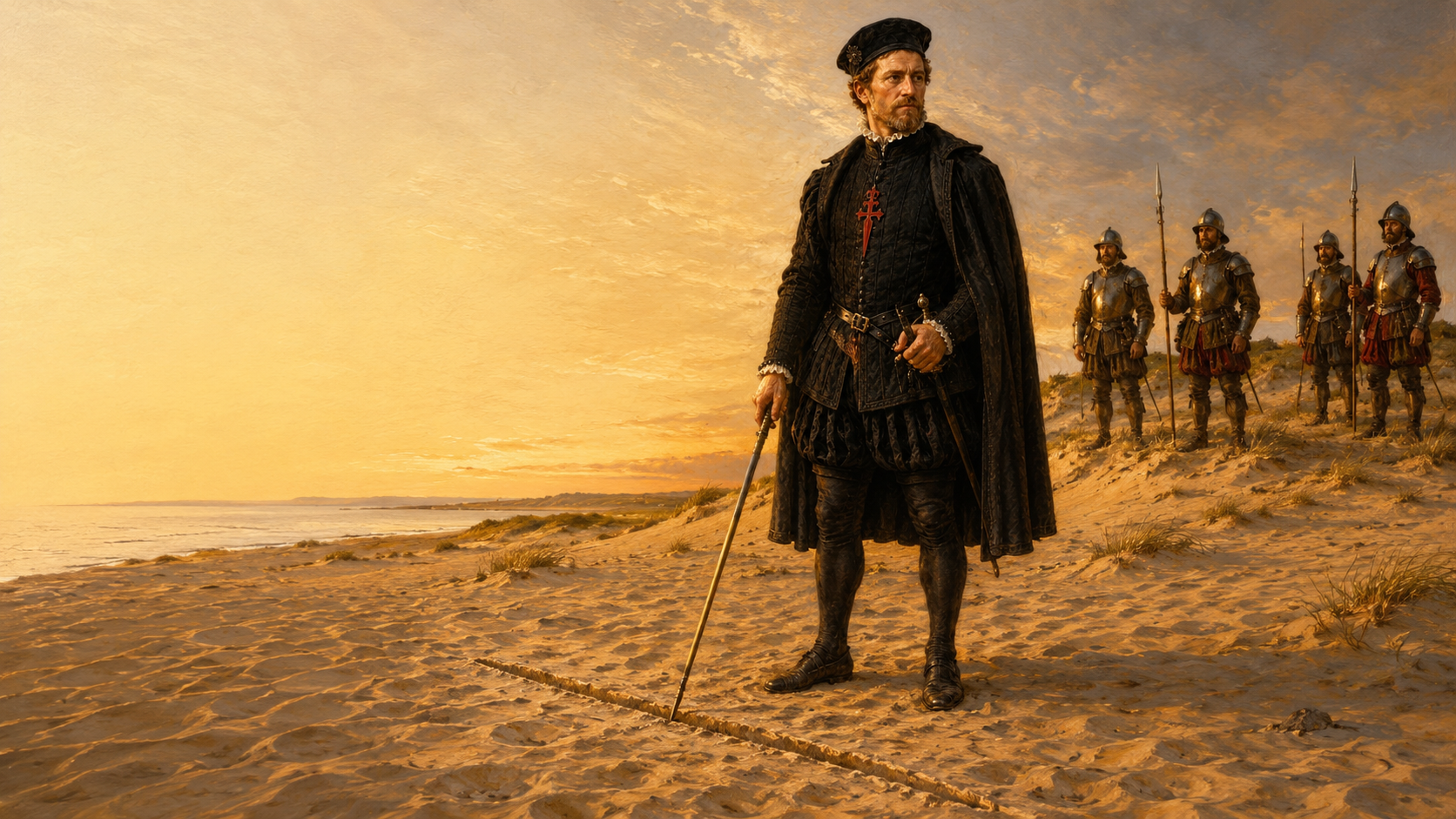
This Country of Ours Chapter 9, How the Spaniards Drove the French Out of Florida, is a hard chapter. Pedro Menendez arrives on the same coast with orders to clear the French off it, hails them in the dark, and gives chase. He founds St. Augustine. The French sail out to attack him and are wrecked by a hurricane. Menendez then marches his men overland through the storm and storms Fort Caroline at dawn. Laudonniere escapes; most do not. The shipwrecked French companies, stranded and starving further down the coast, surrender to him at Matanzas Inlet, and he puts them to death, Jean Ribaut among them, and leaves an inscription over the dead saying he did it not to Frenchmen but to Lutherans. Their two countries were at peace, and on that shore it made no difference at all.
Say what you remember!
Tell what you remember from the last chapter.
What happened in This Country of Ours Chapter 8, How the French Founded a Colony in Florida?Have a look
In Chapter 8, How the French Founded a Colony in Florida, Rene de Laudonniere brought a second and larger French company to the River of May and built Fort Caroline. The chief Satouriona welcomed them and made an alliance that drew them into his wars. Then some of their own men mutinied and stole two ships, food ran short until the colonists were grinding fish bones into bread, and Laudonniere was ready to abandon the country when the English admiral John Hawkins gave them a ship and supplies. As they prepared to leave, Ribaut's long-awaited fleet appeared.
Read the previous lesson: How the French Founded a Colony in Florida →Show what you know!
Use your printable Lesson Guide. Fill in the vocabulary you know, then click to check your work and learn some new words today.
What are the difficult or advanced vocabulary words in This Country of Ours Chapter 9, How the Spaniards Drove the French Out of Florida?rampart, procession, respite, parleyHave a look
- rampart: a broad raised bank built to defend a fort
- procession: a group moving along in an orderly, ceremonial way
- respite: a short interval of rest or relief
- parley: a talk held with an enemy
Locate it on the map!
Use your printable Lesson Guide. Use an atlas and fill in the blank map if you can find the geographic location, then click to check your work.
What important geographic locations connect with This Country of Ours Chapter 9, How the Spaniards Drove the French Out of Florida?
- Find
- Florida
- Spain
- France
- Jacksonville (Fort Caroline)
- Find and Label
- St. Augustine (Florida)
See it on the mapHave a look
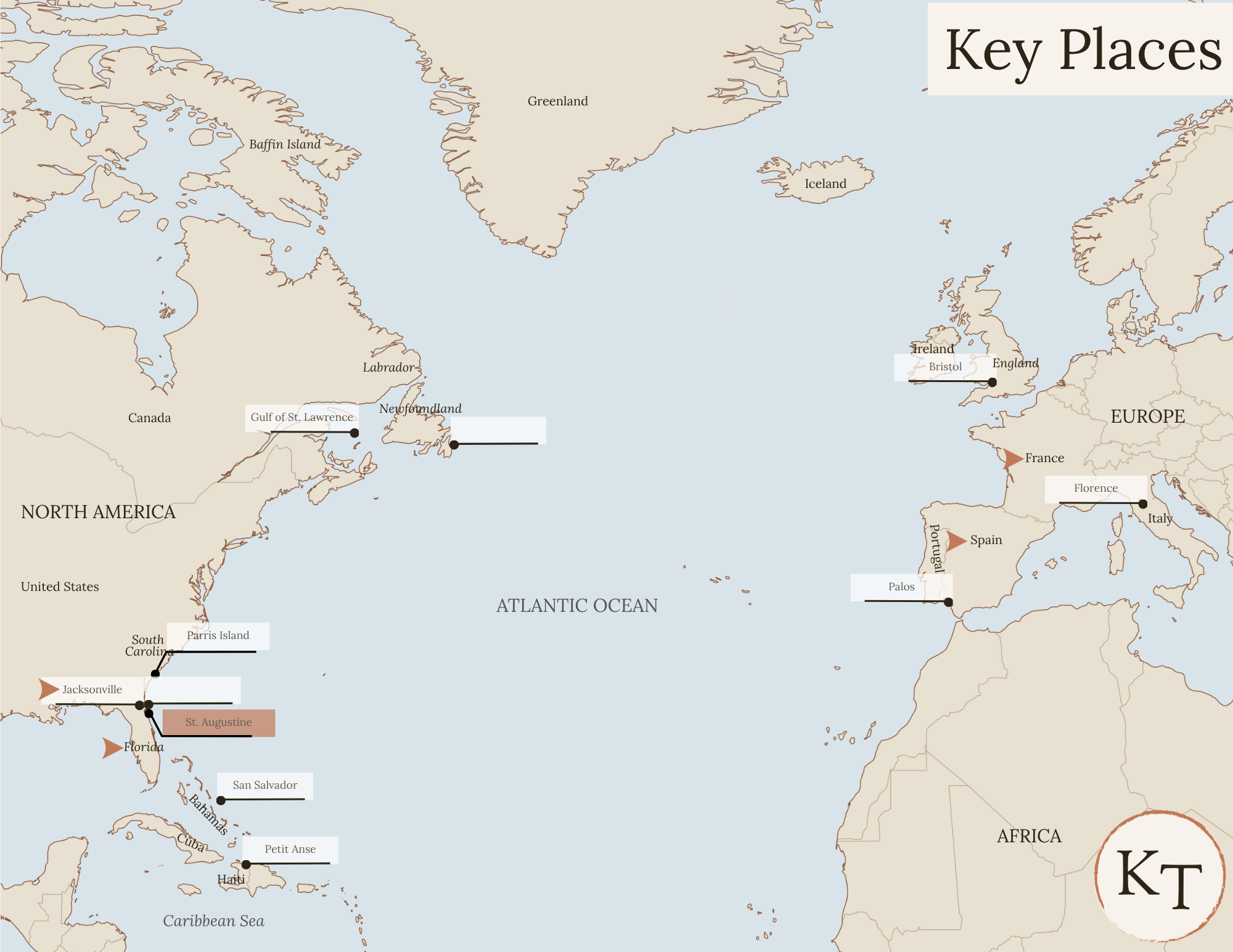
This matches the map in your Lesson Guide.
The Books come Alive!
Read or listen to Chapter 9 of This Country of Ours, the Kindred Thicket Revised Edition.
Read by Kindred Thicket from the This Country of Ours Kindred Thicket Revised Edition.
What corrections are made in Chapter 9 of This Country of Ours?Parent review
This is a Kindred Thicket Revised Edition. Factual and historical errors are corrected and dated wording is put right, and these notes tell you plainly what we changed and what we left as Marshall wrote it.
- About this sectionThroughout this section we brought Marshall’s British spellings to American English, keeping the original spelling inside quoted material.
- Kindred Thicket Revised Edition UpdatesIn This Country of Ours Chapter 9 we thoroughly examined and researched the chapter's contents. Two things needed our attention. Marshall calls St. Augustine the oldest town in the United States. Towns stood on this land long before any European arrived, and among Spanish foundings San Juan in Puerto Rico is older still, so the claim as she made it does not hold. We removed it. St. Augustine keeps its place in the story as the settlement Menendez founded. The second is punctuation. The Spanish soldiers in this chapter speak of the French with two religious insults, and we put quotation marks around both so it is clear they are the soldiers' words and not the book's own. Nothing was taken out.
- Teacher's Notes“We are but dust,” he said, “and to dust we must return”Ribaut's last words are given here as direct speech. No source confirms the exact wording, though they match what was remembered of the man.
- “I do this not as to Frenchmen but as to Lutherans.”The words Menendez left over the dead are given exactly here. The record supports what he meant by them, but the wording itself cannot be confirmed.
- “I am Admiral of the fleet of the King of Spain.”Menendez is called Admiral and Viceroy. His actual title was Adelantado de la Florida, a Spanish rank with no English equal, joining military, civil and financial power in one man.
Memory becomes Action!
Use the Response Resource* to remember and spell tricky names. Choose one way to narrate.
*Materials in the Lesson Guide.
What is the list of names, people, characters, and places that are important in Chapter 9 of This Country of Ours?Menendez, Ribaut, Laudonnière, Fort Caroline, St. Augustine, The River of Dolphins, The Lutherans, SpainHave a look
- Menendez: The Spanish admiral charged with clearing the French from Florida.
- Ribaut: The French commander at Fort Caroline.
- Laudonnière: The founder of Fort Caroline.
- Fort Caroline: The French fort on the River of May, now the St. Johns.
- St. Augustine: The Spanish settlement Menendez founded.
- The River of Dolphins: The river where Menendez landed, now the Matanzas.
- The Lutherans: The Spanish name for the French Protestants.
- Spain: The kingdom claiming Florida for its own.
Chapter 9 Q & A
This is a Kindred Thicket Revised Edition. Marshall’s 1917 history is beautiful but not always right, and here is what the record supports for this chapter.
Is St. Augustine the oldest town in the United States?
Not as Marshall puts it, and we removed the claim. Towns stood on this land long before any European arrived, and among Spanish foundings San Juan in Puerto Rico is older still. St. Augustine keeps its place in the story as the settlement Menendez founded.
Were France and Spain at war?
No, and that is the point the Frenchmen themselves argued. Their two countries were at peace, and it made no difference on that shore. What happened at Matanzas was driven by religious conflict carried across the Atlantic.
Did Menendez really leave that inscription over the dead?
The words are given exactly here, and the record supports what he meant by them, but the wording itself cannot be confirmed.
What were Ribaut's last words?
The chapter gives them as direct speech, that we are but dust and to dust we must return. No source confirms the exact wording, though it matches what was remembered of the man.
Was Menendez an admiral and viceroy?
His actual title was Adelantado de la Florida, a Spanish rank with no English equal, joining military, civil, and financial power in one man.
Should parents preview this chapter?
It may be worth it. Prisoners are put to death after surrendering, and the chapter carries a content consideration in the Teacher's Notes for that reason. Marshall does not dwell on it, but the events are grim and the injustice is plain.
What did Kindred Thicket change in this chapter?
Two things. We removed the oldest-town claim, and we put quotation marks around two religious insults the Spanish soldiers use for the French, so it is clear they are the soldiers' words and not the book's own. Nothing was taken out.