The Listening Grove · This Country of Ours
Chapter 7: How the Flag of France Was Planted in Florida
A Charlotte Mason read-aloud lesson. Press play, with the lesson.
What is This Country of Ours Chapter 7, How the Flag of France Was Planted in Florida, about?Parent review
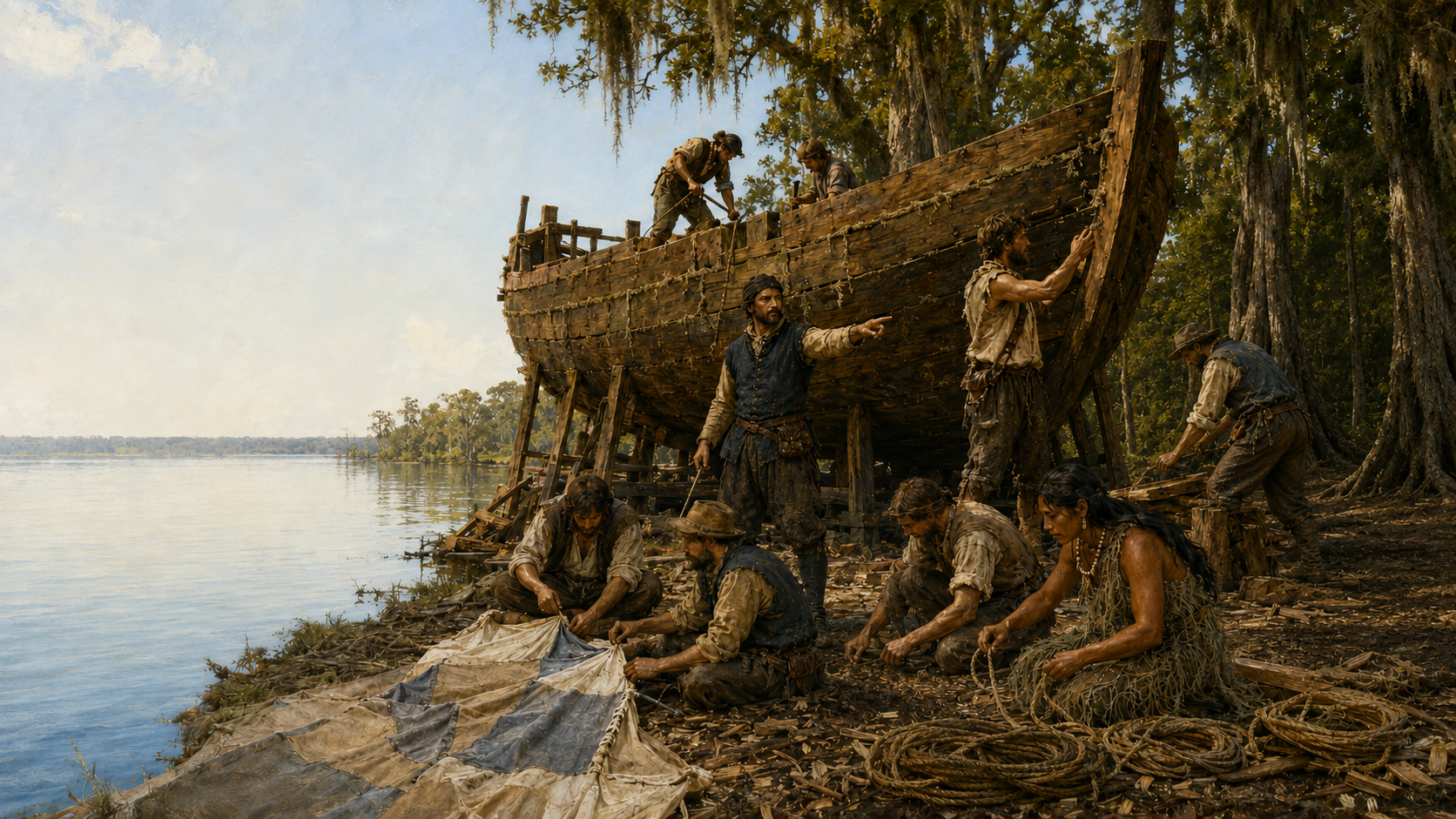
This Country of Ours Chapter 7, How the Flag of France Was Planted in Florida, is about France's first try at Florida, and how badly it went. Jean Ribaut lands on that coast, sets up a stone pillar to claim the country for France, and builds a little fort called Charlesfort. He leaves nearly thirty men to hold it and sails home for supplies, and then does not come back. The men have come for gold, not farming, and they begin to starve. The native chiefs of the country feed them, again and again. Their governor, Albert de la Pierria, rules them so harshly that at last they kill him. Then they build themselves a boat out of wreckage, caulked with moss and rigged with their own shirts, and put out into the Atlantic. They are becalmed and starving when an English ship finds them at last.
Say what you remember!
Tell what you remember from the last chapter.
What happened in This Country of Ours Chapter 6, How the Flag of England Was Planted on the Shores of the New World?Have a look
In Chapter 6, How the Flag of England Was Planted on the Shores of the New World, John Cabot, an Italian settled in Bristol, persuaded a cautious Henry VII to grant him a patent. He crossed the Atlantic in one small ship, the Matthew, with about eighteen men, went ashore on the coast of North America, and set up a cross and the flag of England. He found the sea so full of fish that weighted baskets came up loaded. He returned to a brief fame, and sailed again the next year on a voyage from which the record gives out.
Read the previous lesson: How the Flag of England Was Planted on the Shores of the New World →Show what you know!
Use your printable Lesson Guide. Fill in the vocabulary you know, then click to check your work and learn some new words today.
What are the difficult or advanced vocabulary words in This Country of Ours Chapter 7, How the Flag of France Was Planted in Florida?venison, artisan, hatchet, caulkHave a look
- venison: the meat of a deer or other game animal
- artisan: a worker skilled at a trade or handicraft
- hatchet: a short-handled ax used with one hand
- caulk: to fill a boat's seams so water stays out
Locate it on the map!
Use your printable Lesson Guide. Use an atlas and fill in the blank map if you can find the geographic location, then click to check your work.
What important geographic locations connect with This Country of Ours Chapter 7, How the Flag of France Was Planted in Florida?
- Find
- South Carolina
- Florida
- France
- the Atlantic Ocean
- Find and Label
- Parris Island (South Carolina)
See it on the mapHave a look
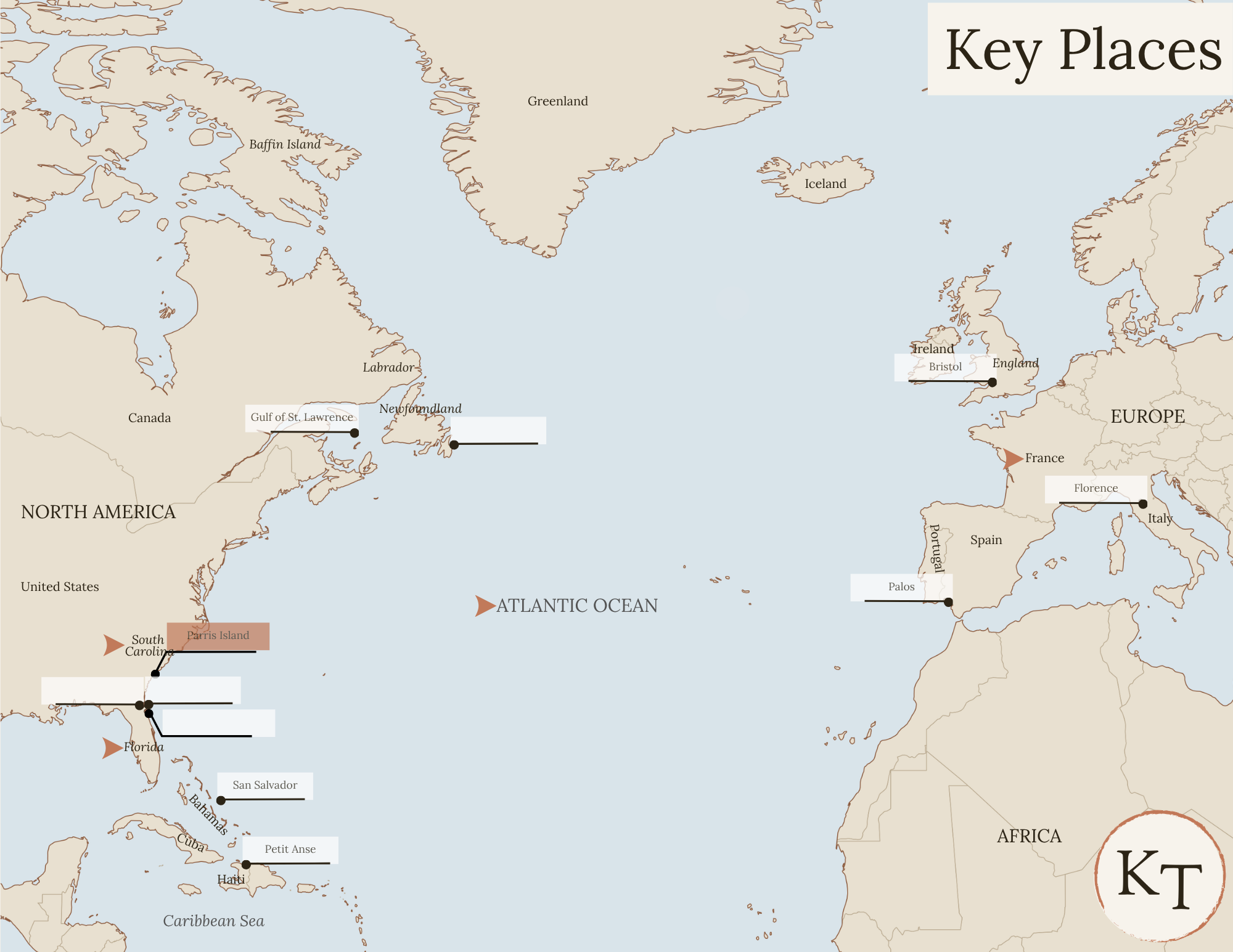
This matches the map in your Lesson Guide.
The Books come Alive!
Read or listen to Chapter 7 of This Country of Ours, the Kindred Thicket Revised Edition.
Read by Kindred Thicket from the This Country of Ours Kindred Thicket Revised Edition.
What corrections are made in Chapter 7 of This Country of Ours?Parent review
This is a Kindred Thicket Revised Edition. Factual and historical errors are corrected and dated wording is put right, and these notes tell you plainly what we changed and what we left as Marshall wrote it.
- About this sectionThroughout this section we brought Marshall’s British spellings to American English, keeping the original spelling inside quoted material.
- Kindred Thicket Revised Edition UpdatesIn This Country of Ours Chapter 7 we thoroughly examined and researched the chapter's contents. Four things needed our attention. Two were matters of fact. Marshall writes that thirty men were chosen to stay behind at Charlesfort. The French accounts of the expedition put it at twenty-seven or twenty-eight, so the text now says nearly thirty. She also writes that the Queen of England was at that time about to send an expedition to Florida. England was growing interested in the New World by 1562, but nothing supports a planned expedition to Florida, which Spain and France were already contesting between them, so the text now speaks of other expeditions. The other two concern the words used for the people the French met. Marshall reached for expressions common in the adventure writing of her day, belittling toward the native people of Florida and toward the Frenchmen in turn, and we replaced them with plain description. Where the text speaks of the chiefs the starving colonists went to beg food from, we removed a word of the same kind. The chiefs, their generosity, and the whole account of that journey stand as Marshall wrote them.
- Teacher's Notes“a man named Albert de la Pierria was chosen as Governor”Albert de Pierria is described as cruel and despotic. All we know of him comes from the French side of the story.
- “I would fain see Father Adam’s will”The retort about Father Adam's will is usually credited to an earlier French king, Francis I, rather than the boy king reigning in this story.
- “They sought the fabled seven cities of gold, they sought the fountain of eternal youth.”The Spaniards came seeking seven cities of gold and a fountain of youth. Both were stories rather than places, and men spent their lives and fortunes chasing them.
Memory becomes Action!
Use the Response Resource* to remember and spell tricky names. Choose one way to narrate.
*Materials in the Lesson Guide.
What is the list of names, people, characters, and places that are important in Chapter 7 of This Country of Ours?Jean Ribaut, Albert de Pierria, The Huguenots, Charlesfort, The River of May, Florida, France, SpainHave a look
- Jean Ribaut: The French captain of the Florida expedition.
- Albert de Pierria: The officer Ribaut set in command of the colony.
- The Huguenots: French Protestants seeking freedom to worship.
- Charlesfort: Ribaut's colony, at present-day Parris Island.
- The River of May: Ribaut's name for the Florida river now called the St. Johns.
- Florida: The southern land France claimed for its colony.
- France: The kingdom whose flag Ribaut planted.
- Spain: The kingdom claiming the same coast.
Chapter 7 Q & A
This is a Kindred Thicket Revised Edition. Marshall’s 1917 history is beautiful but not always right, and here is what the record supports for this chapter.
Why did the Charlesfort colony fail?
Because it had no farmers. The men had come looking for gold and did not plant, so they lived on the generosity of the native chiefs until that could not sustain them either. A colony needs food before it needs treasure, and this one never solved that.
How many men were left at Charlesfort?
Nearly thirty. Marshall writes thirty; the French accounts of the expedition put it at twenty-seven or twenty-eight, so the text now says nearly thirty.
Was the governor really as cruel as the book says?
Everything we know of Albert de Pierria comes from the French side of the story. He is described as cruel and despotic, and his own men killed him, but there is no other account to weigh it against.
Was England about to send an expedition to Florida?
No, and we corrected it. England was growing interested in the New World by 1562, but nothing supports a planned expedition to Florida, which Spain and France were already contesting between them. The text now speaks of other expeditions.
What were the seven cities of gold and the fountain of youth?
Stories rather than places. The Spaniards came seeking both, and men spent their lives and fortunes chasing them. Neither was ever found, because neither existed.
Who really said he would like to see Father Adam's will?
The retort is usually credited to an earlier French king, Francis I, rather than the boy king reigning in this story. It is a famous answer to the idea that the Pope could divide the world between Spain and Portugal.
What did Kindred Thicket change in this chapter?
Four things. Two were facts: the number left at Charlesfort, and the claim about an English expedition. The other two were words. Marshall reached for expressions common in the adventure writing of her day, belittling toward the native people of Florida and toward the Frenchmen in turn, and we replaced them with plain description. The chiefs, their generosity, and the whole account of that journey stand as she wrote them.