The Listening Grove · Our Island Story
Chapter 5: The Story of Boadicea
A Charlotte Mason read-aloud lesson. Press play, with the lesson.
What is Our Island Story Chapter 5, The Story of Boadicea, about?Parent review
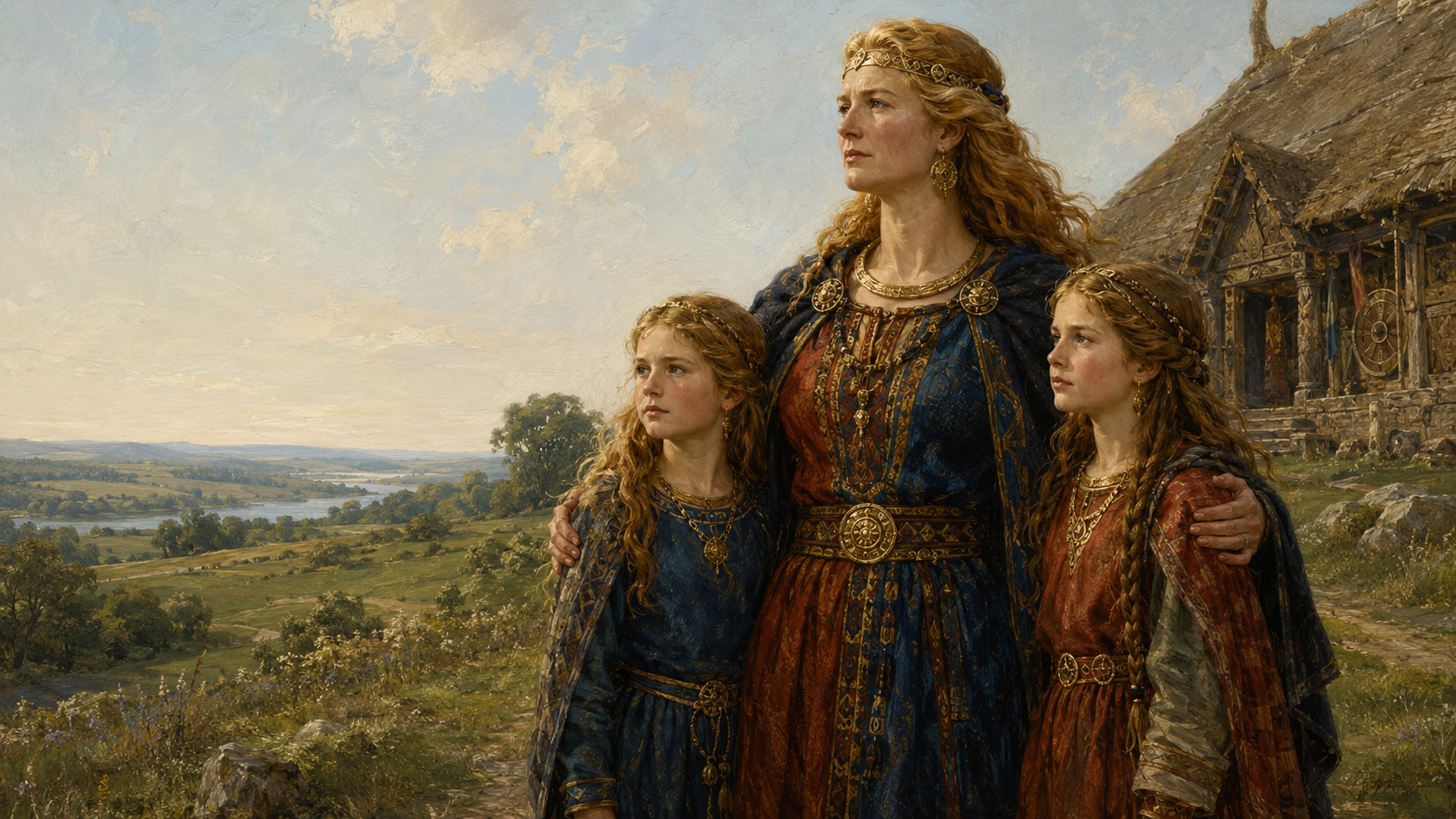
Our Island Story Chapter 5, The Story of Boadicea, tells of the brave queen who rose up against Rome. Boadicea ruled the part of Britain now called Norfolk and Suffolk. When her husband the king died, the greedy Romans seized his wealth by force and treated the queen and her daughters cruelly. Standing on a mound of earth, Boadicea called on her people to rise and drive the robbers out of their land, for it is better to be poor and free than to have great wealth and be slaves. The Britons swore to fight for their queen, and with Boadicea herself leading them, they destroyed the Roman capital Camulodunum, the trade town of Londinium, and the tribal capital of Verulamium. When a Roman leader came asking for peace, she answered that there could be peace only if the Romans left the country. At last the better-armed Roman soldiers defeated the Britons, and the great queen chose death rather than fall again into the hands of the Romans.
Say what you remember!
Tell what you remember from the last chapter.
What happened in Our Island Story Chapter 4, Caligula Conquers Britain?Have a look
In Chapter 4, Caligula Conquers Britain, the emperor Caligula boasted that he would conquer Britain, but he only marched his army to the coast of France, had his soldiers gather shells on the sand, and went home as if he had won a great victory. Then the emperor Claudius sent his generals and came himself. The brave Caractacus led the Britons against the Romans until he was taken prisoner and brought in chains to Rome, where he spoke so proudly and nobly before Claudius that the emperor set him and his family free.
Read the previous lesson: Caligula Conquers Britain →Show what you know!
Say what you think each word means, then click to check your answers and learn some new words today.
What are the difficult or advanced vocabulary words in Our Island Story Chapter 5, The Story of Boadicea?tyrant, province, avenge, solemnHave a look
- tyrant: a cruel ruler who treats people harshly
- province: a region or district of a country
- avenge: to get revenge for a wrong done
- solemn: very serious, grave, and not playful
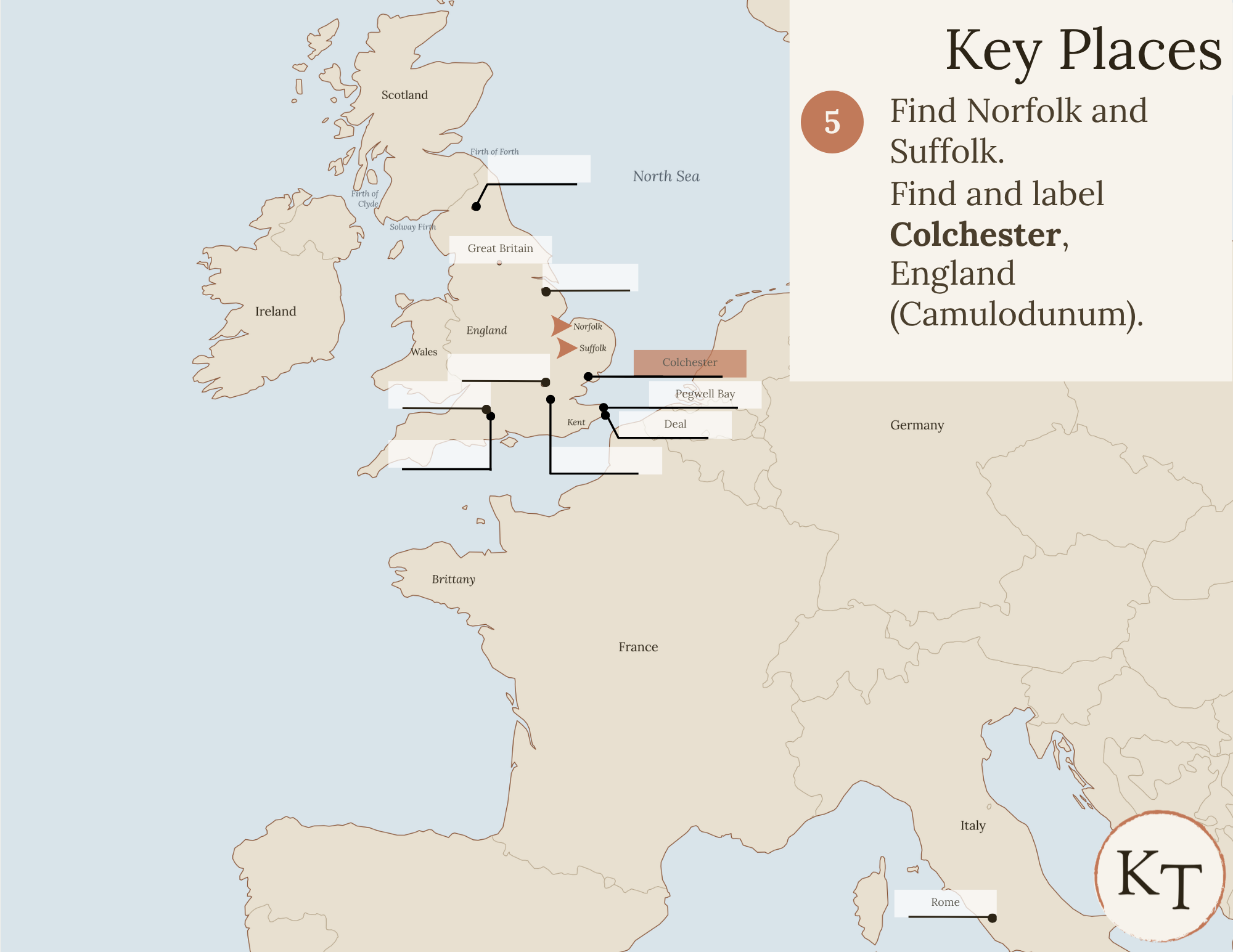
Locate it on the map!
Use an atlas to find the place if you can, then click to check your work on the map.
What important geographic locations connect with Our Island Story Chapter 5, The Story of Boadicea?
- Find
- Norfolk
- Suffolk
- Find and Label
- Colchester (England (Camulodunum))
See it on the mapHave a look
The Books come Alive!
Read or listen to Chapter 5 of Our Island Story, the Kindred Thicket Revised Edition.
Read by Kindred Thicket from the Our Island Story Kindred Thicket Revised Edition.
What corrections are made in Chapter 5 of Our Island Story?Parent review
This is a Kindred Thicket Revised Edition. Factual and historical errors are corrected and dated wording is put right, and these notes tell you plainly what we changed and what we left as Marshall wrote it.
- About this sectionThroughout this section we brought Marshall’s British spellings to American English, keeping the original spelling inside quoted material. Punctuation, readability and grammar may also be adjusted. Where offensive or outdated terminology or descriptions were present in Marshall’s original text, with the exception of direct period quotations, we have made minimal revisions.
- Kindred Thicket Revised Edition UpdatesMarshall's original text said Prasutagus, king of the Iceni, left half his property to the emperor and half to his wife and two children. The ancient historian Tacitus says Prasutagus named his daughters co-heirs with the emperor, Nero. We revised the text accordingly.
- Marshall is presenting Tacitus's version of events regarding the reasons for the revolt. He says the ill-treatment of Prasutagus's family by the Romans sparked the revolt. By contrast, Cassius Dio partially attributes the start of the revolt to financial grievances, specifically the confiscation of imperial gifts and suddenly called-in loans.
- Marshall’s original text listed only London and St Albans among the towns destroyed. However, the rebels first sacked Camulodunum (modern Colchester), then the Roman capital in Britain. We have revised the text accordingly.
- The accounts of Tacitus and Cassius Dio disagree about how Boadicea died (one says poison, one says illness). Neither says anything about her daughters. In Marshall's text, she says that Boadicea poisoned herself and her daughters. We revised the text accordingly.
- Teacher's Notes“Her name was Boadicea, and she was a queen”Marshall uses “Boadicea,” a later English form of the name. The name has been spelled many other ways, including by the two ancient accounts. Tacitus writes Boudicca. Cassius Dio’s Greek is Βουδουῖκα (Boudouika), commonly translated as Buduica.
- “die rather than submit”Boadicea's stirring speech to her soldiers by Marshall is adapted from Cassius Dio's account.
- “the golden band which bound her forehead”Marshall's description of Boadicea's physical appearance is partially dramatization. Cassius Dio describes her as tall and terrifying with a great mass of tawny hair and a golden torc around her neck, but does not mention her eye color.
- “bearing in his hand a green branch as a sign of peace”Marshall’s account that the Romans asked for peace and that a Roman leader came bearing a green branch as a sign of peace appears to be the author’s dramatization. This scene is not found in Tacitus's or Cassius Dio's account. Marshall's telling likely draws on the conventional symbol of a green or olive branch as an emblem of peace.
Memory becomes Action!
Use the names below to remember and spell tricky names. Choose one way to narrate.
What is the list of names, people, characters, and places that are important in Chapter 5 of Our Island Story?Boadicea (also Boudica), King Prasutagus, The Iceni, The Britons, The Romans, Camulodunum (Colchester), Londinium (London), Verulamium (St Albans)Have a look
- Boadicea (also Boudica): Queen of the Iceni and leader of a British rising against Rome.
- King Prasutagus: Boadicea's husband, king of the Iceni.
- The Iceni: Boadicea's tribe, in what is now Norfolk and Suffolk.
- The Britons: The people of Britain, who rose up with Boadicea.
- The Romans: The people of the Roman Empire, now ruling much of Britain.
- Camulodunum (Colchester): The Roman capital in Britain at the time.
- Londinium (London): A bustling Roman trade town, today the UK's capital.
- Verulamium (St Albans): A major tribal capital of the Britons.
Chapter 5 Q & A
This is a Kindred Thicket Revised Edition. Marshall’s 1905 history is beautiful but not always right, and here is what the record supports for this chapter.
Who was Boadicea?
Boadicea was a queen of the Iceni, a British tribe living in what is now Norfolk and Suffolk. After the Romans mistreated her family, she led a great rising of the Britons against Roman rule.
Why is her name spelled so many ways?
Because the ancient writers spelled it differently, and later English writers changed it again. Tacitus writes Boudicca, Cassius Dio’s Greek is usually translated as Buduica, “Boadicea” is a later English form, and you will also often see Boudica.
What did Boadicea’s husband leave in his will?
According to the Roman historian Tacitus, King Prasutagus named his daughters co-heirs with the emperor, Nero.
Why did the Britons rise up against the Romans?
Tacitus says the Romans’ cruel treatment of Prasutagus’s family sparked the revolt. Cassius Dio also blames money troubles: the Romans took back gifts they had given and suddenly called in loans.
Which towns did the Britons destroy?
Three towns: Camulodunum (modern Colchester), then the Roman capital in Britain; the trade town of Londinium (London); and Verulamium (St Albans).
Did Boadicea really have blue eyes and golden hair?
Not quite. Cassius Dio describes a great mass of tawny hair, but he never mentions her eye color.
Did a Roman leader really come with a green branch of peace?
Probably not. The scene does not appear in Tacitus’s or Cassius Dio’s accounts and seems to be Marshall’s own dramatization.
How did Boadicea die?
The ancient accounts disagree. Tacitus says she took poison, and Cassius Dio says she fell ill and died.