The Listening Grove · This Country of Ours
Chapter 4: How Columbus Returned in Triumph
A Charlotte Mason read-aloud lesson. Press play, with the lesson.
What is This Country of Ours Chapter 4, How Columbus Returned in Triumph, about?Parent review
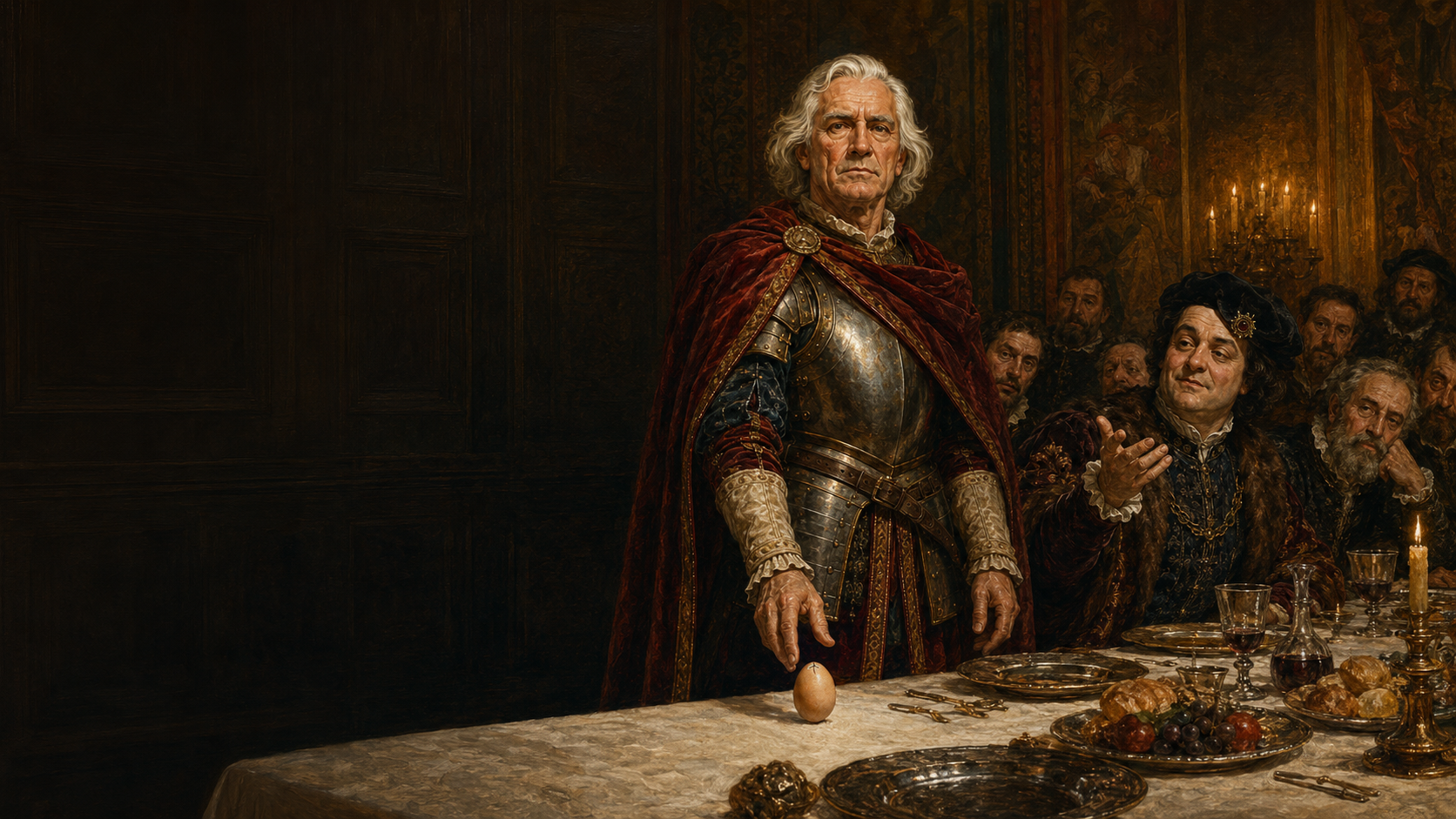
This Country of Ours Chapter 4, How Columbus Returned in Triumph, begins with a shipwreck. On Christmas Eve the Santa Maria runs aground off Haiti, and Columbus builds a little fort from her timbers and names it La Navidad, for Christmas Day. He leaves men there to hold it and sails for home through terrible storms. In Spain he is received like a prince, and at a great banquet a scoffing courtier says anyone could have done as much, and Columbus answers him with an egg. He sails again with a far greater fleet, and finds the little fort destroyed and every man dead. The chapter closes by looking ahead: more voyages, then envy and quarrels, and at the end of his life the honors he had been promised taken from him. He died in neglect, and the continents he opened were named for another man.
Say what you remember!
Tell what you remember from the last chapter.
What happened in This Country of Ours Chapter 3, How Columbus Fared Forth Upon the Sea of Darkness?Have a look
In Chapter 3, How Columbus Fared Forth Upon the Sea of Darkness, Columbus sailed west from Palos with three ships. Week after week passed with nothing but water, and the frightened crew came close to mutiny before he faced them down. After a false cry of land, a sailor sighted a real shore, and they went ashore and gave thanks. The island people came down to meet them in wonder, and the Spaniards traded beads and little bells for gold. Columbus went on from island to island and came to Cuba, believing he had reached the Indies, and then the Pinta deserted him in the night.
Read the previous lesson: How Columbus Fared Forth Upon the Sea of Darkness →Show what you know!
Use your printable Lesson Guide. Fill in the vocabulary you know, then click to check your work and learn some new words today.
What are the difficult or advanced vocabulary words in This Country of Ours Chapter 4, How Columbus Returned in Triumph?tiller, canopy, courtier, banquetHave a look
- tiller: a lever used to turn a boat's rudder
- canopy: a cloth cover held above someone of high rank
- courtier: someone who attends a royal court
- banquet: a grand feast held in someone's honor
Locate it on the map!
Use your printable Lesson Guide. Use an atlas and fill in the blank map if you can find the geographic location, then click to check your work.
What important geographic locations connect with This Country of Ours Chapter 4, How Columbus Returned in Triumph?
- Find
- Haiti (Española)
- Cuba
- Spain
- Palos
- San Salvador
- Find and Label
- Petit Anse (Haiti)
See it on the mapHave a look
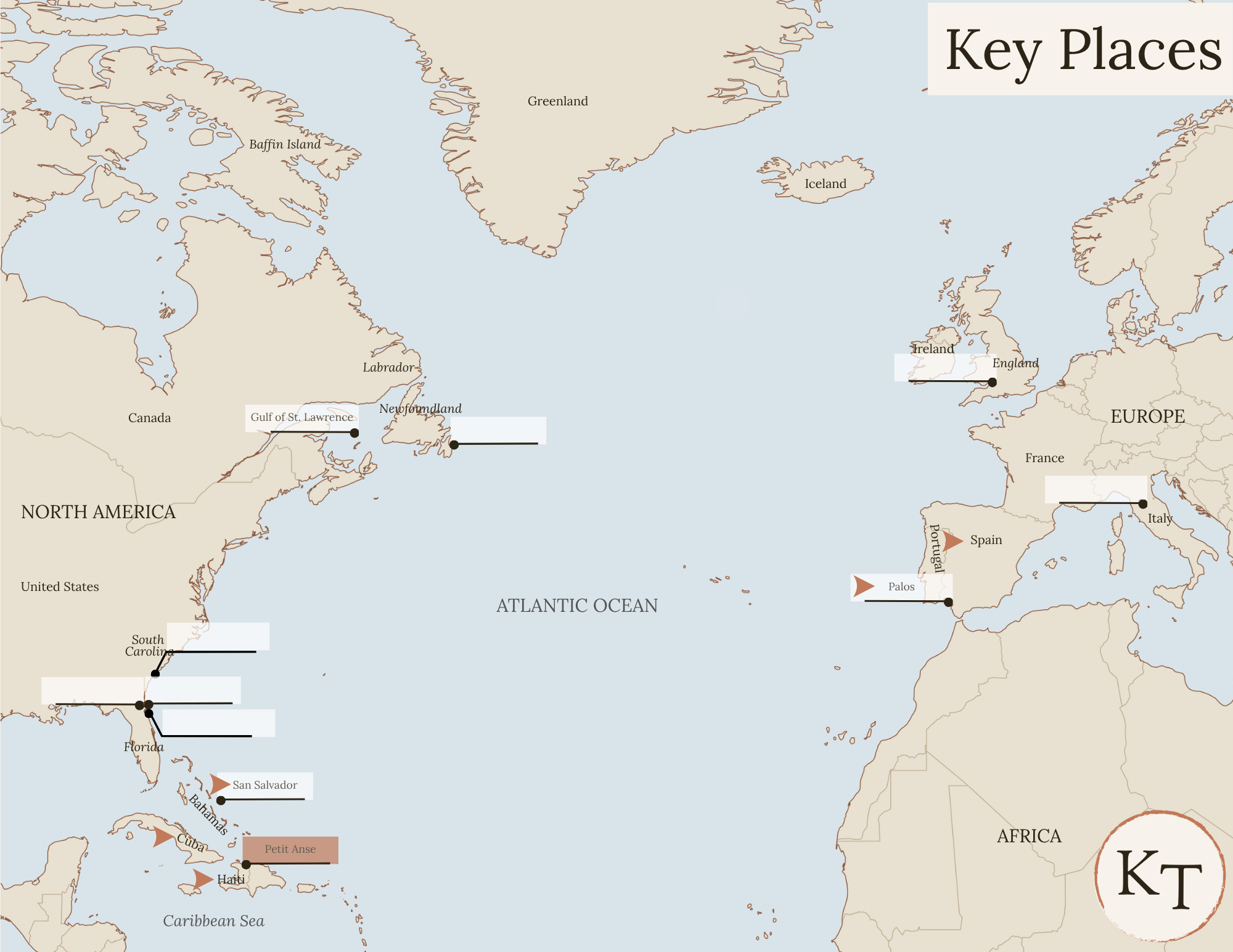
This matches the map in your Lesson Guide.
The Books come Alive!
Read or listen to Chapter 4 of This Country of Ours, the Kindred Thicket Revised Edition.
Read by Kindred Thicket from the This Country of Ours Kindred Thicket Revised Edition.
What corrections are made in Chapter 4 of This Country of Ours?Parent review
This is a Kindred Thicket Revised Edition. Factual and historical errors are corrected and dated wording is put right, and these notes tell you plainly what we changed and what we left as Marshall wrote it.
- About this sectionThroughout this section we brought Marshall’s British spellings to American English, keeping the original spelling inside quoted material.
- Kindred Thicket Revised Edition UpdatesIn This Country of Ours Chapter 4 we thoroughly examined and researched the chapter's contents. Six things needed our attention. Two were matters of fact. Marshall calls the little settlement at La Navidad the first white colony ever planted in Western lands. Norse sailors had reached these lands and built there some five hundred years earlier, so the text now calls it the first colony from Spain ever planted in Western lands. Marshall also writes that Columbus died in poverty and neglect. The neglect is true, and it is the heart of the passage, but the poverty is a long-lived myth. He died reasonably provided for and cared for by his family, stripped of the honors he had been promised rather than of his living, so the text now says he died in neglect. The third is the homecoming itself. Marshall has the people of Palos see only one of the three ships return, with the Pinta appearing later while the cheering was still going. In fact both ships came into Palos on the same day, the fifteenth of March, 1493, and the text now says so and counts two of the three vessels home. Which of them reached the quay first that day is not something the record settles, so we have not said. The fourth is a spelling. Marshall writes the name of Columbus's little fort as La Navida. The Spanish word is La Navidad, meaning the Nativity, or Christmas, which is exactly what Columbus was naming it for: the Santa Maria ran aground on Christmas Eve and the fort was raised from her timbers on Christmas Day. Marshall's own sentence gives the translation, so the missing letter reads as a slip of the pen rather than a choice. The text now says La Navidad. The other two concern how the island people are described. In both places Marshall used language we would not repeat today, and we replaced or removed it.
- Teacher's Notes“he named it La Isla Santa”The claim that Columbus thought it was an island is consistent with historical accounts, but the specific name 'La Isla Santa' cannot be verified.
- “he chose forty-four, appointing one of them, Diego de Arana, as Governor”Forty-four men were left at La Navidad in this account. Modern historians count thirty-six to thirty-nine. Exact numbers from this voyage are often uncertain.
- “the fort had been attacked by unfriendly inhabitants from another island”The survivors blamed people from another island for destroying the fort. Historians now think the Taíno themselves did it, after the colonists mistreated them.
- “all new lands discovered west of an imaginary line drawn through the Atlantic Ocean”The Pope's line of 1493 was not the last word. Spain and Portugal negotiated the Treaty of Tordesillas the next year and moved it much further west.
- “The Pinta, though parted from the Nina, had also weathered the storms and was safely in port.”The Pinta reached Spain first, at Baiona on the first of March. Pinzón wrote asking to see the King and Queen and was refused. Both ships came into Palos on the fifteenth.
Memory becomes Action!
Use the Response Resource* to remember and spell tricky names. Choose one way to narrate.
*Materials in the Lesson Guide.
What is the list of names, people, characters, and places that are important in Chapter 4 of This Country of Ours?Columbus, The Santa Maria, The Nina, The Pinta, La Navidad, Diego de Arana, Barcelona, The PopeHave a look
- Columbus: The Admiral of the Ocean Sea, home from the first voyage.
- The Santa Maria: Columbus's flagship, wrecked on a sandbank.
- The Nina: The ship Columbus sailed home in.
- The Pinta: The other ship that returned to Spain.
- La Navidad: The fort built from the Santa Maria's wood, at present-day Petit Anse.
- Diego de Arana: The man Columbus set in command at La Navidad.
- Barcelona: The Spanish city where the court received Columbus.
- The Pope: The head of the Church, who drew the line dividing the new lands.
Chapter 4 Q & A
This is a Kindred Thicket Revised Edition. Marshall’s 1917 history is beautiful but not always right, and here is what the record supports for this chapter.
Was La Navidad the first colony in the Americas?
Not the first of all. Norse sailors had reached these lands and built there some five hundred years earlier. Marshall calls it the first white colony ever planted in Western lands; the text now calls it the first colony from Spain, which is what the record supports.
Did Columbus die poor?
No, and we corrected it. The neglect is true, and it is the heart of the passage, but the poverty is a long-lived myth. He died reasonably provided for and cared for by his family, stripped of the honors he had been promised rather than of his living.
Why is the fort called La Navidad?
Because it was named for Christmas. The Santa Maria ran aground on Christmas Eve and the fort was raised from her timbers on Christmas Day, and La Navidad is Spanish for the Nativity. Marshall wrote it La Navida, a missing letter that reads as a slip of the pen, so we corrected the spelling.
How many men were left at the fort?
Marshall says forty-four. Modern historians count thirty-six to thirty-nine. Exact numbers from this voyage are often uncertain, so we left the figure and flagged it.
Who destroyed the fort at La Navidad?
The survivors blamed people from another island. Historians now think the Taino themselves did it, after the colonists mistreated them.
Did the Pinta really arrive later, while Palos was still cheering?
No. Both ships came into Palos on the same day, the fifteenth of March, 1493, and the text now says so. The Pinta had actually reached Spain first, at Baiona on the first of March, where Pinzon wrote asking to see the King and Queen and was refused. Which ship reached the quay first at Palos is not something the record settles, so we have not said.
What was the Pope's line drawn through the Atlantic?
A division of the new lands between Spain and Portugal, made in 1493. It was not the last word: the two kingdoms negotiated the Treaty of Tordesillas the next year and moved the line much further west.
Did Columbus really balance an egg on its end?
It is the famous story of the banquet, told to answer a courtier who said anyone could have sailed west. It is a well-loved tradition rather than a documented event, and Marshall tells it as the tradition has come down.